
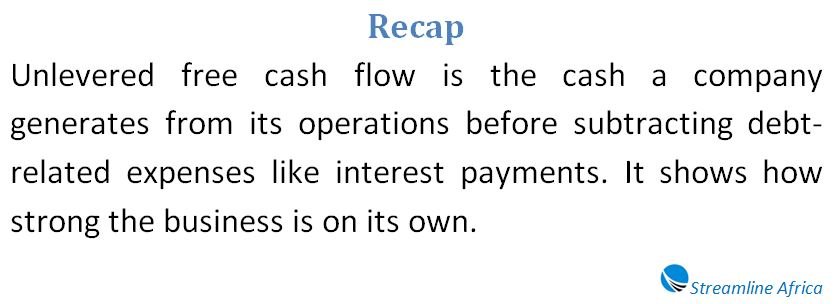
Unlevered free cash flow, often shortened to UFCF, is one of the most important measurements used in financial analysis and company valuation. It represents the cash a business generates from its normal operations before deducting interest payments or other financing-related costs. In simple terms, it reveals the company’s ability to produce cash regardless of how it is funded.
This metric matters because it shows the financial performance of the business itself rather than the impact of management’s borrowing decisions. Investors, analysts, and acquisition professionals use UFCF to understand how efficiently a company turns its operations into usable cash before debt obligations enter the picture.
Unlike accounting profits, which may be affected by non-cash adjustments and reporting methods, UFCF focuses on actual cash movement. This gives a more practical view of a company’s financial strength and long-term sustainability.
Why Unlevered Free Cash Flow Matters
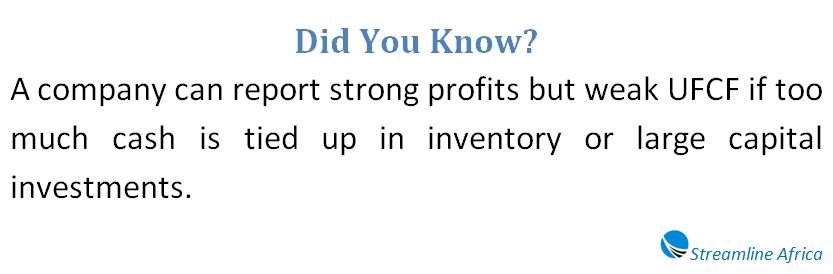
A company can appear highly profitable on paper while struggling to generate usable cash. This happens because accounting earnings often include non-cash items such as depreciation or deferred expenses. UFCF cuts through those accounting complexities and shows how much real cash remains after operating costs and necessary reinvestments have been covered.
This makes it especially valuable for investors comparing businesses with different financing strategies. One company may have heavy debt and large interest expenses, while another may rely entirely on shareholder capital. Looking only at net income could make one seem weaker than the other, even if both operate equally well.
By excluding financing costs, UFCF levels the playing field and allows analysts to evaluate the underlying quality of operations without distortion from debt structure.
What UFCF Reveals About a Business
At its core, UFCF shows the raw cash-producing ability of a business. It measures the money available to all providers of capital, including lenders and shareholders, after the company has handled essential operating needs.
This gives insight into whether the business generates enough internal resources to support growth, upgrade equipment, expand production, or weather financial challenges.
A consistently healthy UFCF often signals strong operational discipline and efficient management. Negative or declining UFCF, on the other hand, may indicate heavy reinvestment requirements, weak operational performance, or cash flow stress that deserves closer examination.
However, context always matters. A temporary decline could reflect aggressive expansion rather than operational weakness.
The Formula for Calculating UFCF
Financial analysts usually calculate unlevered free cash flow using operating income as the starting point.
The standard formula is:
UFCF = EBIT × (1 − Tax Rate) + Depreciation and Amortization − Capital Expenditures − Change in Working Capital
Each component serves a specific purpose in converting accounting profit into a realistic measure of cash generation.
Operating income reflects profit from core business activities before interest costs are considered. Taxes are applied as though the business carries no debt, removing the tax benefits associated with interest deductions.
Depreciation and amortization are added back because they reduce accounting profit but do not involve actual cash leaving the company.
Capital expenditures are subtracted because they represent real cash invested in long-term assets such as machinery, technology, or facilities.
Changes in working capital account for short-term cash tied up in inventory, receivables, or supplier obligations.
Together, these adjustments create a cleaner picture of operating cash flow.
Understanding the Key Components
EBIT, or earnings before interest and taxes, reflects the company’s operating profitability before financing decisions influence results. It forms the foundation of UFCF because it isolates business performance.
The tax adjustment removes the effect of debt-related tax shields. Since UFCF ignores financing, taxes must also be calculated as though no debt exists.
Depreciation and amortization are accounting allocations rather than actual cash payments. Adding them back ensures the calculation reflects real cash flow rather than paper-based expenses.
Working capital changes capture shifts in day-to-day operational cash needs. If inventory increases or customers delay payments, available cash declines even if profits remain steady.
Capital expenditures reflect investments required to maintain or expand the company’s productive capacity. Since these require real cash outflows, they must be deducted.
Each element ensures UFCF reflects operational cash reality rather than accounting appearance.
A Practical Example of UFCF
Imagine a manufacturing company reports operating income of $12,000 and faces a tax rate of 25%.
After taxes, operating profit becomes $9,000.
If depreciation and amortization total $1,500, this amount is added back, bringing adjusted cash flow to $10,500.
Suppose working capital rises by $2,000 due to higher inventory levels. Available cash falls to $8,500.
If the business also spends $5,000 on equipment upgrades, the final unlevered free cash flow becomes $3,500.
This means the company generated $3,500 in operational cash available to both lenders and shareholders before debt servicing costs are considered.
This figure gives analysts a clearer understanding of financial flexibility and operating strength.

UFCF Compared to Levered Free Cash Flow
Unlevered free cash flow and levered free cash flow are closely related but serve different purposes.
UFCF measures cash generated before debt-related costs. It reflects operating performance independent of financing choices.
Levered free cash flow, often called LFCF, shows cash remaining after interest payments and debt obligations have been paid.
The difference between the two can reveal how heavily debt affects financial flexibility.
A company may report strong UFCF yet weak or negative levered cash flow because interest payments consume most available cash. This can indicate excessive leverage and increased financial risk.
Looking at both metrics together provides a fuller understanding of financial health.
Why UFCF Is Preferred in Valuation Models
UFCF plays a central role in discounted cash flow analysis because valuation seeks to estimate the worth of the business itself, not its temporary financing structure.
Analysts project future UFCF and discount those expected cash flows back to present value using the weighted average cost of capital.
This process produces enterprise value, which reflects the total economic worth of the company’s operations.
Because debt structures can change through refinancing or repayment, valuation models avoid building assumptions around current financing arrangements.
Using UFCF keeps analysis focused on operational earning power and produces more consistent comparisons across companies and industries. That is why it remains the preferred metric in mergers, acquisitions, and investment research.
Read Also: Understanding How Businesses Manipulate Cash Flow and the Financial Risks Behind These Practices
Limitations of UFCF
Although powerful, UFCF is not perfect.
Because it ignores debt obligations, it can sometimes make a financially strained company appear healthier than it truly is.
A business carrying heavy interest costs may generate strong UFCF while struggling to meet lender payments. Looking only at this metric could create a misleading impression.
Management can also temporarily improve UFCF by delaying capital spending, reducing inventory, postponing supplier payments, or cutting necessary investments.
These actions may boost short-term cash flow while weakening long-term performance.
For this reason, analysts rarely rely on UFCF alone. It works best when evaluated alongside levered cash flow, debt ratios, profitability trends, and broader financial statements.
Why UFCF Remains Essential
Despite its limitations, unlevered free cash flow remains one of the clearest indicators of business quality.
It strips away financing noise and focuses attention on what matters most: the company’s ability to generate cash from operations after maintaining and growing its asset base.
For investors, it provides a cleaner way to compare opportunities.
For analysts, it forms the backbone of valuation models.
For business owners, it offers insight into whether operations are truly creating value.
When interpreted carefully and paired with other financial measures, UFCF provides one of the most reliable ways to understand whether a business is building lasting economic strength.
Commonly Asked Questions about Unlevered Free Cash Flow
Why is UFCF important to investors?
It helps investors measure how efficiently a company generates cash without being influenced by its financing decisions, making comparisons between businesses easier.
How is UFCF different from levered free cash flow?
UFCF excludes interest and debt payments, while levered free cash flow includes them. UFCF focuses on operational performance, while levered cash flow shows cash left for shareholders.
Why is UFCF used in company valuation?
It helps calculate enterprise value by showing the total cash-generating ability of a company before financing costs are considered.
What is the starting point for calculating UFCF?
Most analysts begin with EBIT, which reflects operating profit before interest and taxes.
Why are depreciation and amortization added back?
These are non-cash accounting expenses, so they reduce reported profit without affecting actual cash flow.
How do capital expenditures affect UFCF?
Capital expenditures reduce UFCF because they represent real cash spent on equipment, property, and business growth investments.
Why is working capital included in the formula?
Changes in working capital show how much cash is tied up in daily operations like inventory and receivables.
Can a company have positive UFCF and still face financial trouble?
Yes. A company may generate strong operational cash flow but struggle if it has high debt payments.
Why do analysts prefer UFCF for DCF models?
Because it removes financing distortions and provides a cleaner estimate of enterprise value.
Can UFCF be manipulated?
Yes. Businesses may delay payments or reduce investments temporarily to improve reported UFCF.
What does a consistently growing UFCF indicate?
It usually signals strong operational health, efficient management, and long-term financial stability.