

Managing company taxes in Nigeria involves more than calculating an annual liability. Businesses must keep reliable accounts, meet reporting deadlines and understand which obligations apply to their activities. This guide explains corporate tax filing, VAT reporting, payment arrangements and compliance risks.
Tax Registration and Annual Returns
Companies must register with the Nigeria Revenue Service (NRS) and obtain a Tax ID. Under the self-assessment system, each company calculates its taxable income, determines the amount payable and submits the required supporting documents.
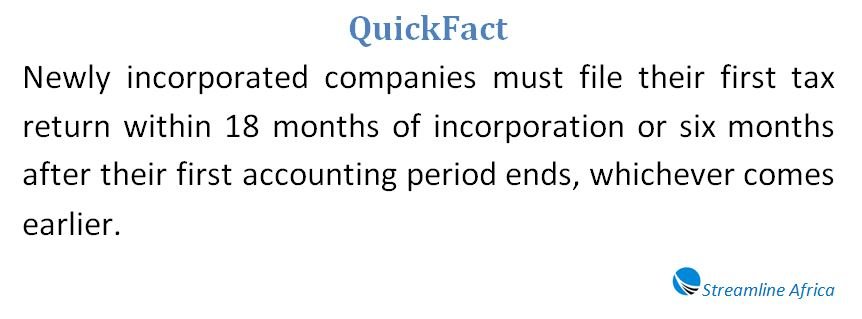
Established companies generally file within six months after their accounting year ends. Newly incorporated companies must submit their first return within 18 months of incorporation or six months after their first accounting period, whichever comes earlier.
For example, an established company whose financial year ends on 31 December 2026 would ordinarily file its annual return by 30 June 2027. Preparing accounts throughout the year makes this deadline easier to manage.
A filing extension of up to two months may be requested, subject to approval. Businesses should continue working towards the original deadline until approval is received.
Documents to Prepare Before Filing
The annual submission generally includes audited financial statements prepared under International Financial Reporting Standards (IFRS), the relevant tax computation, a completed and signed self-assessment form, and evidence of tax payments.
Before submission, the finance team should reconcile revenue, expenses, bank balances and tax credits. Differences between financial statements and tax returns should have clear explanations and supporting records.
Nigeria Tax Filing Deadlines at a Glance
| Obligation | General deadline or frequency |
|---|---|
| Established company’s annual income tax return | Within six months after accounting year-end |
| Newly incorporated company’s first return | Within 18 months of incorporation or six months after its first accounting period, whichever is earlier |
| VAT return, where required | By the 21st of the following month |
| VAT withheld by appointed agents | Remittance by the 14th of the following month |
| Mineral royalty return | By the 21st of the following month |
| Petroleum royalty return | By the 14th of the following month |
| Withholding tax return | Monthly |
| Virtual asset service provider return | Monthly |
| Tax incentive return | Annually |
| Financial institution information return | Quarterly |
Businesses with several obligations should maintain separate reminders for filing and payment, since the dates do not always coincide.
VAT Returns and Small Business Exemptions
Businesses required to submit value added tax (VAT) returns generally report monthly, including periods without economic activity. Their returns should show relevant sales, input VAT, output VAT and the resulting liability.
However, the legislation provides a small business exemption from routine VAT reporting, with an option to elect into the system. A business that ceases to qualify must begin filing monthly returns. Companies should therefore establish their status before assuming that every VAT obligation applies.
Paying Corporate Income Tax
A company submitting its self-assessment return on time may apply in writing to pay corporate income tax (CIT) in instalments. The application must include part payment and reach the relevant authority by the filing deadline.
Approval does not automatically provide extra time beyond that deadline: the final instalment must still be paid by the applicable due date. Cash-flow planning should therefore begin before the annual accounts are completed.
Additional Rules for Petroleum Companies
Upstream petroleum businesses follow specialised reporting and payment arrangements. Estimated petroleum profits tax (PPT) and hydrocarbon tax (HCT) returns are generally required within two months of the fiscal year’s commencement.
Actual returns are due within five months after the accounting period ends and, in any event, no later than 31 May. Relevant petroleum taxes are paid through monthly instalments, starting no later than the third accounting month, followed by a balancing payment when the final return is filed.
Source: Nigeria Revenue Service
Penalties for Late Filing and Payment
Late CIT filing attracts NGN 100,000 for the first month of default and NGN 50,000 for each subsequent month. Late payment generally adds a penalty of 10% of the unpaid tax, together with applicable interest.
Petroleum filing defaults carry substantially higher charges: NGN 10 million on the first day and NGN 2 million for each additional day. Separate interest rules apply to overdue petroleum taxes, depending on the payment currency.
Tax Audits, Records and Disclosure
Tax authorities may review returns, request accounting records, inspect premises and seek explanations for reported figures. Additional assessments generally fall within a six-year period, although fraud, deliberate misstatement or wilful default can remove that limit.
Companies must also consider disclosure requirements for reportable tax arrangements. A favourable tax outcome should be assessed against the reporting rules, rather than treated as automatically exempt from scrutiny.
Electronic Invoicing and VAT Fiscalisation
Nigeria’s digital compliance framework includes electronic invoicing and VAT fiscalisation. Businesses should check the NRS implementation timetable and applicable exemptions to understand when they must connect their invoicing processes.
The NRS platform supports invoice validation, electronic submission and integration with business accounting systems. Accurate customer details, consistent invoice numbering and reliable transaction records help businesses prepare.
Frequently Asked Questions
Does having no VAT transactions remove the filing requirement?
Generally, no. A business subject to monthly VAT reporting must still submit a return for an inactive period. Qualifying small business exemptions must be considered separately.
Can a company request extra time to file?
Yes. An extension may be requested, but approval is discretionary. An application alone does not change the deadline.
Does an instalment arrangement extend the payment deadline?
Not automatically. Under the arrangement described above, the final payment remains due by the filing deadline.
Can tax authorities question a submitted return?
Yes. Self-assessment allows companies to calculate their liabilities, but authorities retain powers to examine the figures and issue further assessments.
How can businesses reduce compliance problems?
Keep accounts current, reconcile tax balances monthly, assign responsibility for each return and retain proof of submissions and payments.
Key Takeaway
Effective Nigeria corporate tax compliance depends on matching each obligation to the business’s circumstances. A practical calendar, organised supporting documents and early payment planning help prevent avoidable penalties.