

In Nigeria, tax residents are generally required to declare income generated both within Nigeria and overseas, while applicable relief provisions help prevent excessive taxation.
Where foreign earnings have already been taxed abroad, qualifying residents may claim a credit against their Nigerian tax liability. This arrangement reduces the possibility of paying tax twice on the same income, subject to statutory requirements.
Read Also: Nigeria’s Business Environment: Investment Opportunities, Market Risks and Growth Sectors
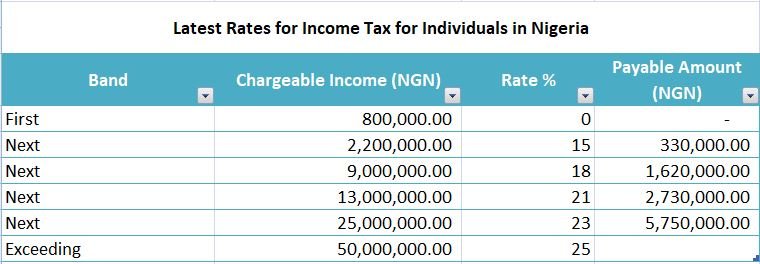
Progressive Personal Income Tax Rates
Nigeria applies graduated tax rates, ensuring that individuals with higher taxable earnings contribute proportionately more. The revised framework also provides greater protection for lower-income earners through an expanded tax-free threshold.
Annual taxable income is assessed using the following structure:
| Annual Taxable Income (NGN) | Tax Rate |
|---|---|
| First 800,000 | 0% |
| Next 2,200,000 | 15% |
| Next 9,000,000 | 18% |
| Next 13,000,000 | 21% |
| Next 25,000,000 | 23% |
| Above 50,000,000 | 25% |
Each percentage applies exclusively to income falling within its corresponding bracket, rather than the taxpayer’s entire earnings.
Employees receiving the national minimum wage of NGN 70,000 monthly are exempt from Pay-As-You-Earn deductions, providing additional financial relief to qualifying workers.
Changes to Minimum Tax Obligations
Previously, Nigeria imposed a minimum income tax equivalent to 1% of total income in specified circumstances. The Nigeria Tax Act no longer retains this provision.
Instead, the broader zero-rated income bracket allows eligible low-income individuals to avoid personal income tax altogether. Employers should consequently review payroll calculations to ensure compliance with the revised requirements.
Tax Treatment of Employment Termination Payments
Compensation received following employment termination benefits from a substantially increased capital gains tax exemption.
Under the revised provisions, only qualifying compensation exceeding NGN 50 million becomes chargeable. The previous exemption threshold stood at NGN 10 million.
This adjustment offers greater financial protection to departing employees while requiring organisations to distinguish genuine loss-of-office compensation from other taxable employment payments when calculating final settlements.
Frequently Asked Questions About Personal Income Tax in Nigeria
What Are the Personal Income Tax Rates in Nigeria?
Nigeria operates a progressive tax system, with rates ranging from 0% to 25%. The first NGN 800,000 of annual taxable income is exempt, while higher income portions attract increasing rates.
Are Minimum Wage Earners Exempt From Income Tax?
Yes. Employees earning the national minimum wage of NGN 70,000 monthly are exempt from PAYE deductions, helping protect their earnings from income tax obligations.
How Does Nigeria Prevent Double Taxation on Foreign Income?
Eligible Nigerian residents who pay taxes on foreign earnings may claim tax credits against their Nigerian liabilities, provided they satisfy the relevant statutory conditions.
Has Nigeria Abolished the Minimum Income Tax?
Yes. The previous minimum income tax provision of 1% of total income has been removed under the revised framework, with the expanded zero-rated tax bracket providing relief to qualifying taxpayers.
Are Employment Termination Benefits Taxable in Nigeria?
Compensation specifically paid for loss of employment benefits from a NGN 50 million exemption threshold. Only qualifying amounts exceeding this limit are subject to the applicable capital gains tax treatment.
How Can Employers Comply With Nigeria’s Revised Income Tax Rules?
Employers should update payroll systems, apply the correct tax brackets, identify exempt employees, and accurately calculate PAYE deductions to minimise compliance risks.