Monetary inflation refers to the persistent rise in the supply of money within an economy. Unlike price inflation, which reflects higher costs of goods and services, monetary inflation is specifically about the creation and expansion of money itself. The two are closely related, as a growing money supply can often lead to price increases, but the connection is influenced by many factors, including economic growth, consumer behavior, and expectations about the future.
Economists widely accept that changes in the money supply play a major role in shaping inflationary pressures. However, there is no single agreed-upon framework for how this process unfolds. Measurement challenges, the complexity of modern financial systems, and the influence of global markets make the relationship far from straightforward.

How Monetary Inflation Differs from Price Inflation
It is easy to confuse monetary inflation with price inflation because the terms are often used interchangeably in public discussions. Monetary inflation deals with how much money exists within the economy. Price inflation, by contrast, refers to how expensive everyday items become. While an increase in the money supply can eventually translate into higher prices, the timing and intensity of that effect depend on factors such as consumer demand, supply chains, and international trade.
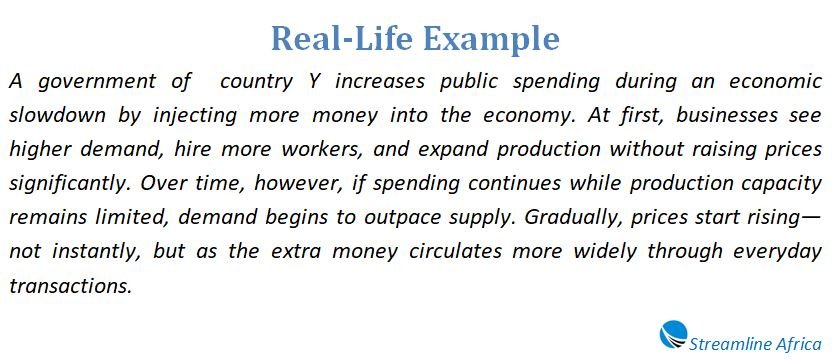
For instance, if the money supply grows but the economy is producing more goods at the same time, price levels may remain stable. On the other hand, if production cannot keep up with increased spending, prices rise more sharply.
The Role of Central Banks
Central banks and monetary authorities are at the heart of managing monetary inflation. Their policies shape how much money circulates, how credit flows, and how the public perceives future inflation. By setting interest rates, purchasing assets, or adjusting reserve requirements, central banks influence the pace at which money enters the economy.
Public trust also plays an enormous role. If people believe prices will rise, they may spend more quickly, creating upward pressure on demand and reinforcing inflation. This is why central banks often communicate clearly about their inflation targets to shape expectations.
Competing Economic Views
Different schools of thought interpret monetary inflation in distinct ways, and these perspectives shape the tools policymakers choose.
Keynesian economists argue that central banks should actively adjust monetary policy in response to economic cycles. By analyzing real-time data, they believe authorities can smooth out recessions and overheating periods. They support targeted interventions to keep growth steady and employment strong.
Monetarists, however, caution against too much intervention. They argue that attempts to fine-tune the economy often lead to errors and unintended consequences. Instead, they advocate for steady, predictable growth in the money supply, believing this provides stability without overcomplicating policy.
Meanwhile, Austrian School thinkers take an even stricter approach. They see any expansion of money beyond natural demand as inflationary. To them, central banks are a source of instability, and some propose returning to systems like the gold standard or free banking where markets determine money creation.
The Quantity Theory of Money
One of the most influential frameworks for understanding monetary inflation is the Quantity Theory of Money. This theory suggests that the overall price level is tied to four factors: the amount of money in circulation, the speed at which money changes hands, the volume of transactions, and the output of goods and services.
When the money supply increases without a matching rise in productivity, inflation is likely. For example, if households suddenly have more disposable cash, they may increase spending on goods and services. This heightened demand can push prices upward, especially when businesses struggle to expand supply quickly.
Additionally, higher demand for goods often raises demand for labor, leading to wage growth. While positive for workers, this also increases production costs, which can feed back into consumer prices.
International Effects of Monetary Inflation
The effects of monetary inflation are not confined to domestic markets. Increased spending can lead to higher imports, which moves money out of the local economy but strengthens demand abroad. This shift can weaken the local currency, making imports more expensive and fueling imported inflation.
Exchange rate fluctuations, therefore, play a critical role in how monetary inflation unfolds globally. A country with a depreciating currency might see costs of essential goods like oil or technology components rise, adding another layer of pressure to domestic prices.
Insights from Modern Monetary Theory
Modern Monetary Theory (MMT) introduces a different perspective. Supporters argue that countries issuing their own currency cannot run out of money in the same way households or businesses can. Instead, their challenge is managing inflation.
From this view, monetary inflation does not automatically translate into price inflation, especially when there are idle resources such as underemployed workers or unused factory capacity. In such cases, increasing the money supply can boost demand and stimulate growth without necessarily driving up prices. However, once the economy reaches its productive limits, further money expansion is more likely to trigger inflation.
Austrian Economics and Business Cycles
The Austrian School views monetary inflation as the root cause of boom-and-bust cycles. By expanding credit beyond natural savings, they argue, central banks create artificial growth. This leads to misallocation of resources, followed by painful corrections when credit conditions tighten.
In this sense, Austrian economists see monetary inflation not just as a threat to price stability but as a destabilizing force that distorts entire economies. Their solution often involves reducing or even abolishing central bank influence, favoring systems where money supply is more closely tied to tangible assets or market forces.
The Debate Over Policy Approaches
Most central banks today adopt a blend of Keynesian and monetarist strategies, relying on inflation targeting to guide their actions. They set medium-term goals for inflation, often around 2%, and adjust monetary tools accordingly. This approach aims to maintain stability without allowing prices to spiral out of control.
Still, debates persist. Should policymakers react quickly to short-term fluctuations, or is it better to stay consistent with gradual, rule-based adjustments? Should money creation be restrained by strict guidelines, or should it remain flexible to address unexpected crises? These questions remain central to economic policy discussions.
Conclusion
Monetary inflation is more than just an academic concept—it shapes everyday life, from the cost of groceries to the value of savings. While all economists recognize the connection between money supply and prices, their interpretations and solutions vary widely.
Whether through strict control, flexible interventions, or alternative frameworks like MMT, the challenge remains the same: how to ensure money supports growth without undermining stability. As economies grow more complex and interconnected, managing monetary inflation will continue to be one of the most pressing responsibilities of policymakers worldwide.
Frequently Asked Questions about Monetary Inflation
How does monetary inflation affect prices?
When more money is circulating but production does not grow at the same pace, demand often outstrips supply, leading to higher prices for goods and services.
What role do central banks play?
Central banks manage money supply and public expectations through tools like interest rates, asset purchases, and reserve requirements. Their policies directly shape how monetary inflation influences price stability.
How do Keynesian economists view monetary inflation?
Keynesians believe central banks should actively adjust policies in response to economic cycles. They argue that well-timed interventions can stabilize growth and employment while curbing sharp swings in inflation.
What do monetarists recommend?
Monetarists advocate for predictable and steady growth of the money supply. They caution against frequent central bank interventions, which they see as prone to errors and unintended consequences.
Why do Austrian economists oppose central banks?
The Austrian School views monetary inflation itself as inflation and blames central banks for fueling boom-and-bust cycles. They often call for free banking or a return to the gold standard.
What does the Quantity Theory of Money say?
This theory links money supply to prices, suggesting that if the money supply rises faster than the economy’s output, inflation will occur. It highlights the direct relationship between excess money and higher price levels.
How does monetary inflation impact global trade?
Rising demand from increased money supply often boosts imports, weakening the local currency. This depreciation makes foreign goods more expensive, fueling imported inflation.
What does Modern Monetary Theory argue?
MMT holds that countries controlling their own currency cannot run out of money but must manage inflation. It suggests monetary expansion can boost growth when there is unused economic capacity, though risks rise once full capacity is reached.