
In every business, there is a continuous flow of transactions between the company and its suppliers. Goods are ordered, services are rendered, and payments are eventually made. But how quickly a company settles these obligations can reveal a lot about its financial discipline and operational efficiency. This is where the concept of accounts payable turnover becomes important.
Accounts payable turnover is a financial ratio that helps assess how frequently a company clears its outstanding supplier invoices within a given period. In simpler terms, it answers a key question: how fast does a business pay what it owes?
Understanding this metric is essential not just for accountants but also for managers, investors, and anyone interested in how well a company manages its short-term obligations. It offers insights into liquidity, supplier relationships, and even broader strategic decisions.
Breaking Down the Core Idea
To truly grasp accounts payable turnover, it helps to think about everyday business operations. Most companies do not pay suppliers immediately upon receiving goods or services. Instead, they are often given a short-term credit window, allowing them to delay payment while using the goods to generate revenue.
The accounts payable turnover ratio measures how many times a company pays off its average outstanding payables during a specific period, typically a year. A higher number suggests frequent payments, while a lower number indicates that payments are spread out over a longer duration.
This ratio is not just about speed—it reflects how a company balances its cash flow. Paying too quickly might reduce available cash for other uses, while paying too slowly could strain supplier relationships.
How the Ratio is Calculated
The calculation of accounts payable turnover involves two main components: total supplier purchases and the average accounts payable balance.
The total supplier purchases represent the value of goods or services obtained on credit during the period. Ideally, only credit purchases should be used, but in many real-world cases, total purchases are used when detailed data is unavailable.
The average accounts payable is calculated by taking the opening balance of payables at the start of the period and the closing balance at the end, then dividing by two. This gives a more balanced view of outstanding obligations over time.
Once these figures are determined, the ratio is calculated by dividing supplier purchases by the average accounts payable. The result shows how many times the company “turns over” its payables within the period.
Interpreting What the Numbers Mean
At first glance, it might seem that a higher accounts payable turnover ratio is always better. After all, paying suppliers quickly could suggest financial strength. However, the interpretation is more nuanced.
A high ratio can indicate that a company is paying its suppliers promptly, which might help build trust and secure favorable terms. It can also reflect strong liquidity and disciplined financial management.
On the other hand, a high ratio might also mean the company is not fully utilizing available credit terms. By paying too quickly, it may be missing opportunities to use cash for other productive activities such as reinvestment or expansion.
A lower ratio, meanwhile, suggests that the company takes longer to settle its obligations. This could be strategic—delaying payments to retain cash longer and improve liquidity. However, it could also signal financial distress if the company is unable to pay on time.
The key is to understand the reason behind the ratio rather than focusing on the number alone.
The Link Between Payables Turnover and Payment Timing
Closely related to accounts payable turnover is another metric that translates the ratio into days. This measure shows the average number of days a company takes to pay its suppliers.
Instead of expressing payment behavior as a frequency, this approach expresses it as time. For example, if a company has a turnover ratio that suggests four payment cycles per year, it means suppliers are typically paid every few months.
This time-based perspective often makes it easier to interpret real-world implications. Managers can quickly understand whether payments are happening within agreed terms or drifting beyond acceptable limits.
The Role of Bargaining Power
One of the most interesting aspects of accounts payable turnover is how it reflects a company’s negotiating strength.
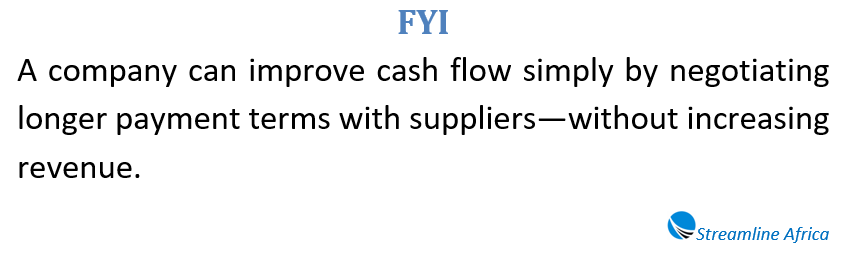
Large or influential companies often have the leverage to negotiate longer payment terms with suppliers. This allows them to hold onto cash for longer periods without damaging relationships. In such cases, a lower turnover ratio is not necessarily negative—it may indicate strong bargaining power.
Smaller businesses, however, may not have the same flexibility. They might be required to pay more quickly to maintain supplier trust. In these situations, a higher turnover ratio could reflect limited negotiating strength rather than superior financial performance.
Therefore, understanding the context—such as company size, industry norms, and supplier relationships—is crucial when analyzing this metric.
Practical Example to Illustrate the Concept
Imagine a company that purchases goods worth a significant amount over a year. At the beginning of the year, its outstanding payables are moderate, and by the end, they have slightly increased. When averaged, the payable balance provides a baseline for comparison.
By dividing total purchases by this average payable balance, we arrive at the turnover ratio. If the result shows multiple cycles within the year, it indicates that the company is clearing its obligations several times annually.
From this, we can also estimate the average number of days it takes to settle invoices. This dual perspective—frequency and timing—offers a comprehensive view of payment behavior.
What Makes a “Good” Turnover Ratio?
There is no universal benchmark for what constitutes a good accounts payable turnover ratio. The ideal range varies widely depending on industry standards, business models, and company strategy.
For example, companies in industries with strong supplier competition may negotiate longer payment terms, resulting in lower turnover ratios. Meanwhile, businesses in industries with tight supplier networks may need to pay quickly, leading to higher ratios.
Rather than comparing a company’s ratio in isolation, it is more meaningful to compare it with peers in the same industry. Trends over time also matter—consistent improvement or stability is often more valuable than a single high or low figure.
Strategic Implications for Businesses
Accounts payable turnover is more than just a financial metric—it has strategic implications.
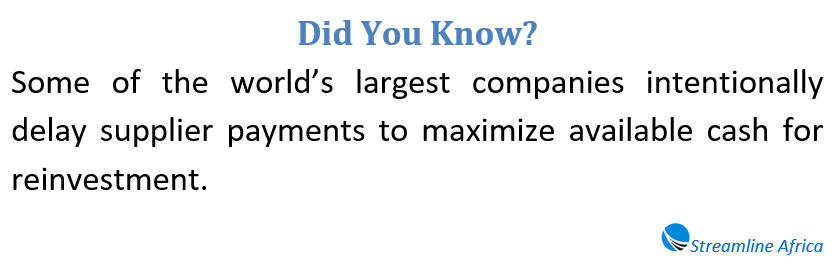
Companies that manage their payables effectively can optimize cash flow, ensuring that funds are available for operations, investments, or unexpected expenses. Delaying payments within agreed terms allows businesses to use cash more efficiently without incurring penalties.
At the same time, maintaining good relationships with suppliers is critical. Consistently late payments can damage trust, lead to stricter credit terms, or even disrupt supply chains.
The challenge lies in striking the right balance between conserving cash and maintaining strong partnerships.
Common Pitfalls to Watch Out For
While accounts payable turnover is a valuable metric, it is not without limitations. One common mistake is interpreting the ratio without context. A low ratio might seem alarming, but it could be part of a deliberate strategy.
Another issue is relying on incomplete data. If total purchases include both cash and credit transactions, the ratio may not accurately reflect payment behavior.
Seasonal fluctuations can also distort the ratio. Businesses with uneven purchasing patterns may show misleading results if the analysis does not account for timing differences.
Bringing It All Together
Accounts payable turnover offers a window into how a company manages its short-term obligations and relationships with suppliers. It highlights the balance between paying promptly and maintaining sufficient liquidity.
Rather than viewing the ratio as inherently good or bad, it should be interpreted within the broader context of the company’s strategy, industry environment, and financial position.
When used thoughtfully, this metric becomes a powerful tool for understanding operational efficiency and guiding smarter financial decisions.
Accounts Payable Turnover – Frequently Asked Questions
What does accounts payable turnover really measure?
It shows how often a business pays its suppliers within a period, giving insight into how quickly it settles its short-term obligations.
Why is this ratio important for businesses?
It helps assess cash flow management, supplier relationships, and overall financial discipline, making it useful for managers and investors alike.
How is accounts payable turnover calculated?
It is calculated by dividing total supplier credit purchases by the average accounts payable balance over a specific period.
What does a high turnover ratio indicate?
It usually means the company pays suppliers quickly, which may reflect strong liquidity or a preference for maintaining good supplier relationships.
Is a low turnover ratio always a bad sign?
Not necessarily. It can indicate strategic cash management or strong bargaining power, but it may also signal cash flow challenges.
How is this ratio connected to payment timing?
It can be converted into days, showing the average time a company takes to pay suppliers, making it easier to interpret in real-world terms.
What role does supplier negotiation play in this metric?
Companies with stronger negotiating power can delay payments longer, resulting in a lower turnover ratio without harming relationships.
Can industry type affect the ratio?
Yes, different industries have different payment norms, so comparing companies within the same industry gives more meaningful insights.
What is the biggest mistake when using this ratio?
Looking at the number alone without context—understanding the company’s strategy and environment is key to accurate interpretation.