

In business and finance, the term backlog often signals that tasks or obligations are piling up faster than they can be completed. In accounting specifically, a backlog usually means financial activities that remain unprocessed or delayed, such as invoices, reconciliations, or reports. Left unattended, these backlogs can interfere with decision-making, compliance, and growth.
But backlogs are not always negative. In some cases, they may reflect strong demand, as when sales orders exceed production capacity. To understand how backlogs function in accounting and finance, it’s important to explore their causes, types, and consequences, along with real-world examples that illustrate both the risks and opportunities.
What Is Backlog in Accounting?
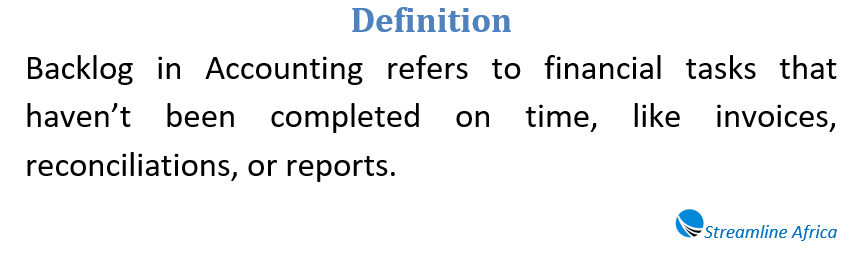
Backlog in accounting refers to unfinished financial tasks that have not been recorded, reconciled, or reported on time. This can include unpaid invoices, unposted journal entries, unreconciled bank statements, or delayed financial reports.
When these activities accumulate, they create confusion, increase the chance of errors, and can even damage a company’s financial standing. Businesses that fall behind in accounting often face difficulties in meeting tax deadlines, preparing accurate financial statements, or presenting reliable numbers to stakeholders.
At its simplest, backlog is a sign that financial records are not being updated in step with the flow of business transactions. Without timely record-keeping, companies lose visibility into their real financial position.

Types of Backlogs in Accounting
Backlogs come in different forms, each with unique challenges. Some are operational, tied to day-to-day activities, while others are regulatory, connected to compliance and reporting deadlines.
Invoice Backlog
When invoices from customers or suppliers remain unprocessed, it creates confusion around what is owed and what is due. This often leads to missed payments, strained vendor relationships, or delays in receiving revenue.
Journal Entry Backlog
Journal entries form the backbone of financial reporting. If debits and credits are not entered into the ledger on time, entire statements become unreliable. Even a small delay can ripple through financial reports, affecting audits and tax compliance.
Bank Reconciliation Backlog
Reconciliation ensures company records match the bank’s statements. Delays in reconciling accounts can hide errors or even fraud. Without regular reconciliation, businesses risk misreporting cash balances and making poor liquidity decisions.
Financial Statement Backlog
When reports such as income statements or balance sheets are not prepared on time, management and investors lose a vital tool for decision-making. This backlog delays strategic planning and compliance filings.
Tax Filing Backlog
Missed tax filings—whether for VAT, payroll, or corporate income—carry severe consequences. In many jurisdictions, failing to meet filing deadlines results in penalties, interest charges, and potential legal action.
Triggers for Falling Behind
Several factors can push businesses into backlog situations:
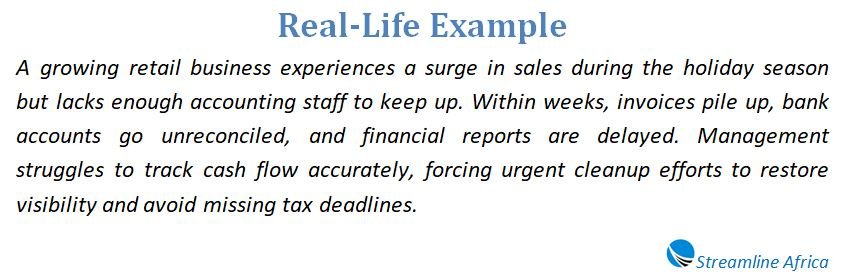
- Rapid Growth: Expanding companies often face surges in transactions, overwhelming existing accounting systems.
- Limited Staff: Small businesses without dedicated accountants may struggle to balance multiple roles, leaving financial work undone.
- Outdated Systems: Manual or old accounting software slows down processes and increases the chance of errors.
- Regulatory Changes: New tax laws or compliance rules, such as the introduction of VAT in the UAE, can catch companies unprepared.
- Seasonal Activity: Retailers and contractors often experience heavy peaks in activity that strain accounting teams, creating delays.
Backlog Beyond Accounting: A Broader View
In finance and operations, the concept of backlog extends beyond bookkeeping. It can also describe sales orders or production work that remains unfulfilled. For example, a construction company may have contracts lined up but not enough capacity to execute them immediately, resulting in a project backlog.
Similarly, subscription-based businesses like SaaS providers often report backlogs in the form of future revenues under contract. These are not negative—they simply represent income that will be recognized as services are delivered.
Backlogs as a Double-Edged Sword
Backlogs can send mixed signals. On one hand, they may show inefficiency, poor planning, or under-resourced teams. On the other, they may reflect strong demand that outpaces current capacity.
- Positive backlog: High order volumes that temporarily exceed capacity, indicating customer interest and potential revenue growth.
- Negative backlog: Administrative or operational delays that hinder reporting accuracy, compliance, or service delivery.
Understanding whether a backlog represents growth or mismanagement is critical for interpreting its meaning.
Real-World Examples of Backlogs
Backlogs are not abstract concepts—they play out visibly across industries.
- Apple’s iPhone Launch: When Apple released the iPhone X in 2017, demand overwhelmed supply, leading to weeks of shipping delays. While some saw this as poor forecasting, it also demonstrated exceptional demand.
- The 2008 Housing Crisis: Lenders accumulated massive foreclosure backlogs when homes defaulted faster than paperwork could be processed. This left many borrowers in their homes for years without paying, delaying recovery.
- Small Business Example: Imagine a T-shirt company capable of printing 1,200 shirts per day. If demand suddenly jumps to 2,400 daily orders, the firm quickly develops a daily backlog of 1,200 shirts until production expands.
These cases show that while some backlogs reflect opportunity, others highlight structural weaknesses.
Long-Term Business Impact of Backlogs
Unchecked accounting backlogs can destabilize a business in multiple ways:
- Inaccurate Reports: Without updated records, financial statements misrepresent the company’s condition, making it hard to budget or attract investors.
- Compliance Risks: Missed tax filings invite penalties, audits, and potential legal action.
- Poor Forecasting: Incomplete records undermine forecasts, making expansion or funding risky.
- Operational Delays: Vendors may stop deliveries over unpaid invoices, while customers may lose trust over billing delays.
- Audit Exposure: Weak records draw scrutiny from regulators, increasing the chance of disruptive audits.
Managing and Clearing Backlogs
Dealing with backlogs requires both cleanup and prevention. Businesses often turn to specialized accounting services for help. The process typically involves:
- Comprehensive Cleanup: Reviewing financial records, organizing documents, reconciling accounts, and preparing overdue reports.
- Tax Filing Support: Completing outstanding VAT or income tax submissions to restore compliance.
- Accurate Reporting: Producing up-to-date statements to re-establish financial clarity.
- Modern Tools: Using cloud-based software to speed up processing and reduce human error.
- Ongoing Monitoring: Preventing future backlogs with routine checks, automated workflows, and adequate staffing.
Lessons for Businesses
From these insights, a few key lessons emerge:
- Backlogs are warning signs. Whether caused by rapid growth, poor systems, or external shocks, they should never be ignored.
- Not all backlogs are harmful. Sales order backlogs can represent healthy demand but must be managed strategically.
- Prevention is better than cure. Investing in staff, systems, and processes reduces the risk of falling behind.
- Transparency matters. Clear communication with vendors, customers, and investors helps maintain trust, even when backlogs occur.
Conclusion
Backlogs in accounting and finance represent more than just delayed paperwork. They reflect the intersection of business growth, operational capacity, and financial discipline. While some backlogs may highlight success—like an overflow of orders—others reveal gaps that can harm compliance, operations, and long-term stability.
By recognizing the types of backlogs, understanding their causes, and implementing effective solutions, businesses can regain control and avoid costly consequences. Whether through modern technology, professional services, or better staffing, tackling backlogs ensures that financial records remain accurate and that opportunities are not lost to inefficiency.
In short, backlogs tell a story—sometimes one of thriving demand, other times of dangerous neglect. The challenge for every business is to understand the message and act before small delays grow into serious problems.

FAQs about Backlogs
Are backlogs always a bad sign?
Not always. They can mean inefficiency, but in sales they might show high demand that temporarily outpaces capacity.
What are the common types of accounting backlogs?
Invoices, journal entries, bank reconciliations, financial statements, and tax filings.
Why do businesses fall into backlog?
Rapid growth, limited staff, outdated systems, regulatory changes, or seasonal workload spikes can all cause delays.
How does an invoice backlog affect a company?
It can lead to unpaid bills, late collections, and poor cash flow visibility.
What is the risk of a tax filing backlog?
Missing deadlines brings penalties, fines, and possible audits from tax authorities.
Can backlogs impact financial forecasting?
Yes. Without up-to-date records, businesses struggle to predict revenue, expenses, or plan for growth.
How do backlogs affect daily operations?
Vendors may delay supplies over unpaid bills, and customers may lose trust if invoicing is slow.
How can businesses clear accounting backlogs?
By cleaning up records, reconciling accounts, filing overdue taxes, and using modern cloud-based tools.
What’s the best way to prevent backlogs?
Invest in proper accounting staff, update systems, and monitor records regularly to stay current.