
Latest posts
-
Core Assets vs Non-Core Assets: A Complete Guide to Business Survival and Long-Term Growth

Every business, no matter its size or sector, relies on certain critical resources to stay productive and profitable. These essential resources are known as core assets, and they form the backbone of an organization’s ability to operate consistently and compete effectively. When people discuss what keeps a company running, they are usually referring to these…
-
What the Output Gap Reveals About GDP, Inflation, and Recession Risks
Economists often look for ways to understand whether an economy is running smoothly or facing strain, and one of the key tools used to make this judgment is the output gap. This measure compares what an economy is currently producing with what it could produce if all resources—labour, capital, and technology—were being used efficiently. Although…
-
What Are Kondratiev Waves? The Long-Term Economic Cycles Driving Global Growth
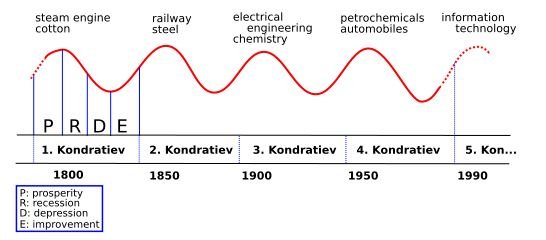
Introduction to the Long Economic Wave Concept For more than a century, economists, historians, and analysts have attempted to understand why modern economies experience long stretches of prosperity followed by equally long periods of slowdown. One of the most debated explanations is the idea of Kondratiev waves, a term used to describe long-term economic cycles…
-
How the Robin Hood Effect Influences Wealth, Policy, and Social Equity

The concept widely known as the Robin Hood effect refers to the redistribution of economic resources in a way that reduces inequality by shifting wealth or opportunity from those who have more to those who have less. The term draws its inspiration from the English folklore hero Robin Hood, who famously “took from the rich…
-
What Net Debt Per Capita Reveals About a Country’s Fiscal Health

Net debt per capita is a concept that frequently surfaces in discussions about public finance, especially when the conversation turns toward how heavily indebted a government may be. While the phrase itself might sound technical, its underlying idea is straightforward: it represents the amount of government debt that would theoretically be assigned to each individual…
-
How Net Foreign Factor Income Transforms GDP and GNP: A Clear Guide to Cross-Border Earnings
As the world becomes increasingly interconnected, the flow of money, labor, and business activity across borders has grown dramatically. This shift has made it more important than ever to understand how income earned abroad and income earned domestically by foreign entities affect a nation’s economic story. Net foreign factor income (NFFI) is a key concept…
-
How Infrastructure Investment Fuels Economic Growth

When governments face periods of economic stagnation or declining business activity, one of the tools they frequently turn to is infrastructure spending. Roads, power systems, water networks, and other large-scale public projects play a foundational role in keeping an economy functional. These systems are used by everyone—households, businesses, and industries—so improvements often have wide-reaching effects.…
-
How Ghanaian Entrepreneurs Can Access Small Business Grants to Grow and Expand Their Companies

Securing adequate funding remains one of the biggest challenges for small business owners in Ghana. While loans from banks, microfinance institutions, and personal investment often dominate the conversation, grants offer a unique advantage: they do not need to be repaid. These grants are provided by a mix of public institutions, local government bodies, NGOs, and…
-
What Funding Gaps Really Mean for Businesses and Public Institutions

Every organization, whether a small start-up or a large government agency, depends on consistent financial resources to function smoothly. Yet many institutions find themselves dealing with a shortfall between what they need to operate and what they currently have available. This space between required resources and actual funding is known as a funding gap. It…
-
How to Climb the Corporate Ladder: Proven Strategies, Real Success Stories, and Career Growth Insights

The idea of a corporate ladder is a metaphor used to describe how jobs in an organization are arranged from the most junior roles to the highest positions of leadership. Picture a ladder with wide lower rungs that accommodate many entry-level employees and narrower upper rungs where only a select few executives operate. As people…