
Every business, no matter how efficient, eventually runs into bottlenecks—those frustrating points where work slows down or grinds to a halt. These obstacles may appear in production, logistics, customer service, or even administrative processes. Left unchecked, they can drain resources, frustrate employees, and impact customer satisfaction. Over time, bottlenecks make it harder for a company to grow and compete effectively.
The good news is that with a systematic approach, these roadblocks can be identified, addressed, and even prevented in the future. By freeing up capacity and streamlining operations, businesses gain more time and energy to focus on what really drives growth.

Look Closely at How Work Flows
The first step in fixing bottlenecks is to truly understand how work moves through your company. From the moment a customer places an order to the time the final product or service is delivered, many steps take place behind the scenes. Inefficiencies can creep in when processes are poorly designed, outdated, or dependent on unclear roles.
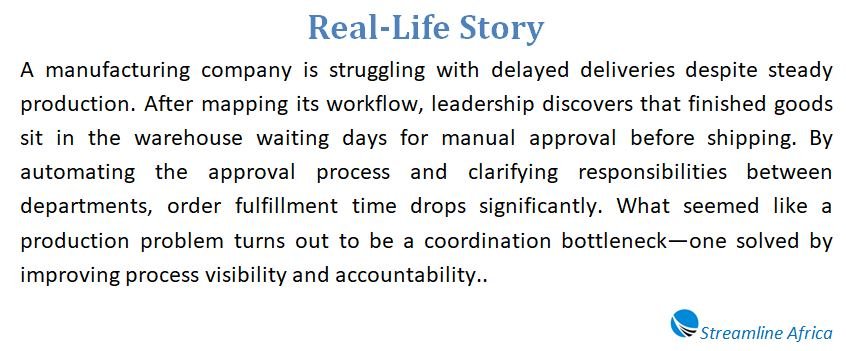
Creating a visual map of your workflows helps bring hidden problems to the surface. Flowcharts or process-mapping software allow you to spot where tasks are piling up or waiting for approvals. Sometimes, simply laying out the entire process reveals unnecessary steps or unclear handoffs that nobody noticed before.
This kind of review makes it easier to distinguish between occasional slowdowns and recurring issues that indicate a deeper structural bottleneck.
Use Data to Pinpoint Weak Spots
While gut feelings may highlight some problem areas, data provides a clearer and more reliable picture. Tracking the right performance metrics helps uncover where efficiency breaks down. For example:
- Monitoring output levels shows whether production is keeping pace with demand.
- Checking average delivery times highlights issues in logistics or order fulfillment.
- Tracking error or defect rates helps identify quality control problems.
- Customer satisfaction surveys reveal whether service delays or frustrations are hurting loyalty.
- Measuring how long certain tasks take can uncover underused resources or processes that take longer than expected.
Regularly reviewing these numbers keeps leaders from being caught off guard and helps them address issues before they spiral into larger problems.
Watch Work in Action
Data tells part of the story, but direct observation often reveals details that numbers alone can’t. Spending time on the floor, shadowing employees, or sitting in on team processes helps leaders see how work really gets done.
During these observations, look for recurring delays, duplicated efforts, or steps that don’t add value. Employees may be waiting for approvals, juggling outdated tools, or finding workarounds for inefficient systems. These patterns are often invisible until you see them play out in real time.
Adding technology such as workflow monitoring software or analytics dashboards makes it easier to track these trends consistently. Combining firsthand observation with digital insights gives a fuller picture of where processes are stalling.
Tap Into Employee Knowledge
Employees who deal with systems and customers every day often know exactly where the pain points lie. They experience bottlenecks firsthand and may already have ideas for solutions. The challenge is that many don’t feel empowered to share their observations unless leaders actively invite their input.
Creating open channels for communication—whether through feedback sessions, anonymous surveys, or regular team check-ins—encourages employees to speak up. Showing that their ideas are taken seriously not only helps uncover bottlenecks but also builds engagement and morale.
Evaluate Your Tools and Systems
Even the most talented team can be held back by outdated tools or inefficient systems. Software that once served the company well may no longer keep up with modern needs. Old equipment can slow down production, and manual processes may struggle to scale as demand grows.
To address this, businesses should regularly review the systems they rely on. Ask whether they are still meeting the organization’s needs or if newer, more efficient alternatives are available. Upgrading may involve investing in automation, customer relationship management platforms, or modern collaboration tools. While these changes require upfront effort, they often save time and money in the long run.

Compare Performance Against Industry Standards
Another effective way to spot bottlenecks is to benchmark performance against competitors or industry averages. If your delivery times, production output, or customer satisfaction scores lag behind others in your field, this can signal an underlying efficiency problem.
Once gaps are identified, set clear and realistic improvement goals. These targets should focus on the specific processes that are underperforming. For example, if order fulfillment is slower than competitors, create a roadmap to streamline warehousing, shipping, or payment systems. Benchmarking provides both motivation and a framework for meaningful improvement.
Build a Culture of Continuous Improvement
Fixing bottlenecks shouldn’t be a one-time project. Businesses that thrive in the long run make continuous improvement part of their culture. That means regularly reviewing workflows, listening to employees, analyzing performance data, and being willing to make changes as new challenges arise.
This proactive mindset ensures that inefficiencies are caught early and resolved before they grow into serious problems. More importantly, it fosters an environment where innovation is encouraged, and teams feel responsible for contributing to smoother operations.
The Payoff of Removing Bottlenecks
Identifying and resolving bottlenecks frees up resources, improves employee satisfaction, and enhances customer experiences. When processes run smoothly, businesses can respond faster to demand, deliver higher-quality products or services, and scale more effectively.
While addressing these inefficiencies may take time and careful planning, the benefits are worth the effort. Removing roadblocks not only makes day-to-day work easier but also strengthens the foundation for long-term growth and competitiveness.
Frequently Asked Questions about Business Bottlenecks
How can mapping workflows help uncover bottlenecks?
Creating a visual map of how tasks and resources move through your business makes it easier to spot delays, redundancies, or areas where work piles up.
Why is performance analysis important in this process?
Tracking KPIs like production speed, delivery times, and customer satisfaction reveals where operations are falling short and helps you measure progress over time.
Can observation add value beyond data analysis?
Yes. Watching processes in real time shows hidden inefficiencies that numbers alone might not reveal, such as unnecessary steps or task repetition.
How do employees help identify bottlenecks?
Frontline staff experience processes daily and often know where issues occur. Encouraging open feedback lets them share insights that leadership may miss.
Why should businesses audit tools and systems regularly?
Outdated or inefficient tools create roadblocks. Regular reviews ensure your technology and equipment keep up with modern demands and industry standards.
What role does benchmarking play in fixing bottlenecks?
By comparing your performance with competitors or industry standards, you can identify gaps, set realistic goals, and track improvement more effectively.