

Business acquisition refers to a transaction in which one enterprise takes control of another by purchasing its operations, assets, or ownership stake. In practical terms, it is the transfer of an existing business from one owner to another, often involving a transition from a sole trader or partnership into a corporate structure. This transformation is usually driven by strategic motives such as scaling operations, improving efficiency, or accessing broader financing options.
In many economies, small and medium-sized enterprises frequently evolve into limited liability companies to unlock growth potential. When such a transition occurs through a sale to a company or through incorporation, the process is categorized as an acquisition. The party that takes over the business is commonly referred to as the acquiring entity, while the seller is known as the vendor.
Acquisitions are not limited to large corporations making headlines. They occur regularly among smaller firms seeking expansion, consolidation, or survival in competitive markets. Regardless of size, the underlying principle remains consistent: control shifts from one party to another through an agreed financial arrangement.
Why Businesses Choose Acquisition as a Strategy
Organizations pursue acquisitions for a variety of strategic and operational reasons. One of the most common motivations is expansion into new markets. Instead of building operations from scratch, acquiring an established business provides immediate access to customers, infrastructure, and brand recognition.
Another key driver is growth acceleration. When internal expansion becomes constrained by limited resources or logistical challenges, acquiring another firm can offer a faster route to increased revenue and capacity. This approach is particularly attractive in industries where speed to market is critical.
Acquisitions are also used to reduce competition. By purchasing a rival, a company can strengthen its market position and potentially improve pricing power. In addition, businesses may acquire firms to gain access to new technologies, specialized skills, or intellectual property that would otherwise require significant time and investment to develop internally.
Cost efficiency is another important consideration. Integrating operations can lead to economies of scale, where combined production and administrative processes reduce overall costs. In some cases, acquisitions are undertaken simply to diversify risk by entering different sectors or product lines.

Determining the Purchase Consideration
A central element in any acquisition is the purchase consideration, which represents the total amount the buyer agrees to pay for the business. This figure is negotiated between the buyer and seller and reflects the perceived value of the enterprise.
Payment for an acquisition can take several forms. It may involve cash, shares issued by the acquiring company, debt instruments such as debentures, or a combination of these. The structure of payment often depends on the financial position of the buyer and the preferences of the seller.
In some situations, the agreed price is a single lump sum. However, this figure must be carefully evaluated against the actual value of the business being acquired. This comparison helps determine whether the buyer is paying a premium or securing a bargain.
Approaches to Calculating the Acquisition Price
Two primary methods are commonly used to determine the purchase consideration. The first is the net asset approach, which focuses on the value of assets and liabilities being transferred. Under this method, the buyer calculates the total value of assets acquired and subtracts any liabilities assumed. The resulting figure represents the net worth of the business.
The second approach is based on the total payments made by the acquiring company. This method involves adding together all forms of consideration provided, including cash payments, shares issued, and any other financial instruments. The sum of these components constitutes the acquisition price.
Both methods ultimately aim to establish a fair valuation, though they may produce different perspectives depending on how assets and liabilities are assessed. In practice, negotiations often incorporate elements of both approaches.
Goodwill and Capital Reserve in Acquisitions
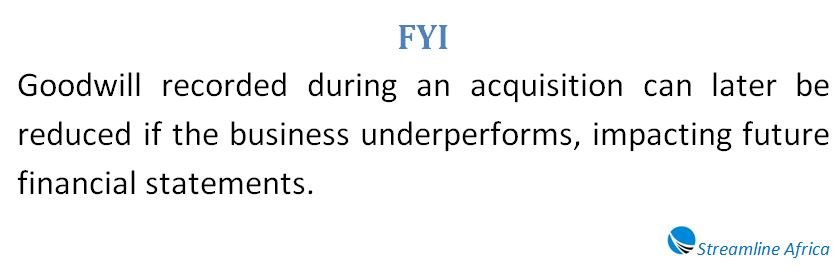
When the agreed purchase price differs from the net value of identifiable assets, the difference must be accounted for appropriately. If the buyer pays more than the net assets acquired, the excess is recorded as goodwill. This represents intangible benefits such as brand reputation, customer loyalty, and future earning potential.
Conversely, if the purchase price is lower than the net asset value, the difference is recognized as a capital reserve. This situation may arise when the seller is motivated to exit quickly or when the business is undervalued for strategic reasons.
These adjustments are essential in ensuring that the financial statements of the acquiring company accurately reflect the economic reality of the transaction. They also play a role in future financial reporting, particularly in relation to impairment and profitability.
Accounting Treatment When a New Set of Books Is Created
In many acquisitions, the purchasing company establishes a fresh set of accounting records to reflect the newly acquired business. This approach provides a clean starting point for tracking assets, liabilities, and equity under the ownership of the acquiring entity.
The accounting process begins with recording the assets and liabilities taken over at their agreed values. The purchase consideration is then recorded, and any difference between this amount and the net assets is adjusted through goodwill or capital reserve.
Subsequent entries reflect how the purchase consideration is settled, whether through cash payments, issuance of shares, or other financial instruments. Once these entries are completed, a new balance sheet is prepared to present the financial position of the combined entity.
This method is particularly useful when the acquisition involves significant restructuring or when the acquiring company wants to maintain clear separation from the seller’s historical records.
Continuing with the Existing Accounting Records
In some cases, instead of opening new books, the acquiring company may continue using the existing accounting records of the business. This approach is often adopted when a partnership converts into a company without substantial operational disruption.
Under this method, adjustments are made directly within the existing books to reflect the new ownership structure. Assets and liabilities may be revalued to align with their current market worth. Any differences arising from revaluation are transferred to the capital accounts of the previous owners.
Items not taken over by the new company are removed from the records and settled accordingly. Undistributed profits are also allocated among the former owners before the transition is finalized. Finally, the adjusted capital balances are converted into share capital in the new company.
This approach simplifies the transition process but requires careful adjustments to ensure accuracy and compliance with accounting standards.
Handling Debtors and Creditors During Acquisition
An important consideration in acquisitions is whether the buyer will assume responsibility for the seller’s receivables and payables. In some cases, the acquiring company may choose not to take over these balances due to uncertainty about their realization or settlement.
When receivables are included, there is always a risk that some debts may not be fully collected. Similarly, liabilities may turn out to be higher than initially estimated. To manage these risks, agreements often include guarantees or retention clauses.
For example, a portion of the purchase price may be withheld as security against potential losses from uncollected debts. If the receivables are successfully recovered, the retained amount is released to the seller. Otherwise, it is used to offset any shortfall.
Alternatively, the acquiring company may act as an agent on behalf of the seller, collecting debts and settling liabilities without formally taking ownership of them. In such arrangements, the company typically earns a commission for its services.
These mechanisms ensure that both parties are protected from unforeseen financial exposures while maintaining fairness in the transaction.
Key Considerations Before Finalizing an Acquisition
Before proceeding with an acquisition, the buyer must conduct thorough due diligence. This involves examining the financial health of the target business, including its assets, liabilities, revenue streams, and profitability.
One critical factor is whether the asking price aligns with industry benchmarks. Overpaying for a business can undermine the financial viability of the deal. Similarly, excessive debt levels in the target company may signal underlying risks that need to be addressed.
Legal considerations are equally important. Ongoing litigation or regulatory issues can create future liabilities for the acquiring company. Reviewing contracts, compliance records, and legal obligations helps mitigate these risks.
Transparent and well-maintained financial statements are another key requirement. They enable the buyer to make informed decisions and reduce the likelihood of unpleasant surprises after the acquisition is completed.
Acquisition Compared to Mergers and Takeovers
Although often used interchangeably, acquisitions, mergers, and takeovers have distinct characteristics. In an acquisition, one company takes control of another, which continues to exist as part of the acquiring entity.
A merger, on the other hand, involves two companies combining to form a completely new organization. This typically occurs between firms of similar size and strength, with both parties contributing to the creation of a new identity.
Takeovers can resemble acquisitions but often carry a more aggressive connotation. In hostile scenarios, the target company resists the purchase, and the acquiring firm gains control by directly acquiring shares from shareholders.
Despite these differences, all three strategies fall under the broader category of corporate restructuring and are used to achieve growth, efficiency, and competitive advantage.
Types of Business Acquisitions
Acquisitions can be classified based on the relationship between the acquiring and target companies. A vertical acquisition occurs when a company purchases another within its supply chain, such as a supplier or distributor. This helps improve operational efficiency and control over production processes.
A horizontal acquisition involves acquiring a competitor operating in the same industry. This strategy is often used to increase market share and reduce competition.
Conglomerate acquisitions take place when a company buys a business in an entirely different industry. This approach is typically used for diversification and risk management.
Congeneric acquisitions occur between companies in related industries with similar markets but different products. These transactions allow firms to expand their offerings while leveraging existing expertise and customer bases.
Concluding Perspective on Business Acquisition
Acquiring a business is a multifaceted process that combines financial analysis, strategic planning, and careful negotiation. Whether undertaken by small enterprises or large corporations, acquisitions serve as a powerful tool for growth and transformation.
From determining the purchase price to handling accounting treatments and managing operational risks, each stage requires precision and informed decision-making. When executed effectively, an acquisition can unlock new opportunities, strengthen market position, and create long-term value.
However, success is not guaranteed. Thorough evaluation, realistic valuation, and clear contractual terms are essential to ensuring that the transaction delivers the intended benefits. In a dynamic business environment, acquisitions remain a central mechanism through which companies adapt, compete, and evolve.
Commonly Asked Questions
What does acquiring a business really involve?
It means one company takes control of another by purchasing its assets, operations, or ownership stake. The buyer steps into the seller’s position and continues or restructures the business under new ownership.

Why would a company choose to acquire another business?
Firms often acquire others to grow faster, enter new markets, reduce competition, or gain access to valuable resources like technology, skilled staff, or established customer bases.
How is the purchase price for a business determined?
The price is agreed upon by both parties and can be based on asset values, expected future earnings, or a combination of payments such as cash, shares, or debt instruments.
What is the difference between net asset and net payment methods?
The net asset method focuses on assets minus liabilities, while the net payment method looks at the total value of what the buyer gives in exchange, such as cash and shares.
What is goodwill in a business acquisition?
Goodwill arises when the buyer pays more than the value of the identifiable net assets. It reflects intangible benefits like reputation, brand strength, and customer loyalty.
When does a capital reserve occur?
A capital reserve is created when a business is purchased for less than its net asset value, meaning the buyer gains extra value from the transaction.
What are the two main accounting approaches after acquisition?
A company can either open a completely new set of accounting records or continue using the existing books with adjustments to reflect the new ownership.
Why might a buyer avoid taking over debtors and creditors?
There is risk involved, such as unpaid debts or underestimated liabilities. To manage this, buyers may exclude them or include guarantees to protect against losses.
What is due diligence and why is it important?
Due diligence is a detailed review of the target company’s financial, legal, and operational status. It helps the buyer avoid hidden risks and make informed decisions.
How is an acquisition different from a merger or takeover?
An acquisition involves one company taking control of another, a merger creates a new combined entity, and a takeover often happens without the target’s full agreement.