

For African Americans considering Ghana as a place to live, invest, or build long-term economic roots, the conversation must go beyond cultural return. While Ghana’s historical and emotional connection to the African diaspora remains powerful, sustainable relocation depends heavily on business planning, financial readiness, trusted partnerships, and a clear understanding of the local market.
Ghana offers several opportunities for diaspora entrepreneurs, investors, professionals, and homebuyers. These opportunities cut across real estate, agribusiness, tourism, hospitality, education, technology, financial services, and local manufacturing. However, success requires more than enthusiasm. It requires proper due diligence, a realistic budget, cultural awareness, legal guidance, and a long-term strategy.
Ghana as a Business Destination for the Diaspora
Ghana has become one of West Africa’s most visible destinations for members of the African diaspora seeking to establish personal and commercial ties on the continent. Its English-speaking environment, political visibility, growing urban economy, and active diaspora networks make it attractive for African Americans exploring relocation or investment.
For business-minded repatriates, Ghana can serve as both a home base and an entry point into broader West African markets. Accra, Tema, Kumasi, Takoradi, Cape Coast, and other emerging urban centers present opportunities in services, housing, logistics, food, education, and trade. However, investors must approach the market with research and patience. Ghana is full of opportunity, but it is not a market where assumptions should replace evidence.

Entrepreneurship Opportunities in Key Sectors
Diaspora entrepreneurs can find strong business potential in sectors where Ghana has rising demand, infrastructure gaps, or underdeveloped value chains. Tourism remains one of the most obvious areas, especially because diaspora travel to Ghana continues to create demand for curated experiences, accommodation, transport, cultural education, food services, and event management.
Hospitality is another important space. As more international visitors, remote workers, business travelers, and returnees spend time in Ghana, demand grows for reliable short-term housing, boutique hotels, serviced apartments, restaurants, wellness spaces, and professional customer service. Entrepreneurs with experience in American service standards may find opportunities to build businesses that combine Ghanaian culture with efficient operations.
Education also offers room for innovation. Diaspora families relocating to Ghana often look for schools, tutoring services, cultural education programs, skills training, and hybrid learning options. Entrepreneurs can explore African-centered education, technology-supported learning, vocational training, business coaching, and professional development programs.
Technology, fintech, coding, artificial intelligence, digital marketing, and business process support are also promising fields. Ghana has a young population, growing digital adoption, and increasing demand for solutions that improve payments, logistics, agriculture, retail, and customer management.
Agribusiness and Local Manufacturing
Agribusiness is one of Ghana’s most important investment areas. The country produces cocoa, maize, cassava, shea, tomatoes, pineapples, and other agricultural products. Yet many of these products leave the country in raw or semi-processed form, while finished goods are imported at higher prices. This creates a major opening for investors who can support value addition.
African American investors do not necessarily need to buy farmland to participate in Ghana’s agricultural economy. In many cases, the stronger opportunity may be in processing, packaging, storage, branding, logistics, and distribution. A small factory that processes tomatoes, fruit, cassava, cocoa, or shea can create more value than simply owning land without a clear operating model.
Food processing, canning, chocolate production, shea-based cosmetics, cold storage, animal feed, and agro-logistics are practical areas to explore. These businesses can create jobs, support farmers, reduce post-harvest losses, and help Ghana retain more value locally. However, investors must carefully assess supply availability, power costs, machinery, food safety rules, packaging standards, and access to markets before committing capital.
Real Estate and Housing as an Investment Area
Real estate is one of the most attractive sectors for diaspora investors, but it is also one of the areas that requires the greatest caution. Many African Americans want to buy land, build homes, or develop rental properties in Ghana. The demand is real, especially in and around Accra, where population growth, diaspora interest, and urban expansion continue to drive housing needs.
However, property investment must be handled professionally. Land title disputes, informal sales, unclear ownership, unverified agents, and poorly supervised construction can lead to serious financial loss. Investors should avoid relying only on verbal assurances, family connections, or emotional attachment to a location. Every land or housing transaction should involve legal review, proper documentation, title verification, and clear payment terms.
For those living outside Ghana, remote construction adds another layer of risk. A trusted developer or structured housing platform can help reduce this risk by providing contracts, progress reports, photos, payment records, construction timelines, and customer support. Transparency is essential. Diaspora buyers need systems that allow them to monitor their investment even when they are not physically present.
Financing Property and Business Ventures
Access to finance is one of the biggest challenges for African Americans who want to build or invest in Ghana. Many real estate developers require large deposits and short repayment periods. For example, a buyer may be asked to make a substantial down payment and complete payment within a limited time. This can be difficult for middle-income buyers who need longer-term financing.
Mortgage-style arrangements, diaspora-focused housing finance, and structured payment plans can help make property ownership more realistic. Investors should carefully review interest rates, repayment timelines, ownership conditions, lien arrangements, completion guarantees, and penalties before signing any agreement.
Business financing also requires planning. Entrepreneurs may need capital for registration, equipment, rent, staff, permits, inventory, transport, marketing, and working capital. It is important to prepare a realistic budget that includes delays and unexpected costs. Ghana’s business environment may involve slower approvals, changing prices, import costs, and informal operating realities that must be accounted for.
Banking, Remittances, and Cross-Border Money Movement
Financial infrastructure is central to successful relocation and investment. African Americans doing business in Ghana need reliable ways to save, transfer, invest, and manage money across borders. This includes personal banking, business accounts, remittances, mobile money, international transfers, and payment platforms.
Diaspora-focused financial institutions and credit union models can support financial inclusion by helping underserved communities access capital and move money more efficiently. Lower-cost transfers, financial literacy, savings products, and community-based lending can help African Americans invest in Ghana with greater confidence.
However, investors must pay attention to exchange rates, transfer fees, compliance requirements, tax obligations, documentation, and currency risk. A business may earn income in Ghana cedis while some expenses, such as imported machinery or international loans, may be priced in dollars. This currency mismatch can affect profitability if not managed properly.
Employment Creation and Workforce Development
One of the strongest ways diaspora entrepreneurs can contribute to Ghana is through employment creation. Businesses in tourism, housing, construction, agriculture, logistics, education, and technology can create jobs for local workers while transferring skills and improving service standards.
However, investors must approach hiring with structure. Workplace expectations in Ghana may differ from those in the United States. Employers should invest in onboarding, training, supervision, clear job descriptions, performance standards, and communication systems. It is not enough to hire people and expect immediate alignment. Strong businesses are built by developing teams and creating systems that support accountability.
Training can become a competitive advantage. A company that builds reliable staff, consistent service, and strong customer care can stand out in a market where execution is often more important than the business idea itself.
Market Entry Strategy for Diaspora Entrepreneurs
Before launching a business in Ghana, African American entrepreneurs should take a phased approach. The first step is market research. This means understanding customers, pricing, competition, regulations, locations, suppliers, labor, and operating costs. The second step is relationship building. Local partners, lawyers, accountants, bankers, real estate professionals, and industry contacts can help reduce risk.
The third step is testing. Entrepreneurs should start small where possible, validate demand, and learn from the market before making large investments. A pilot project, short-term rental, small processing operation, or limited service launch can reveal practical challenges that may not appear in a business plan.
The fourth step is formalization. Business registration, tax compliance, employment contracts, permits, accounting systems, and proper governance are essential for long-term growth. Investors who want sustainable businesses must build with structure from the beginning.
Building Long-Term Economic Value
Ghana’s business environment presents real opportunities for African Americans who are prepared, patient, and strategic. The most promising areas include real estate, agribusiness, tourism, hospitality, education, fintech, professional services, and local manufacturing. These sectors align with Ghana’s development needs and the skills, capital, and networks that many diaspora investors can bring.
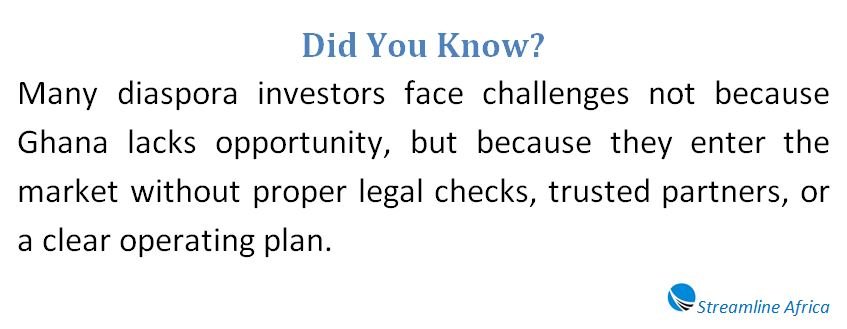
However, opportunity must be matched with discipline. Repatriates should avoid rushing into land purchases, informal partnerships, or emotionally driven investments. They should seek professional advice, understand the market, verify every major transaction, and plan for long-term sustainability.
For African Americans, doing business in Ghana can be more than personal investment. It can support job creation, local production, knowledge transfer, and intergenerational wealth. The strongest outcomes will come from those who combine cultural purpose with commercial clarity, financial discipline, and respect for the Ghanaian business environment.
Frequently Asked Questions
What Makes Ghana Attractive To African American Investors?
Ghana offers a strong mix of cultural connection, business opportunity, political visibility, and access to West African markets. For African American investors, it can serve as both a place of return and a platform for building long-term economic value.
Which Business Sectors Offer The Best Opportunities?
The article highlights real estate, agribusiness, tourism, hospitality, education, fintech, professional services, logistics, and local manufacturing as strong areas. These sectors align with Ghana’s growing economy and the needs of both locals and the diaspora.
Why Is Agribusiness A Major Opportunity?
Ghana produces important crops such as cocoa, maize, cassava, shea, tomatoes, and pineapples. The major opportunity is not only farming, but processing, packaging, branding, storage, and distribution, where investors can create more value locally.
Why Should Investors Be Careful With Real Estate?
Real estate is attractive, but land title issues, informal sales, unclear ownership, and unverified agents can create serious risks. Investors should always use legal professionals, verify documents, and avoid relying only on verbal assurances.
How Can Diaspora Buyers Build Homes Safely From Abroad?
They should work with trusted developers or structured housing platforms that provide contracts, payment records, photo updates, construction timelines, and clear customer support. Transparency is essential when the buyer is not physically in Ghana.
What Is The Biggest Financing Challenge?
Many property and business investments require large upfront payments. Short repayment periods can also make projects difficult for middle-income buyers. Diaspora-focused financing, longer payment plans, and mortgage-style models can make investment more realistic.
Why Is Banking Important For Repatriates?
Good banking systems help investors transfer money, save, pay suppliers, manage business funds, and support family or projects across borders. Investors must also consider exchange rates, transfer fees, tax issues, and currency risk.
How Can African Americans Contribute To Ghana’s Economy?
They can create jobs, transfer skills, support local production, invest in underserved sectors, and introduce stronger systems in customer service, training, finance, technology, and operations.
What Should Entrepreneurs Do Before Starting A Business?
They should conduct market research, understand local demand, study competition, build relationships, test the idea on a smaller scale, and formalize the business through proper registration, accounting, and compliance.
Why Is Workforce Training Important?
A good business idea is not enough. Entrepreneurs need reliable teams, clear job descriptions, proper onboarding, supervision, and performance standards. Strong training can become a major competitive advantage.
What Mistake Should New Investors Avoid?
They should avoid rushing into land purchases, informal partnerships, or emotionally driven investments. Ghana offers real opportunity, but every major decision should be backed by due diligence and professional advice.
What Is The Main Business Lesson From The Article?
The strongest opportunities in Ghana will benefit those who combine cultural purpose with commercial discipline. Success requires patience, financial planning, trusted partnerships, and respect for Ghana’s business environment.