
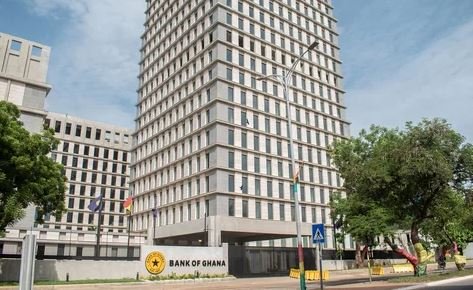
The idea that a central bank could make a loss often feels counterintuitive. In Ghana, this question frequently arises whenever the Bank of Ghana publishes financial results that show deficits instead of surpluses. For many observers, the reaction is immediate: how can an institution with the authority to issue the Ghanaian cedi ever run short of money?
The answer lies in a fundamental misunderstanding of what a central bank is—and what it is not.
Unlike commercial banks or private corporations, a central bank is not designed to maximize profit. Its role is broader, more technical, and rooted in maintaining stability across the entire economy. Once that distinction is clear, the idea of a central bank making losses becomes far less surprising—and far more logical.
Why “Printing Money” Isn’t a Solution
A common assumption is that the Bank of Ghana can simply print more money whenever it faces financial pressure. While it is true that the central bank has the authority to issue currency, this power is tightly constrained.
Money creation is a policy tool, not a funding mechanism for operational expenses.
If a central bank were to create money indiscriminately to cover losses, it would increase the amount of money circulating in the economy without a corresponding increase in goods and services. Over time, this leads to inflation—a general rise in prices that reduces the purchasing power of money.
In severe cases, excessive money creation can destabilize an economy entirely. That is why central banks operate within strict frameworks designed to balance liquidity with price stability. The ability to print money exists, but it must be used with precision and restraint.

The Real Costs of Running a Central Bank
The Bank of Ghana functions as a large, technically sophisticated institution, and like any organization, it has real operating costs.
These include:
- Compensation for economists, regulators, and support staff
- Development and maintenance of payment systems and financial infrastructure
- Currency production and nationwide distribution
- Banking sector supervision and regulatory enforcement
- Investment in cybersecurity and data systems
In addition to these direct costs, there are financial exposures that can affect its balance sheet. For example, fluctuations in exchange rates can change the value of foreign reserves. Likewise, shifts in interest rates can affect the valuation of financial assets held by the central bank.
These are not theoretical risks—they are part of the day-to-day financial reality of central banking.
Where the Bank of Ghana Earns Income
Although profit is not its primary objective, the Bank of Ghana generates income through several structured channels.
A major source is interest earned on government securities. Central banks often hold treasury instruments as part of monetary policy operations, and these assets generate returns over time.
Another source is lending to commercial banks, particularly during periods of liquidity stress. As the lender of last resort, the central bank provides short-term funding and earns interest on those facilities.
Additional income streams include:
- Fees from licensing and supervising financial institutions
- Returns on foreign exchange reserves invested internationally
- Seigniorage, which is the difference between the cost of producing currency and its face value
Despite these revenue sources, income can fluctuate depending on economic conditions, policy decisions, and market dynamics.
How Losses Occur in Practice
Central bank losses typically arise from the same kinds of financial forces that affect other large institutions—but with some unique twists.
One common factor is asset valuation. When interest rates rise, the market value of existing bonds tends to fall. If the central bank holds those bonds, it may record losses, even if the underlying assets are still performing.
Another factor is credit risk. If financial institutions or governments that have borrowed funds are unable to fully meet their obligations, the central bank may incur losses through restructuring or write-downs.
Exchange rate movements also matter. The Bank of Ghana holds foreign currency reserves, and changes in exchange rates can alter their value when expressed in cedis.
It is important to recognize that many of these losses are accounting-based and reflect market conditions rather than operational failure.
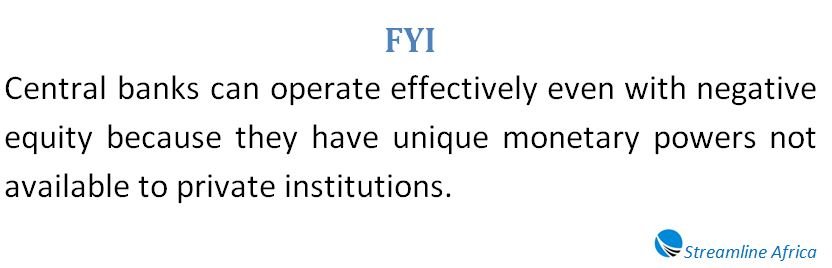
Stability Comes Before Profit
The most important principle in understanding central banking is that profit is not the goal.
The Bank of Ghana’s mandate is centered on maintaining macroeconomic stability. This includes:
- Controlling inflation
- Supporting a stable financial system
- Promoting sustainable economic growth
At times, achieving these objectives requires decisions that reduce profitability.
For instance, increasing interest rates to control inflation can reduce the market value of financial assets held by the central bank. This may result in losses, but the policy action is necessary to protect the broader economy.
In this sense, financial losses can be a byproduct of responsible policymaking rather than a sign of inefficiency.
Independence and Institutional Balance
Central banks are typically granted a degree of independence to ensure that monetary policy decisions are made based on economic conditions rather than short-term political considerations.
For the Bank of Ghana, this independence allows it to adjust interest rates, manage liquidity, and respond to inflationary pressures without direct political interference.
However, independence does not mean isolation.
The central bank operates within a broader public framework, and its financial outcomes are linked to government finances. For example, when the central bank generates profits, they are often transferred to the state. Conversely, sustained losses may require policy adjustments or balance sheet restructuring.
This relationship creates a delicate balance between autonomy and accountability.
Oversight and Governance
To maintain public trust, the Bank of Ghana is subject to oversight and governance mechanisms.
Its accounts are audited, and institutions such as the Parliament of Ghana provide a layer of scrutiny. These processes are designed to ensure transparency, accountability, and adherence to legal mandates.
However, effective oversight depends on expertise and institutional strength. Central banking involves complex financial and economic concepts, and meaningful evaluation requires a high level of technical understanding.
The Broader Economic Context
The central bank does not operate in isolation. Its actions are interconnected with the wider economy, which consists of households, businesses, and the government.
Households and firms generate income through productive activity. Governments, in turn, rely on taxes and borrowing to finance public spending.
When fiscal pressures increase, there can be indirect effects on the central bank—especially if it becomes involved in stabilizing financial markets or supporting government debt operations.
This is why maintaining clear boundaries and strong institutional frameworks is essential. It ensures that monetary policy remains focused on long-term stability rather than short-term financing needs.
Inflation: The Constant Constraint
Inflation remains the central concern of monetary policy.
If the money supply grows faster than the economy’s capacity to produce goods and services, prices will rise. This reduces purchasing power and can create economic instability.
For Ghana, managing inflation involves navigating multiple factors, including exchange rates, global commodity prices, and domestic production levels.
The Bank of Ghana must continuously balance liquidity provision with price control—a process that often involves trade-offs affecting its financial position.
Final Insight
So, can the Bank of Ghana make a loss?
Yes—and that possibility is built into how central banking works.
Losses can arise from policy decisions, market movements, or financial restructuring. But they do not necessarily indicate failure. In many cases, they reflect the cost of maintaining economic stability in a complex and evolving environment.
The more relevant question is whether the central bank is effectively fulfilling its mandate: keeping inflation under control, ensuring financial system resilience, and supporting sustainable growth.
When evaluated through that lens, profit becomes secondary—and the role of the central bank becomes much clearer.
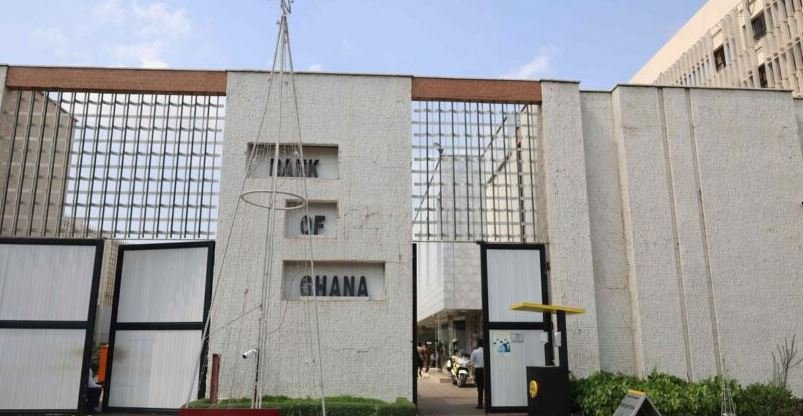
Important Notifications
Central Banks Are Not Profit-Seeking Institutions
The Bank of Ghana is designed to stabilize the economy, not to maximize profits. Judging it like a commercial bank misses its real purpose.
Printing Money Has Real Consequences
Even though the central bank issues the Ghanaian cedi, it cannot simply create money to cover losses without risking inflation and economic instability.
Losses Can Be a Sign of Policy Action
When the central bank takes steps like raising interest rates or restructuring financial assets, short-term losses can occur—but these decisions often protect the broader economy.
Income Sources Are Real but Not Guaranteed
Revenue from bonds, loans to banks, and foreign reserves helps fund operations, but these income streams fluctuate with market conditions and policy choices.
Exchange Rates and Market Forces Matter
Changes in global markets and currency values can impact the central bank’s balance sheet, sometimes leading to accounting losses beyond its direct control.
Independence Helps—but Isn’t Absolute
The Bank of Ghana operates with autonomy to make sound decisions, yet it remains connected to government finances and national economic realities.
Stability Is the True Measure of Success
Ultimately, the central bank’s effectiveness is measured by how well it controls inflation and maintains financial stability—not whether it records a profit.