
Why Demand Matters More When Economic Growth Slows
Economic uncertainty often causes investors to rethink how their portfolios are positioned. While headlines frequently focus on inflation, interest rates or stock market volatility, another equally important concept deserves attention: consumer demand. Specifically, understanding the difference between elastic and inelastic demand can help investors identify businesses that may struggle during a downturn and those that are more likely to remain resilient.
Although no one can accurately predict the exact timing of a recession, investors can prepare for changing economic conditions by evaluating how companies generate revenue and how consumers behave when disposable income becomes limited. Businesses that depend heavily on discretionary spending often face greater pressure during slowdowns, whereas companies supplying everyday necessities typically experience more stable demand.
Rather than reacting emotionally to market swings, successful investors focus on the long-term characteristics of businesses and industries. Incorporating demand analysis into portfolio construction can improve decision-making and help reduce unnecessary investment risk.
The Relationship Between Consumer Demand and Investment Performance
Every publicly traded company depends on customers purchasing its products or services. However, consumers do not respond equally to every price increase or economic challenge.
When household budgets become constrained, spending priorities naturally change. Essential purchases remain relatively consistent, while optional expenses are often postponed or eliminated altogether. These behavioral shifts directly affect corporate earnings, which in turn influence company valuations and stock prices.
For investors, understanding these spending patterns provides valuable insight into which industries may experience stronger earnings stability and which sectors could face declining revenues during weaker economic conditions.
Rather than simply asking whether the economy is entering a recession, investors should ask a more practical question: “How likely are customers to continue buying this company’s products if financial conditions become more difficult?”
Understanding Elastic Demand
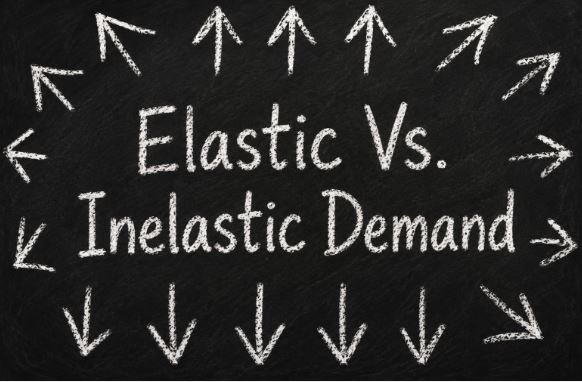
Elastic demand refers to products or services whose demand changes significantly when prices increase or consumers experience financial pressure. Customers purchasing these goods generally have flexibility. They can delay purchases, choose lower-cost alternatives or decide not to buy at all.
This type of demand is common among businesses offering discretionary products and lifestyle-related services. Industries such as luxury retail, tourism, entertainment, restaurants, premium electronics, automobiles and recreational activities frequently experience elastic demand because consumers view these purchases as optional rather than essential.
For example, during periods of economic expansion, families may dine out frequently, purchase premium smartphones, travel internationally and upgrade vehicles sooner than necessary. During economic uncertainty, many of those same households reduce discretionary spending, postpone vacations, cook more meals at home and delay major purchases until financial confidence improves.
Companies operating within these sectors may therefore experience larger swings in revenue and profitability compared to businesses serving everyday needs.
Characteristics of Businesses With Elastic Demand
Investors can often identify companies with elastic demand by looking beyond industry labels and evaluating customer behavior.
Businesses operating in highly competitive markets usually face greater pricing pressure because consumers have numerous alternatives. Premium products that are not considered necessities also tend to lose demand when purchasing power weakens.
Similarly, companies whose revenues depend heavily on consumer confidence often experience declining sales before an official recession is declared. Since stock markets typically anticipate future earnings, these businesses may experience price declines well before economic data confirms slowing growth.
However, investors should avoid assuming that every company within an elastic industry is automatically a poor investment. Businesses with strong brands, loyal customer bases, efficient operations or unique competitive advantages may outperform their industry peers even during challenging economic periods.
Understanding Inelastic Demand
In contrast, inelastic demand describes products and services that consumers continue purchasing regardless of moderate price increases or economic weakness. These goods satisfy essential needs that households cannot easily eliminate from their budgets.
Healthcare services, prescription medications, electricity, water, household cleaning products, basic food items, fuel in certain situations and telecommunications services often demonstrate relatively inelastic demand.
Even when families reduce discretionary spending, they still require medical care, groceries, electricity and other daily necessities. While consumers may substitute brands or purchase smaller quantities, overall demand generally remains much more stable than demand for luxury or recreational products.
For investors seeking greater stability during uncertain economic periods, companies operating within these sectors often deserve closer attention.
Defensive Industries That May Offer Greater Stability
Certain sectors have historically demonstrated greater resilience during economic downturns because they provide products or services that remain necessary regardless of broader market conditions.
Healthcare companies continue serving patients who require treatment and medication. Utility providers supply electricity, gas and water that households depend upon every day. Consumer staples manufacturers produce food, beverages, personal care products and household essentials that remain part of routine spending patterns.
These industries are often described as defensive sectors because their revenues may fluctuate less dramatically during recessions than those of more economically sensitive businesses.
Defensive investments should not be viewed as risk-free. Regulatory changes, rising operating costs, technological disruption, litigation and management decisions can still affect performance. Nevertheless, their underlying demand characteristics often contribute to relatively stable earnings across different economic cycles.
Asset Allocation Remains the Foundation of Risk Management
Demand analysis should complement—not replace—sound portfolio construction.
An effective investment portfolio typically combines multiple asset classes rather than relying exclusively on equities. Depending on an investor’s objectives, this may include bonds, fixed-income securities, cash equivalents, real estate, exchange-traded funds, mutual funds and selected alternative investments.
Each asset class behaves differently under varying economic conditions. Bonds may provide income and reduce overall portfolio volatility. Cash offers liquidity during uncertain periods. Real estate can contribute diversification, while alternative investments may reduce dependence on traditional equity markets.
Appropriate asset allocation helps investors balance growth opportunities with risk management instead of concentrating exposure within a single market segment.
Diversification Should Extend Beyond Asset Classes
Many investors mistakenly believe diversification simply means owning numerous stocks. True diversification requires spreading investments across industries, company sizes, geographic regions and economic drivers.
Holding twenty companies that all depend on discretionary consumer spending offers little protection during an economic slowdown. Likewise, concentrating exclusively on technology, financial services or energy increases exposure to sector-specific risks.
A diversified equity portfolio should include businesses with varying demand characteristics, different revenue sources and distinct competitive advantages. Combining growth-oriented companies with defensive businesses can improve resilience while preserving long-term return potential.
Regular portfolio reviews also help ensure diversification remains aligned with changing market conditions and personal financial objectives.
Practical Indicators Investors Should Monitor
Rather than relying solely on recession forecasts, investors should observe economic indicators that influence consumer behavior.
Employment trends provide insight into household purchasing power. Inflation affects disposable income and spending priorities. Consumer confidence surveys reveal changing attitudes toward future spending. Retail sales data, manufacturing activity and corporate earnings reports can also indicate whether demand is strengthening or weakening.
Monitoring these indicators collectively provides a broader understanding of economic conditions than focusing on any single statistic.
Equally important is evaluating individual companies. Strong balance sheets, manageable debt levels, healthy cash flow, pricing power and experienced management teams often position businesses to navigate difficult economic environments more successfully.
Common Mistakes Investors Make During Economic Uncertainty
Periods of heightened volatility often encourage emotional decision-making, which can undermine long-term investment success.
One common mistake is selling quality investments simply because markets have declined. Another is attempting to predict the exact beginning or end of a recession through frequent portfolio changes.
Some investors also overconcentrate in defensive sectors, believing they eliminate risk entirely. While these sectors may reduce volatility, excessive concentration can limit diversification and expose portfolios to industry-specific challenges.
Successful investing typically depends more on disciplined planning than on perfectly timing economic cycles. Maintaining a diversified portfolio aligned with clearly defined financial objectives remains one of the most effective long-term strategies.
Building a Portfolio Designed for Multiple Economic Environments
Preparing for economic uncertainty does not require abandoning growth opportunities. Instead, it involves constructing a portfolio capable of performing across different stages of the business cycle.
Understanding the distinction between elastic and inelastic demand enables investors to identify businesses whose revenues are likely to respond differently as consumer spending changes. This knowledge supports more informed sector selection, stronger diversification and improved risk management.
Ultimately, investors cannot control inflation, interest rates or recession timing. What they can control is portfolio quality, asset allocation, diversification and investment discipline. By focusing on business fundamentals rather than short-term market noise, investors place themselves in a stronger position to preserve capital during downturns while remaining prepared to benefit from future economic recovery.
Important Points to Note
Consumer Demand Shapes Investment Performance
A company’s ability to remain profitable often depends on whether customers will continue buying its products when household budgets become tighter.
Elastic Demand Creates Greater Volatility
Businesses selling optional goods and services may experience sharper revenue declines because consumers can postpone purchases, switch brands or stop spending entirely.
Essential Products Offer Greater Stability
Healthcare, utilities, food and household necessities often maintain stronger demand because consumers continue purchasing them during difficult economic periods.
Defensive Sectors Are Not Risk-Free
Although defensive industries may perform more consistently during recessions, they can still be affected by regulation, competition, rising costs and poor management.
Asset Allocation Helps Control Portfolio Risk
Combining equities with bonds, cash, property and other investments can reduce dependence on a single asset class and provide greater stability.
Diversification Requires More Than Owning Many Stocks
A portfolio is not properly diversified when all its holdings depend on the same customers, industries or economic conditions.
Company Fundamentals Still Matter
Strong cash flow, manageable debt, pricing power and effective leadership can help a business withstand weaker economic conditions, regardless of its sector.
Economic Indicators Should Be Viewed Together
Employment, inflation, consumer confidence, retail spending and corporate earnings provide a clearer picture when considered collectively rather than separately.
Emotional Investing Can Damage Long-Term Returns
Selling during market declines or frequently changing investments based on recession predictions may cause investors to lock in losses and miss future recoveries.
Resilient Portfolios Prepare for Different Conditions
The most effective investment strategies balance growth opportunities with defensive assets, allowing portfolios to remain flexible across changing economic cycles.