

Guinea represents one of West Africa’s most resource-rich yet structurally challenging markets. The country possesses extraordinary mineral wealth, but its economic potential has not been matched by broad-based development, institutional strength, or improvements in living standards.
Our assessment is that Guinea should be viewed as a high-opportunity, high-risk market. Its long-term investment case is supported by globally significant mineral reserves, expanding infrastructure requirements, and growing demand for industrial services. However, political uncertainty, regulatory inconsistency, weak public institutions, and infrastructure deficiencies continue to affect commercial confidence.
Guinea’s economy exceeded US$22 billion in 2024, reflecting considerable expansion over the previous two decades. Despite this progress, the benefits of growth remain unevenly distributed. A large share of the population continues to experience poverty, while public services and transport networks remain underdeveloped.
Political developments also require close monitoring. The expected transition to civilian government was delayed, contributing to renewed demonstrations and tension between the military administration, opposition groups, and civil society organisations. For investors, this creates uncertainty around policymaking, regulatory continuity, and the timing of future reforms.
Mining Remains the Central Investment Proposition
In our analysis, mining will remain the principal driver of Guinea’s economic growth for the foreseeable future. The country is one of the world’s most important bauxite producers and holds approximately 23% of known global reserves. This gives Guinea a strategic position within the international aluminium supply chain.
The development of the Simandou iron ore project significantly strengthens the country’s investment outlook. Simandou contains an estimated four billion tonnes of high-grade iron ore suitable for steel production. The project is expected to support large-scale exports while encouraging investment in associated rail, port, energy, engineering, and logistics infrastructure.
As production expands, Guinea may become one of the world’s leading iron ore suppliers. We expect this development to create substantial demand for contractors, equipment providers, transport operators, professional services firms, and workforce development specialists.
Guinea also produces gold and diamonds, although these industries remain smaller than the bauxite sector. Investors should recognise that the country’s dependence on mineral exports exposes it to global commodity price volatility, operational delays, regulatory renegotiations, and changing tax requirements.
Opportunities Across Supporting Industries
Our advisory view is that some of Guinea’s most attractive opportunities may emerge outside direct mineral extraction. Large mining developments generate significant demand for housing, transport, catering, security, telecommunications, maintenance, financial services, and employee training.
Infrastructure remains a particularly important area. Guinea requires stronger road networks, reliable electricity, modern ports, expanded railway systems, and improved water facilities. Businesses with experience in infrastructure delivery, engineering, project management, and industrial logistics may find opportunities through partnerships with government agencies or major mining operators.
The fisheries industry also offers growth potential. Investment in cold storage, processing facilities, modern fishing equipment, distribution systems, and export certification could improve productivity and reduce waste.
Tourism remains relatively undeveloped despite Guinea’s natural attractions, including coastlines, forests, waterfalls, mountains, and cultural heritage. However, investors should approach the sector cautiously because transport limitations, weak hospitality infrastructure, and political uncertainty may delay returns.
Political, Regulatory, and Operational Risks
We consider governance risk to be one of the most important factors for investors entering Guinea. Corruption, bureaucratic delays, inconsistent administrative processes, and limited transparency can affect licensing, customs clearance, taxation, procurement, and contract enforcement.
Although the government has expressed interest in attracting foreign direct investment, implementation has been uneven. In practice, large investors, particularly mining companies, have often secured favourable terms through individual negotiations rather than through consistently applied national policies.
Political restrictions also create reputational risks. The suppression of protests, restrictions on media activity, and pressure on opposition figures may concern investors with strong environmental, social, and governance obligations.
Poverty and low wages further shape the operating environment. More than 40% of Guineans are estimated to live below the poverty line. While this may reduce labour costs, it also limits consumer purchasing power and increases expectations that major investors will contribute to employment, community development, and public infrastructure.
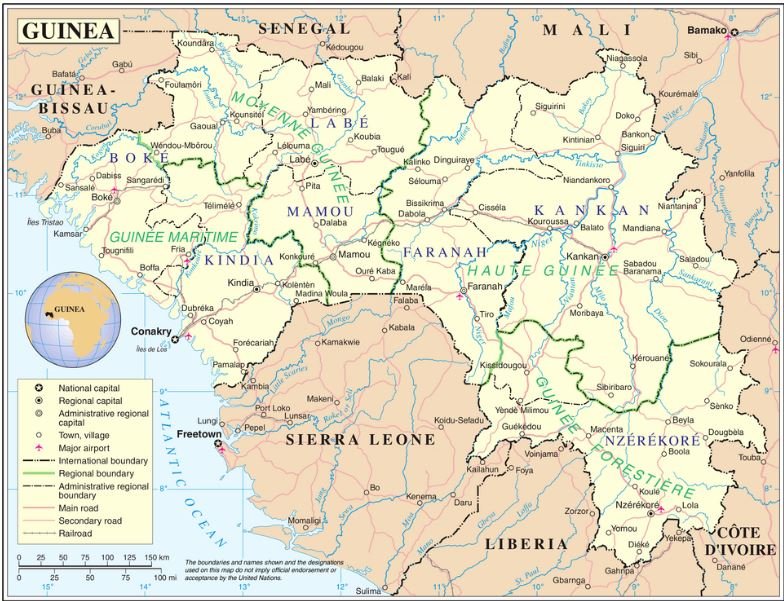
Security conditions vary across the country. Businesses operating near the Malian border should undertake enhanced risk assessments because of the possibility of militant incursions, kidnapping, and cross-border instability.
Business Registration and Ownership Structures
Foreign investors may generally establish fully owned businesses in Guinea, although restrictions apply in sensitive sectors such as media. Property may be acquired by foreign nationals, but ownership arrangements often provide leasehold rights rather than unrestricted title.
One of the most commonly used corporate structures is the Société à Responsabilité Limitée, or SARL. This form of limited liability company requires at least one shareholder and one director. These individuals or entities may be foreign nationals or foreign corporate bodies.
The government has introduced a digital business registration system to simplify market entry. However, our experience suggests that investors should still prepare for administrative delays, inconsistent application of procedures, and requests for supplementary documentation.
Local legal, tax, and regulatory advisers are therefore essential. A well-structured entry strategy can reduce the risks associated with licensing, employment compliance, customs procedures, and contractual negotiations.
Trade and Tax Considerations
Guinea’s international trade framework remains less developed than that of several neighbouring markets. The country does not benefit from broad investment or free trade agreements with some major Western partners and has experienced changes in its relationship with ECOWAS.
Nevertheless, Guinea maintains economic ties with several African countries, Turkey, the United Arab Emirates, Switzerland, and other international partners. Investors should evaluate applicable bilateral agreements before selecting corporate, financing, or export structures.
Tax reforms are also becoming more important. The government is seeking to increase domestic revenue, with particular attention directed towards large mining companies. Businesses should expect closer scrutiny of royalties, corporate taxes, customs duties, transfer pricing, and contractual tax exemptions.
Cultural and Market Entry Considerations
French is the principal language of government and business. Although some internationally educated professionals speak English, investors will generally require French-speaking employees, representatives, or advisers.
Guinean society is predominantly Muslim, and business interactions often reflect formal social customs. Investors should demonstrate respect for religious practices, dress modestly, and consider local expectations when arranging meetings, travel, or corporate events.
In our overall assessment, Guinea offers considerable long-term potential for investors capable of managing complexity. The strongest opportunities are linked to mining, infrastructure, logistics, energy, professional services, fisheries, and industrial support activities.
Successful market entry will depend on rigorous due diligence, credible local partnerships, strong government engagement, regulatory compliance, security planning, and a realistic understanding of political and operational risks.
Investing in Guinea – Frequently Asked Questions
Which sector drives Guinea’s economy?
Mining is the country’s main economic engine. Bauxite production dominates exports, while the Simandou iron ore project is expected to strengthen Guinea’s position in global mineral markets.
Why is the Simandou project important?
Simandou contains approximately four billion tonnes of high-grade iron ore. Its development is expected to generate jobs, increase exports, and support major investments in railways, ports, energy, and logistics.
Are there opportunities outside mining?
Yes. Investors can explore infrastructure, transport, energy, fisheries, telecommunications, housing, professional services, security, catering, and workforce training. Many of these sectors will benefit from mining-led economic activity.
What are the main risks of investing in Guinea?
The principal risks include political uncertainty, corruption, bureaucratic delays, inconsistent regulations, weak infrastructure, security concerns, and unpredictable administrative procedures.
How does political instability affect businesses?
Political uncertainty can delay reforms, change investment policies, weaken regulatory consistency, and create operational disruptions. Investors must closely monitor government decisions and the transition to civilian rule.
Can foreigners fully own businesses in Guinea?
Foreign investors may generally own local companies entirely, although restrictions apply in sensitive industries such as media. Professional legal advice is recommended before establishing a business.
Read Also: Nigeria Business Environment: Investment Opportunities, Market Risks and Growth Sectors
What business structure is commonly used by investors?
The Société à Responsabilité Limitée, commonly known as a SARL, is widely used. It requires at least one shareholder and one director, who may be foreign individuals or corporate entities.

Is business registration straightforward?
Guinea has introduced a digital registration platform, but the process is not always efficient. Investors may still experience delays, unclear documentation requirements, and inconsistent administrative decisions.
What tax issues should investors consider?
Businesses should carefully assess corporate taxes, customs duties, mining royalties, transfer pricing rules, and available exemptions. Tax reforms are increasing scrutiny of major companies, particularly within the mining industry.
What language is used for business?
French is the main language of government, administration, and commercial activity. Companies entering the market should have French-speaking employees, advisers, or local representatives.
What is the best approach to entering Guinea?
A successful entry strategy should include detailed due diligence, trusted local partnerships, strong regulatory compliance, political risk monitoring, security planning, and realistic expectations regarding administrative delays.