
Employee mental health has become an increasingly important consideration for organizations seeking to maintain performance, retain talent and build resilient teams. Although workplace discussions about well-being are more common than they were in the past, many employees still hesitate to disclose when they are experiencing stress, emotional exhaustion or difficulty coping with workplace demands.
This reluctance is often driven by concerns about confidentiality, professional credibility and potential career consequences. Employees may fear being perceived as unreliable, less capable or insufficiently committed. As a result, organizations may have formal mental health policies in place while employees remain uncomfortable using the support available to them.
Managers play a central role in closing this gap. They translate organizational commitments into everyday employee experiences through the way they allocate work, conduct conversations, respond to concerns and model professional behaviour. A credible workplace mental health strategy must therefore be embedded in management practice rather than treated solely as an HR programme or employee benefit.
Leaders are not expected to diagnose mental health conditions or provide clinical support. Their responsibility is to create a work environment in which concerns can be raised early, workloads can be reviewed realistically and employees can access appropriate assistance without fear of judgment or disadvantage.
Assess the Conditions Within the Team
A practical starting point is to evaluate whether the team environment itself is generating avoidable stress. Organizations sometimes focus on individual resilience while overlooking structural issues that contribute directly to employee strain.
Unclear responsibilities, conflicting instructions, excessive workloads, poor communication and unresolved interpersonal tensions can significantly affect employee well-being. Frequent changes in priorities, limited decision-making authority and unrealistic deadlines can also create a persistent sense of instability.
Managers should periodically assess the health of their teams by examining how employees collaborate, communicate and manage responsibilities. This assessment may include confidential feedback, workload reviews, team discussions and analysis of recurring performance challenges.
The objective should not be to identify individuals who are struggling. It should be to determine whether systems, processes or leadership practices are making it unnecessarily difficult for employees to succeed.
Where recurring stressors are identified, managers should take corrective action. This may involve clarifying roles, improving decision rights, reducing unnecessary meetings or redistributing responsibilities. Effective mental health support begins by addressing the operational conditions that influence employee experience.
Establish Regular and Structured Check-Ins
Employee well-being should be incorporated into regular management conversations rather than discussed only after a significant problem has emerged. Structured one-on-one meetings provide an opportunity for managers to understand how employees are managing their responsibilities and whether additional support is required.
These conversations should extend beyond performance targets and task completion. Managers should ask about workload sustainability, emerging obstacles, competing priorities and the employee’s ability to maintain an appropriate level of energy and focus.
General questions such as “How are things?” may not generate useful responses. More focused questions are often more effective. A manager may ask which responsibilities are becoming difficult to sustain, whether priorities are clear or what support would make the current workload more manageable.
The quality of the manager’s response is equally important. Employees are more likely to speak openly when they believe they will be heard without interruption, criticism or immediate judgment. Managers should first seek to understand the issue before proposing a solution.
Regular check-ins also allow leaders to identify concerns earlier. When discussions occur consistently, employees do not need to wait until a problem becomes severe before asking for assistance.
Strengthen Psychological Safety
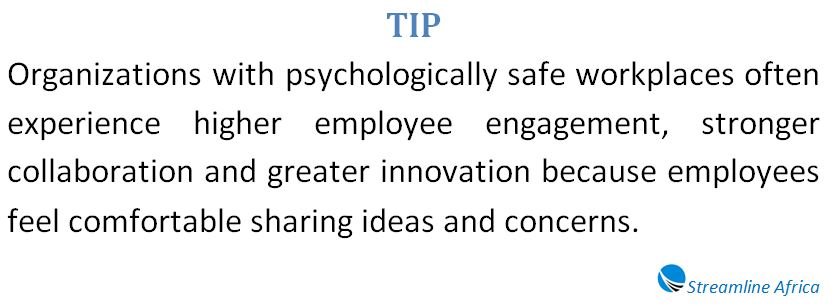
Psychological safety refers to an employee’s confidence that they can raise concerns, acknowledge mistakes or request help without being embarrassed, punished or professionally disadvantaged.
This is especially important in relation to mental health. Employees are unlikely to disclose difficulties if they believe the information could affect future assignments, performance ratings or promotion opportunities.
Psychological safety is built primarily through managerial behaviour. When leaders respond respectfully to concerns, maintain confidentiality and follow through on commitments, employees gain confidence in the system. When concerns are dismissed, minimized or discussed inappropriately, trust can deteriorate quickly.
Managers should therefore respond consistently and professionally when employees raise sensitive issues. They should avoid making assumptions, comparing one employee’s experience with another or treating disclosure as a sign of weakness.
Leaders should also separate legitimate support conversations from formal performance management where possible. Employees must understand that raising a concern will not automatically result in negative conclusions about their competence.
A psychologically safe workplace does not remove accountability. It creates an environment in which employees can raise issues early enough for them to be managed constructively.
Integrate Workload Management Into the Well-Being Strategy
Workload is one of the most direct links between organizational design and employee mental health. Excessive or poorly coordinated demands can create chronic stress, reduce concentration and increase the likelihood of mistakes.
Employees do not always communicate when they are overloaded. Many continue accepting assignments because they do not want to appear uncooperative or incapable. By the time the workload problem becomes visible, performance may already have declined.
Managers should therefore make workload discussions a recurring management practice. They should review the volume of work, the urgency of priorities and the resources available to complete assignments.
When demands exceed capacity, leaders should decide which tasks can be delayed, reassigned, simplified or discontinued. It is not sufficient to encourage employees to manage stress while leaving the underlying workload unchanged.
Organizations should also avoid treating every task as urgent. Constant urgency reduces employees’ ability to plan, prioritize and recover. A disciplined approach to prioritization allows teams to focus on high-value work while reducing unnecessary pressure.
Workload management is not a concession. It is a core management responsibility that supports productivity, quality and sustainable performance.
Stop Reinforcing a Culture of Overwork
In some organizations, employees who work late, remain constantly available or avoid taking leave are perceived as especially committed. Although this behaviour may appear productive in the short term, it can create significant long-term risks.
When overwork is rewarded, employees may hide exhaustion, delay asking for support and continue working beyond healthy limits. This can contribute to burnout, disengagement, reduced quality and avoidable turnover.
Leaders should assess the behaviours that are informally recognized and rewarded within the organization. If promotions, praise and important assignments consistently go to employees who sacrifice personal boundaries, the organization may unintentionally be encouraging unsustainable practices.
Performance should be evaluated primarily on outcomes, quality, collaboration and responsible execution. It should not depend on continuous availability or visible exhaustion.
Managers should also avoid praising employees for repeatedly working through leave, illness or personal emergencies. Such recognition may communicate that well-being is less important than output.
A high-performance culture should be defined by effectiveness and accountability, not by the number of hours employees remain connected to work.
Model the Behaviours Expected From Employees
Leadership behaviour often has a stronger influence on workplace culture than written policies. Employees observe how managers use leave, respond to messages and manage their own working hours.
A manager may encourage employees to disconnect after work while continuing to send instructions late at night. Even where an immediate response is not explicitly requested, employees may interpret the message as an expectation of availability.
Managers should therefore model the boundaries they want employees to maintain. This includes taking annual leave, respecting nonworking hours, using scheduled email delivery and avoiding unnecessary communication during rest periods.
Where work outside normal hours is genuinely required, leaders should clarify the reason and ensure that such demands do not become routine.
Executives and senior managers also have an important role. When employees see leaders using leave, protecting personal time and acknowledging the need for recovery, these behaviours become more acceptable throughout the organization.
Visible leadership practices help employees understand that responsible boundary management is compatible with professional success.
Identify Early Changes in Behaviour
Mental health concerns may become visible through changes in behaviour, communication or engagement. An employee who is usually active may become unusually withdrawn. A reliable team member may begin missing deadlines or making avoidable errors. Another employee may appear increasingly irritable or disconnected.
Managers should be trained to notice patterns while avoiding unsupported conclusions. Behavioural changes may result from many factors, including workload, family responsibilities, conflict, physical health concerns or uncertainty about employment.
The appropriate response is a respectful, private conversation. Managers can describe the change they have observed and ask whether the employee requires support.
For example, a manager may say that they have noticed a change in participation or communication and would like to understand whether anything at work is contributing to the situation.
Managers should not attempt to diagnose the employee or pressure them to disclose personal information. The purpose is to open a professional conversation and identify whether workplace adjustments or referrals may be appropriate.
Early intervention can prevent manageable concerns from developing into more serious performance or health issues.
Provide Flexible and Individualized Support
Employee needs vary significantly. A standardized approach may not adequately address the circumstances of different individuals.
One employee may benefit from a quieter working environment, while another may require temporary flexibility in working hours. Some employees may need clearer priorities, adjusted deadlines, reduced travel or temporary support with a major assignment.
Managers should ask employees what practical support would help them remain effective. This approach is generally more useful than assuming that the same intervention will work for everyone.
Where feasible, managers should consider reasonable short-term adjustments. These may include modifying schedules, redistributing selected responsibilities or allowing additional breaks.
Support arrangements should be documented appropriately and reviewed after an agreed period. This helps ensure that adjustments remain suitable for both the employee and the organization.
Individualized support does not require the organization to remove performance expectations. It means considering how employees can continue contributing effectively while managing legitimate challenges.
Ensure Confidential Access to Professional Assistance
Employees may be reluctant to seek support if they believe their personal information will be shared internally or influence future employment decisions.
Organizations should therefore provide access to confidential professional resources. These may include employee assistance programmes, external counselling providers, independent therapists or specialist referral services.
The process for accessing support should be simple, clearly communicated and available without unnecessary managerial involvement. Employees should understand what information remains confidential and under what limited circumstances disclosure may be required.
Managers should also know how to refer employees appropriately. Their role is to support access, not to provide counselling beyond their competence.
Where an employee indicates a serious or immediate concern, managers should follow established escalation procedures and involve qualified professionals.
Confidence in confidentiality is essential. Employees are more likely to seek help when they trust that doing so will not create professional risk.
Equip Managers With Practical Training
Organizations should not assume that managers naturally know how to respond to mental health concerns. Many managers may be willing to help but uncertain about what to say, what questions to ask or when to escalate an issue.
Practical training can help managers recognize warning signs, conduct sensitive conversations and understand the boundaries of their role. Training may also cover confidentiality, reasonable workplace adjustments and available referral pathways.
Mental health first aid programmes can provide a useful foundation. However, training should be adapted to the organization’s operating environment, workforce profile and legal obligations.
Managers should also have access to ongoing guidance from HR or occupational health professionals. One-time training may not be sufficient for complex or sensitive situations.
A capable manager should understand how to listen, document relevant workplace actions and direct employees toward appropriate resources without acting as a clinician.
Enable Employees to Disconnect Fully
Leave and rest periods provide limited value when employees remain connected to work. An employee may be officially absent but still monitor messages, answer calls or feel responsible for unresolved matters.
Organizations should design work processes that allow employees to disconnect fully. This requires effective handovers, shared access to information and clear temporary ownership of responsibilities.
Managers should avoid contacting employees during leave except in genuine emergencies. Teams should also be discouraged from creating an informal expectation that employees remain available while absent.
Where one person’s absence creates operational disruption, the underlying issue may be poor succession planning or overdependence on a single employee. This should be treated as an organizational risk rather than a reason to limit leave.
A well-managed team should be able to maintain essential operations while employees take appropriate time away from work.
Support Social Connection and Belonging
Employee mental health is influenced by the quality of workplace relationships. Remote and hybrid working arrangements can reduce informal interaction and contribute to isolation.
Organizations should create opportunities for employees to connect beyond formal project discussions. These opportunities may include team conversations, learning sessions or informal virtual gatherings.
The objective should not be to introduce compulsory social activities. Instead, leaders should create voluntary and inclusive opportunities that strengthen relationships and reduce excessive workplace formality.
Managers should also monitor whether particular employees are becoming disconnected from the wider team. New employees, remote workers and employees operating across different locations may require more deliberate inclusion.
A strong sense of belonging can improve trust, collaboration and willingness to seek support.
Use Leadership Disclosure With Appropriate Judgment
When leaders speak carefully about their own experiences with stress, recovery or professional support, they can help reduce stigma. Employees may feel more comfortable seeking assistance when senior figures acknowledge that difficulty is not incompatible with competence.
However, leadership disclosure should be purposeful and appropriately limited. Managers should not place emotional responsibility on employees or share information that creates discomfort.
The objective is to normalize responsible help-seeking, not to require personal disclosure from others.
A brief and relevant example can demonstrate that taking leave, consulting a professional or temporarily adjusting workload is an acceptable response to pressure.
Such openness is most credible when it is supported by consistent organizational behaviour.
Measure the Effectiveness of Mental Health Initiatives
Organizations should evaluate whether their mental health initiatives are producing meaningful results. The existence of a programme does not necessarily indicate that employees trust or use it.
Relevant indicators may include employee feedback, absenteeism, turnover, workload concerns and utilization of support services. Confidential surveys can provide insight into whether employees feel comfortable raising concerns and whether managers respond appropriately.
Leaders should review trends rather than rely on individual data points. For example, repeated reports of excessive workload in one department may indicate a structural issue requiring intervention.
Measurement should not become intrusive. The objective is to assess the workplace environment and the effectiveness of support systems, not to monitor individual mental health.
Findings should be translated into practical action. Employees are more likely to participate in future assessments when they see that their feedback leads to visible improvement.

Position Mental Health as Part of Organizational Performance
A credible mental health strategy should not be presented as separate from business performance. Employee well-being affects productivity, decision-making, collaboration, safety and retention.
Organizations that identify risks early and respond effectively are better positioned to maintain performance during periods of uncertainty or high demand.
Effective leadership in this area requires a combination of empathy and operational discipline. Managers must listen carefully, but they must also address workload, improve processes and allocate resources appropriately.
Policies provide an important foundation, but culture is shaped through daily leadership decisions. Employees evaluate an organization’s commitment to well-being by observing whether managers respect boundaries, respond professionally to concerns and take practical action when pressure becomes unsustainable.
The most effective organizations treat mental health as a shared leadership and management responsibility. They create environments in which employees can contribute at a high level without believing that exhaustion, silence or constant availability are required for success.