
For many business leaders, communicating with investors is treated as a broad marketing campaign. They design slick presentations, share ambitious plans, and cast their messages as widely as possible in the hope of drawing in as many potential shareholders as they can. This strategy may seem logical at first glance. After all, the more investors you reach, the greater the chance that some of them will buy into the company’s vision and purchase stock. But while this scattershot approach might generate temporary boosts in share price, it doesn’t always align with the company’s long-term health. Instead of trying to lure every possible investor, organizations benefit more from attracting the right shareholders — those whose goals and values match the company’s mission.
Why Not Every Shareholder Is the Right Fit
It’s tempting to believe that all investors are equally valuable, but that is far from reality. Different shareholders have different agendas. Some are focused on short-term returns, eager to see rapid increases in stock price regardless of how that growth is achieved. Others are more patient, willing to give management room to execute longer-term strategies. There are also investors who prioritize environmental, social, and governance (ESG) practices, and they may be skeptical of companies that chase only financial gain.
When a company fills its shareholder base with investors who demand quick wins, leadership may feel pressured to cut corners, abandon innovation, or avoid difficult but necessary decisions that would otherwise strengthen the organization over time. On the other hand, cultivating relationships with investors who appreciate the company’s purpose, competitive advantages, and long-term objectives creates a healthier balance. Those shareholders are more likely to support strategic moves even if they take years to pay off.

The Dragnet Mentality in Investor Relations
Investor relations often resemble casting a fishing net in the ocean: the company tosses its story out into the market, hoping to catch anyone interested in the opportunity. This dragnet mentality focuses on volume rather than quality. The problem with this approach is that it can attract investors whose expectations do not align with the company’s actual path.
For example, a firm that positions itself as a disruptive innovator may capture the attention of risk-seeking investors who demand fast growth. But if the company’s true strategy requires years of development before profitability emerges, that mismatch will cause frustration on both sides. Investors may become impatient, sell their shares, and even damage the firm’s reputation in the process.
Instead of using a dragnet, organizations should think more like skilled matchmakers, carefully identifying the types of investors who will thrive in partnership with the company.
Understanding the Shareholder Landscape
Not all investors behave the same way, and recognizing their differences is the first step in targeting the right ones. Broadly speaking, shareholders can be grouped into several categories.
Institutional investors, such as pension funds or mutual funds, often seek stable, long-term returns. They may prioritize governance, transparency, and risk management. Hedge funds, in contrast, typically chase quick profits, using aggressive strategies and sometimes pushing management to adopt short-term measures. Meanwhile, retail investors — individuals buying shares directly — vary widely in their goals but can be influenced by public perception, media coverage, or even trends on social platforms.
Knowing which of these groups aligns with a company’s mission allows leaders to focus their investor relations strategy where it matters most.
Building a Clear and Honest Narrative
Attracting the right shareholders requires a consistent story. Companies that misrepresent themselves to lure investors set themselves up for trouble later. A strong narrative doesn’t mean overselling; it means clearly explaining the business model, the challenges, and the opportunities ahead.
Investors who share the company’s values will resonate with an honest account of what lies ahead. For instance, a renewable energy firm should not try to attract investors looking for rapid quarterly earnings at the expense of sustainability. Instead, it should emphasize its role in shaping the energy transition, its technological edge, and its commitment to steady growth over time. Those points will naturally draw shareholders who want to see both financial performance and positive societal impact.
Aligning Strategy With Shareholder Expectations
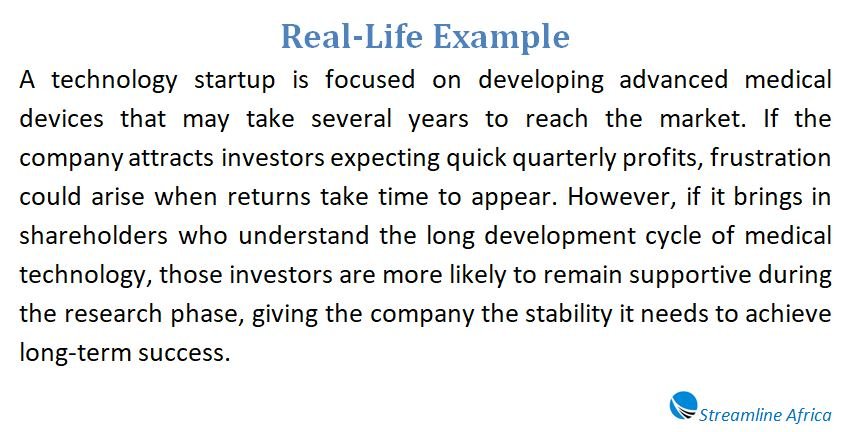
A company’s long-term strategy should guide which shareholders it seeks out. If leadership wants to invest heavily in research and development, it needs investors willing to tolerate fluctuations in short-term performance. If expansion into emerging markets is the focus, the ideal investors will understand the inherent risks and still support the plan.
Alignment doesn’t mean every investor will agree with every decision, but it does mean there is enough trust and shared vision to weather ups and downs together. This creates stability and reduces the risk of shareholder revolts when results don’t immediately meet market expectations.
The Role of Transparency and Communication
One of the most powerful tools in attracting suitable investors is open communication. Shareholders don’t expect perfection, but they do expect honesty. Regular updates, transparent reporting, and proactive engagement build credibility.
When investors feel they are treated as true partners rather than distant financiers, they are more likely to stay committed. This doesn’t mean bombarding them with corporate jargon or generic updates. It means tailoring communication to reflect the priorities of the shareholders the company wants to attract. For instance, investors focused on ESG initiatives should see clear reporting on sustainability goals, while those drawn to innovation should receive insight into the pipeline of upcoming projects.
Learning From Companies That Get It Right
Several businesses have successfully cultivated the right shareholder base. Consider technology firms that invest heavily in long-term innovation. They often seek out investors who understand the cyclical nature of the industry and are willing to tolerate years of heavy spending before returns materialize.
Similarly, consumer goods companies with strong ethical or sustainability commitments often attract shareholders who value social impact alongside profits. By reinforcing these messages consistently, they build an investor community that not only supports their strategies but also champions their reputation.
These examples highlight that attracting the right shareholders is not about manipulating perception but about matching the reality of the company’s path with investors who appreciate it.

The Risks of Ignoring Shareholder Fit
When companies neglect the importance of shareholder alignment, they can face serious challenges. Investors who are misaligned with the business model may push for disruptive changes, call for leadership replacements, or push to sell off assets to boost immediate value. Such pressures often undermine long-term growth.
For instance, if a company committed to heavy infrastructure investments suddenly faces pressure from activist shareholders demanding higher dividends, leadership may be forced to cut back on projects critical for future competitiveness. This can weaken the firm over time, leaving it vulnerable to rivals.
Avoiding such risks means being intentional about who is invited to the shareholder base in the first place.
Shifting the Investor Relations Mindset
Attracting the right shareholders requires a shift in mindset. Instead of viewing investor relations purely as a marketing exercise, leaders should see it as a process of building mutually beneficial partnerships. The question isn’t just, “How can we get more shareholders?” but rather, “Which shareholders will help us achieve our goals?”
This reframing encourages more disciplined communication, more targeted outreach, and a clearer understanding of the company’s identity. It also reduces the temptation to oversell or to chase investors whose demands could derail strategic plans.
Practical Steps to Attract the Right Shareholders
Companies can take several practical steps to cultivate the right investor base:
- Define core values and strategy clearly. This makes it easier to identify investors who share the same outlook.
- Develop tailored communication plans. Speak directly to the priorities of the desired shareholders.
- Build relationships before capital is needed. Cultivating trust early allows for stronger partnerships later.
- Stay consistent. Mixed messages can erode confidence and attract the wrong crowd.
- Measure fit as carefully as performance. Evaluate whether investor behavior aligns with company objectives, not just whether they provide capital.
By following these practices, leaders can create a more resilient and supportive shareholder base.
A Partnership Built on Shared Vision
At its core, attracting the right shareholders is about building relationships rooted in shared vision and mutual respect. Investors are not merely sources of cash; they are stakeholders who influence the direction of the business. By being deliberate about who is welcomed into that circle, companies can protect their mission, foster innovation, and create sustainable value.
Casting a wide net might bring in numbers, but it rarely brings in the partners a company truly needs. The smarter path is to choose carefully, communicate honestly, and nurture alignment between shareholder expectations and organizational goals. That way, both the company and its investors stand to thrive over the long term.
Frequently Asked Questions
What makes some shareholders a better fit than others?
Not all shareholders share the same priorities. Some are focused on short-term gains, while others value long-term growth, innovation, or sustainability. The best fit comes from those who align with the company’s mission and support its strategic vision.
Why is casting a wide net for investors risky?
Attracting every possible investor may lead to a shareholder base with conflicting demands. Short-term-focused investors, for instance, might pressure management into cutting projects or abandoning strategies that take time to pay off.
How can companies identify the right investors?
By understanding investor types — such as institutional investors, hedge funds, and retail investors — and evaluating their typical goals, companies can narrow their focus to those whose interests match their strategy.
What role does honesty play in investor relations?
Transparency builds trust. When companies are open about challenges, risks, and opportunities, they attract shareholders who are prepared for the realities of the journey rather than those who expect quick, unrealistic returns.
How do long-term strategies influence shareholder choice?
A company committed to research, innovation, or expansion needs investors willing to wait for results. If shareholders understand the timeline and are aligned with it, management has the freedom to execute without constant short-term pressure.
Why is communication so important with shareholders?
Consistent and tailored communication helps investors feel like true partners. Providing relevant updates — whether on ESG efforts, innovation, or financial performance — builds confidence and keeps shareholders engaged.
What happens when investors are misaligned with company goals?
Misaligned shareholders can create instability. They may push for leadership changes, demand higher dividends at the expense of growth, or pressure management into short-term actions that weaken the company’s long-term prospects.
How can companies shift their investor relations mindset?
Instead of treating investor relations as marketing, businesses should focus on building strong, mutually beneficial partnerships. The goal isn’t just to gain more shareholders but to secure the right ones who will support the company’s journey.
What practical steps help attract the right shareholders?
Clear values, consistent messaging, tailored communication, and building relationships early all help. Companies should also evaluate whether investors’ behaviors match their own goals, not just whether they provide capital.
What is the ultimate benefit of having the right shareholders?
When shareholders and companies share a vision, they create a stable, supportive environment that fuels innovation, growth, and resilience. Both sides benefit from a long-term, value-driven partnership.