
A toxic organizational culture can take a heavy toll. When morale sinks, tensions rise, and employees start leaving in noticeable numbers, managers are faced with the challenge of protecting their teams. Even if the broader environment feels beyond your control, the way you respond as a leader can determine whether your people feel supported or left adrift. Safeguarding your team doesn’t mean pretending the problems don’t exist. It means creating an environment within your sphere of influence that is healthier, more stable, and more motivating than the culture outside it.
Recognizing the Signs of Toxicity
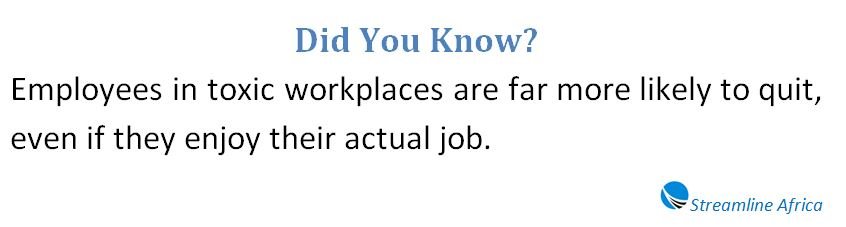
Before you can protect your team, you have to acknowledge the signals that the culture is turning toxic. These may include high turnover, frequent rumors, unclear communication, or an atmosphere of fear where employees hesitate to speak up. A toxic culture often creates confusion, pits departments against one another, and prioritizes appearances over substance. If your team members constantly seem anxious, disengaged, or worried about their future, it’s a clear warning sign that the environment is harming them.

Building a Protective Bubble for Your Team
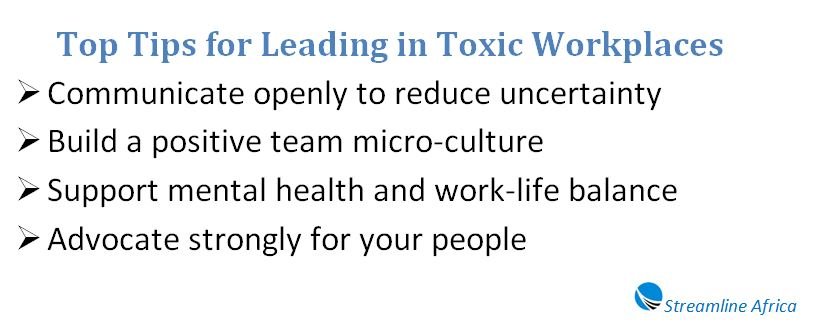
You may not be able to change the entire organization overnight, but you can create a kind of “protective bubble” for your direct reports. This means setting ground rules for how your team treats one another, ensuring respect and collaboration even when the larger company lacks those qualities. As a manager, you can filter out unnecessary negativity from above and provide your people with clarity and purpose.
Small practices matter: celebrating wins, offering consistent feedback, and fostering a spirit of support go a long way. By modeling positive behavior, you show your team that they don’t have to mirror the dysfunction around them. Instead, they can adopt a healthier standard within their own group.
Practical Example
Consider a department manager in a company where leadership frequently changes policies without explanation, creating confusion across teams. Instead of allowing the uncertainty to overwhelm her staff, the manager holds weekly check-ins where she clarifies expectations, answers questions honestly, and recognizes team achievements. She also encourages collaboration rather than competition within the group. Over time, her team remains more engaged and supportive of one another, even though the wider company culture continues to struggle.
Prioritizing Honest Communication
When people feel like they are being left in the dark, mistrust grows quickly. In a toxic workplace, rumors thrive because employees sense they aren’t being told the full story. As a leader, you can counteract this by being as transparent as possible. Share what you know, acknowledge what you don’t, and keep your team informed about decisions that affect them.
Being honest doesn’t mean dumping every negative detail on your team. It means communicating with empathy and clarity so they feel respected. When employees know that their manager will keep them updated and answer questions directly, their stress levels decrease, even if the wider organization feels unstable.
Encouraging Resilience Without Ignoring Reality
Toxic environments can wear people down. That’s why resilience — the ability to adapt and recover — is so important. Encourage your team to focus on what they can control, such as the quality of their work, how they collaborate, and the professional standards they uphold.
That said, resilience should not be confused with denial. Pretending everything is fine or minimizing employees’ frustrations can backfire. Acknowledge that the situation is challenging, validate their feelings, and then guide them toward practical coping strategies. By balancing realism with optimism, you help them find stability without sugarcoating the truth.
Advocating for Your People
One of the most powerful ways to protect your team is to advocate for them. If higher-level leaders are making unreasonable demands or if policies are harming morale, step in and speak up on behalf of your group. Even if you can’t always change the outcome, your employees will notice that you are willing to defend their interests.
Advocacy can also mean ensuring your team has access to resources, training, and fair recognition. By pushing for what they need and highlighting their achievements to others, you strengthen their sense of security and loyalty.
Supporting Mental and Emotional Well-being
Toxic cultures often take a toll on mental health. As a manager, you can help by making well-being a priority. Encourage your team to take breaks, use their vacation time, and maintain boundaries around work hours. Normalize conversations about stress, and make it clear that asking for help is not a weakness.
If your company provides employee assistance programs, counseling services, or wellness initiatives, remind your team that these resources exist. When leaders actively support mental and emotional health, employees feel more valued and less isolated.
Creating Opportunities for Growth
Even in a toxic environment, professional growth can be a strong motivator. Offer your team members chances to learn new skills, take on meaningful projects, or expand their responsibilities in ways that align with their career goals.
Growth opportunities give people a reason to stay engaged despite the challenges. They also signal that you, as their manager, are invested in their future, not just their current output. This sense of forward momentum can counteract the stagnation that toxic cultures often breed.
Strengthening Team Unity
A strong sense of community within the team can be a powerful shield against toxicity. Encourage collaboration, create rituals that bring people together, and celebrate milestones as a group. The more connected your employees feel to one another, the more resilient they will be when external pressures mount.
Team unity also creates a support network where colleagues can lean on each other during stressful times. When individuals know they are not facing difficulties alone, their ability to cope with a toxic environment improves significantly.
Knowing When It’s Time to Move On
Protecting your team is important, but there are limits to what one manager can do. If the broader organization consistently undermines your efforts, ignores feedback, or creates harm that cannot be mitigated, you may need to help your employees explore other opportunities.
Encourage open conversations about career paths, and support them if they decide leaving is the healthiest choice. While it can be difficult to lose good people, guiding them toward a better environment can ultimately be an act of protection too.

Leading With Integrity
At the heart of protecting your team in a toxic workplace is integrity. Your employees look to you for cues on how to navigate the culture around them. If you remain honest, compassionate, and fair, you provide a model of stability. Even when the broader organization is dysfunctional, your leadership can give people a sense of safety and purpose.
You may not be able to eliminate toxicity across the entire company, but you can create a healthier micro-culture where your team feels respected, supported, and motivated. In doing so, you give them a reason to stay, grow, and thrive, despite the challenges beyond your control.
Commonly Asked Questions
How can managers spot signs of a toxic workplace?
Warning signs include high turnover, constant rumors, lack of trust, and employees appearing anxious or disengaged. These are clear indicators that the culture is harming morale.
What role does honest communication play in protecting a team?
Clear, transparent updates reduce uncertainty and mistrust. When managers share information openly, employees feel respected and less stressed, even if the wider company is unstable.
How can leaders support their team’s mental well-being?
By encouraging breaks, promoting healthy boundaries, and reminding employees of available support programs, managers can ease the mental toll of a toxic culture.
Why is team unity so important in a toxic environment?
A connected team provides emotional support and resilience. When people feel they’re not facing challenges alone, they are more motivated to stay engaged and positive.
When should managers consider helping employees move on?
If the organization consistently undermines efforts to create a healthier environment, guiding team members toward better opportunities may be the most protective choice.