
For founders at the earliest stages, raising money without relying on loans can feel like the only viable path to scale. This is where angel investors come in. These individuals, often experienced entrepreneurs or high-net-worth professionals, are not simply looking to support ideas—they are looking for calculated opportunities that can multiply their capital significantly over time.
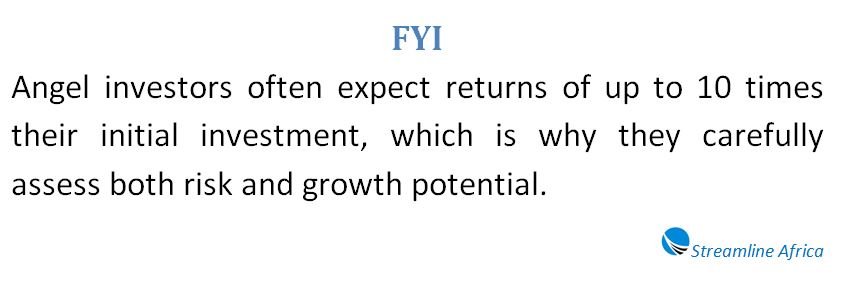
From their standpoint, investing in a start-up is inherently risky. Many ventures fail, so the few that succeed must deliver outsized returns. Typically, angels look for opportunities that could return several multiples of their original investment within a five- to eight-year window. That expectation shapes how they assess your business.
What draws them in is not just innovation, but clarity. They want to see a product or service that solves a meaningful problem, preferably in a growing or underserved market. Beyond that, they assess whether the business has the capacity to scale and whether the founders have the competence and resilience to execute the plan. In many cases, the strength of the founding team carries as much weight as the idea itself.
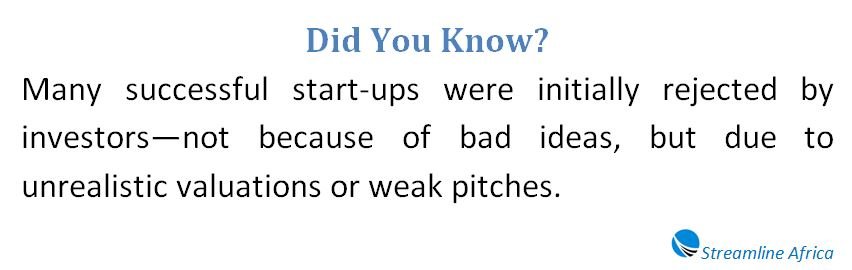
A common pitfall is misunderstanding this perspective. Founders may become overly attached to their concept and assign a valuation that reflects emotional investment rather than market reality. When expectations between founder and investor diverge too far, deals rarely materialize.

Why Traditional Valuation Methods Fall Short
Valuing a young business is not straightforward. Established financial models that work well for mature companies often fail when applied to start-ups. This is largely because early-stage ventures lack the data those models rely on.
For example, forecasting future cash flow requires historical performance and predictable revenue streams. Most start-ups are still experimenting with their business model, making such projections speculative at best. Similarly, asset-based valuation does not capture the true worth of a start-up, since much of its value lies in intangible elements like intellectual property, innovation, and market positioning.
Even comparing your company to similar businesses can be misleading. If your venture is pre-revenue or just beginning to gain traction, there may not be enough comparable data to draw meaningful conclusions. Applying traditional metrics in these cases often undervalues the business or creates unrealistic expectations.
Because of these limitations, founders must adopt more flexible approaches that reflect both the uncertainty and the potential of early-stage ventures.
Practical Ways to Estimate Your Start-Up’s Value
In the start-up ecosystem, valuation is less about precision and more about constructing a logical, defensible range. Rather than relying on a single formula, founders often combine several approaches to arrive at a figure that makes sense to both parties.
One commonly used method involves informal benchmarks within specific industries. For instance, a concept-stage company may fall within a modest valuation range, while a business with a prototype and initial users may command a higher figure. As traction improves—through revenue, partnerships, or user growth—the valuation typically increases.
Another useful strategy is analyzing similar funding deals. By examining companies at comparable stages, in similar markets, you can identify patterns in how they were valued. This doesn’t provide an exact number, but it helps anchor your expectations within a realistic range.
A more forward-looking approach involves estimating what your company could be worth in the future. You map out a growth trajectory over several years, project a potential exit value, and then work backwards to determine what that future outcome implies for today’s valuation. While this method relies on assumptions, it becomes credible when those assumptions are clearly explained and grounded in market data.
Ultimately, these methods are not about finding a perfect answer. They are about building a narrative that aligns your valuation with your business potential and market conditions.
Balancing Valuation With Long-Term Strategy
Setting a valuation is not just about closing the current funding round—it has lasting implications for your company’s future. A poorly considered valuation can create challenges that extend far beyond the initial investment.
If you undervalue your business, you may end up giving away a large portion of ownership too early. This can reduce your influence over key decisions and make it harder to attract future investors, as there may be limited equity left to offer.
On the other hand, setting the valuation too high can discourage investors altogether. Even if you manage to secure funding at an inflated valuation, it may create pressure in future rounds. If your company does not grow at the expected pace, subsequent investors may demand lower valuations, leading to what is known as a down round.
To avoid these scenarios, founders need clarity on two key points: how much capital they require and how much ownership they are willing to give up. The valuation should enable you to raise sufficient funds to reach your next major milestone while preserving enough equity to remain motivated and attractive to future investors.
Rather than chasing the highest possible number, focus on establishing a valuation you can justify with confidence. Investors are more likely to engage when they see that your assumptions are grounded in reality.
Strengthening Your Position Beyond the Numbers
While valuation is important, it is only one part of the fundraising equation. Investors are equally interested in how you present your business and how you engage with feedback throughout the process.
One effective approach is to seek input early. Sharing your pitch with experienced founders, mentors, or even potential investors can reveal gaps in your reasoning and help you refine your valuation. This process not only improves your proposal but also demonstrates openness and adaptability—qualities investors value.
Equally important is how you frame your funding request. Instead of presenting it as a need for financial support, position it as an opportunity. Highlight the momentum your business is building, the timing of your market entry, and the strengths of your team. Investors want to feel they are joining a promising journey, not rescuing a struggling idea.
Adapting your pitch is another critical skill. Different investors prioritize different aspects of a business. Some focus on market size, others on product innovation, and others on the team’s track record. Being able to adjust your emphasis without altering your core message can significantly improve your chances of securing investment.
Understanding your audience also plays a major role. Research the types of businesses an investor typically supports and tailor your presentation accordingly. When your pitch aligns with their interests and expertise, it becomes far more compelling.
Building Trust Through Transparency and Dialogue
Fundraising is not a one-sided transaction; it is a collaborative process. The most successful founders treat valuation as the starting point of a conversation rather than a fixed demand.
Engaging investors in discussion allows you to test your assumptions and refine your approach. It also shows that you are thoughtful and willing to consider different perspectives. This openness can build trust, which is often the deciding factor in early-stage investments.
Transparency is particularly important when explaining how you arrived at your valuation. Clearly outline your reasoning, including any assumptions and data points you used. When investors understand your logic, they are more likely to view your proposal as credible, even if they negotiate the final terms.
There is also a strategic advantage in seeking advice before directly asking for funding. Conversations that begin with a request for insight often evolve into investment opportunities, as they allow relationships to develop organically.
Bringing It All Together
Securing angel investment is as much about communication as it is about numbers. A strong valuation reflects not only the potential of your business but also your understanding of the market and your ability to think strategically.
By approaching valuation with flexibility, grounding your assumptions in reality, and engaging investors in meaningful dialogue, you create a foundation for successful fundraising. At the same time, presenting a compelling vision and demonstrating your capability as a founder strengthens your overall case.
In the end, raising angel investment is not about arriving at a perfect figure. It is about aligning expectations, building trust, and crafting a story that convinces others your business is worth backing.
Frequently Asked Questions about Angel Investment
What is angel investment and why does it matter for start-ups?
Angel investment refers to funding provided by individuals who invest their own money into early-stage businesses. It matters because it gives founders access to capital without taking on debt, allowing them to grow faster while also benefiting from the investor’s experience and network.
How do angel investors decide whether to invest?
They typically look for a clear problem being solved, a scalable market, and a capable founding team. While the idea matters, many investors place even more emphasis on the people behind the business and their ability to execute consistently.
Why is valuing a start-up so difficult?
Early-stage companies usually lack stable revenue, historical data, and tangible assets. This makes traditional valuation models unreliable, forcing founders to rely on assumptions, projections, and market comparisons instead.
What are practical ways to estimate a start-up’s value?
Founders often combine industry benchmarks, comparable funding deals, and future projections. These methods help create a valuation range that reflects both current progress and long-term potential.
Read Also: Startup Investment Guide: Find, Pitch, and Partner with the Right Investors
What happens if a founder sets the valuation too high or too low?
A low valuation can mean giving away too much ownership early, which may hurt control and future funding. A high valuation can scare off investors or create pressure in later funding rounds if growth expectations aren’t met.
How much equity should founders be willing to give up?
There’s no fixed rule, but the goal is to raise enough capital to reach the next milestone while retaining enough ownership to stay motivated and attractive to future investors.
How can founders improve their chances of securing investment?
By refining their pitch, gathering feedback, understanding their target investors, and clearly presenting their business as a strong opportunity rather than a desperate need for funding.
Why is communication as important as valuation in fundraising?
Because investors are not just buying into numbers—they’re buying into vision and trust. Clear, transparent communication helps build confidence and makes investors more comfortable committing their money.