

In any business that purchases goods or services, ensuring that payments are accurate and justified is critical. One widely used control method to achieve this is three-way matching. This process acts as a checkpoint within the accounts payable function, confirming that what a company ordered, what it received, and what it is being billed for are all aligned. By introducing this level of verification, organizations reduce financial risk and maintain stronger operational discipline.
At its core, three-way matching revolves around comparing three essential documents: the purchase order, the delivery confirmation, and the supplier’s invoice. When these documents correspond correctly, payment can proceed with confidence. If not, the issue must be resolved before any funds are released.
The Purpose Behind Three-Way Matching
Three-way matching is not just a routine administrative task; it serves as a protective mechanism within financial operations. Businesses deal with numerous transactions daily, and even small discrepancies can lead to significant losses over time. This method ensures that payments are only made for goods or services that were legitimately requested and successfully delivered.
Errors can arise at multiple points—during ordering, shipping, or invoicing. In some cases, inaccuracies may be unintentional, such as typographical mistakes or miscalculations. In other instances, they may indicate fraudulent activity. By systematically comparing documents, organizations can identify these issues early and prevent financial leakage.
The Three Key Documents Explained
The strength of three-way matching lies in the distinct role each document plays in the procurement cycle. Together, they form a complete narrative of the transaction.
The purchase order is the starting point. It represents the company’s official request to a supplier, outlining what is needed, in what quantity, and at what agreed price. This document sets expectations and provides a baseline for comparison.
Next comes the delivery confirmation, often referred to as a receiving report. This document verifies that the ordered goods have actually arrived. It typically includes details such as quantity received, condition of items, and delivery date. It confirms whether the supplier fulfilled their obligation as specified in the purchase order.
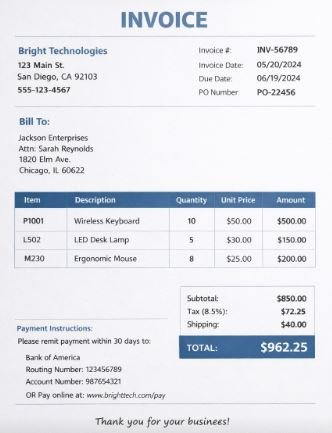
The final document is the supplier’s invoice. This is the formal request for payment, listing the items delivered along with their corresponding costs. Ideally, it should reflect the same details found in the purchase order and receiving report.
When these three documents are consistent, the transaction is considered valid and ready for payment processing.
Comparing Two-Way and Three-Way Matching
Before the adoption of more comprehensive controls, many businesses relied on two-way matching. This simpler approach compares only the purchase order and the supplier invoice. While it can be sufficient in certain scenarios—especially for intangible services—it lacks the ability to confirm whether goods were actually received.
Three-way matching addresses this limitation by incorporating the receiving report. This additional layer of verification is particularly valuable for organizations dealing with physical inventory, where delivery discrepancies are more likely to occur.
Although two-way matching still has its place in low-risk or service-based transactions, three-way matching is widely regarded as a more robust and reliable method.
How the Three-Way Matching Process Works
The process of three-way matching involves several coordinated steps, typically handled by the accounts payable team in collaboration with other departments.
First, all relevant documents must be gathered. This includes locating the purchase order, obtaining the receiving report from the warehouse or receiving team, and retrieving the supplier’s invoice.
Next, the details across these documents are carefully compared. This includes checking quantities, item descriptions, unit prices, and totals. Even minor inconsistencies must be examined to ensure accuracy.
If all information aligns, the invoice is approved for payment. However, if discrepancies are identified, the process shifts to investigation. The accounts payable team may need to communicate with the supplier or internal departments to clarify the issue.
Once resolved, the corrected documents are reviewed again before payment is authorized. After payment is processed, the documents are stored for record-keeping and future audits.
The People Involved in the Process
Three-way matching is not the responsibility of a single department. It requires coordination across multiple roles within the organization.
The purchasing team initiates the process by creating the purchase order. Their role includes selecting suppliers, negotiating prices, and ensuring that orders are accurate.
The receiving or warehouse team plays a crucial role in verifying deliveries. They confirm that goods arrive as expected and document any discrepancies at the point of receipt.
Suppliers contribute by issuing invoices that accurately reflect the goods or services provided. Their cooperation is essential for maintaining smooth transactions.
Finally, the finance and accounts payable teams oversee the entire process. They ensure that all checks are completed, policies are followed, and payments are made only when appropriate.
Effective communication among these stakeholders is vital for ensuring efficiency and minimizing delays.
A Practical Illustration
To better understand how three-way matching works, consider a company purchasing office equipment. Suppose the company orders 100 chairs from a supplier at an agreed price.
When the chairs are delivered, the receiving team counts and inspects them, confirming that all 100 units have arrived in good condition. They document this in a receiving report.
Later, the supplier sends an invoice for the order. The accounts payable team then compares the invoice with the purchase order and receiving report.
If all documents show 100 chairs at the agreed price, the invoice is approved and payment is processed.
However, if the invoice lists 105 chairs instead of 100, the discrepancy is flagged. The accounts payable team investigates by contacting the supplier and verifying the actual delivery. Only after the issue is resolved will payment proceed.
Benefits of Three-Way Matching
One of the most significant advantages of three-way matching is improved accuracy. By verifying information across multiple sources, businesses reduce the likelihood of overpayments or duplicate payments.
It also serves as a strong deterrent against fraud. Since every transaction must be supported by matching documents, it becomes more difficult for unauthorized or inflated invoices to go unnoticed.
Another benefit is enhanced transparency. The process creates a clear audit trail, making it easier to track transactions and comply with regulatory requirements.
Additionally, consistent and accurate payment practices can strengthen relationships with suppliers. When suppliers trust that they will be paid correctly and on time, it fosters long-term collaboration.
Challenges to Consider
Despite its advantages, three-way matching is not without its challenges. The process can become complex, especially when dealing with large orders or multiple line items. Differences in formatting or terminology across documents can make comparisons more difficult.
It can also be time-intensive, particularly when performed manually. Reviewing each document in detail requires effort and attention, which can strain resources in high-volume environments.
Another potential drawback is payment delays. While identifying discrepancies is important, resolving them can take time, which may impact supplier relationships if not managed carefully.
Improving the Effectiveness of Three-Way Matching
Organizations can take several steps to make their three-way matching process more efficient and reliable.
Clear communication is essential. Establishing well-defined procedures for sharing documents and reporting discrepancies ensures that everyone involved understands their role.
Adopting technology can significantly enhance efficiency. Automated systems can compare documents quickly and accurately, reducing the burden on staff and minimizing human error.
Regular reviews of the process are also important. By analyzing performance metrics such as processing time and error rates, businesses can identify areas for improvement.
Maintaining organized documentation is another key factor. Ensuring that all records are easily accessible and properly labeled helps streamline the matching process.
The Role of Automation in Modern Systems
With advancements in technology, many organizations are moving toward automated three-way matching. These systems use predefined rules to compare documents, ensuring consistency and accuracy.
Automation reduces the need for manual data entry, which is often a source of errors. Technologies such as optical character recognition can extract information from invoices, speeding up processing times.
Automated systems can also flag discrepancies instantly, allowing teams to address issues more quickly. In addition, centralized dashboards provide visibility into the status of transactions, making it easier for managers to oversee operations.
Integration with enterprise systems further enhances efficiency by enabling seamless data flow across departments. This not only improves accuracy but also supports better decision-making.
Final Thoughts
Three-way matching remains a fundamental practice in accounts payable, offering a structured approach to verifying transactions. By ensuring alignment between orders, deliveries, and invoices, businesses can protect their finances, maintain compliance, and build stronger supplier relationships.
While the process may require effort and coordination, its benefits far outweigh the challenges—especially when supported by modern tools and well-defined procedures.
Frequently Asked Questions
What is three-way matching in simple terms?
Three-way matching is a financial control process where a business compares a purchase order, delivery record, and supplier invoice to ensure everything aligns before making payment.
Why is three-way matching important for businesses?
It helps prevent overpayments, duplicate payments, and fraud by confirming that goods were ordered, received, and billed correctly.
Which documents are involved in three-way matching?
The process relies on three documents: the purchase order, the receiving report, and the supplier’s invoice.
How does three-way matching reduce fraud risk?
By requiring consistency across three independent documents, it becomes harder for fake or inflated invoices to pass through unnoticed.
What happens when there is a mismatch in documents?
The payment is paused while the accounts payable team investigates the issue, often involving suppliers or internal departments to resolve discrepancies.
Who is responsible for the three-way matching process?
It involves multiple teams including purchasing, warehouse/receiving, suppliers, and the accounts payable or finance team.
Is three-way matching always necessary?
Not always—some businesses use two-way matching for low-risk or service-based transactions, but three-way matching is preferred for physical goods.
How can companies improve their three-way matching process?
They can adopt automation tools, standardize documentation, improve communication between teams, and regularly review performance metrics.