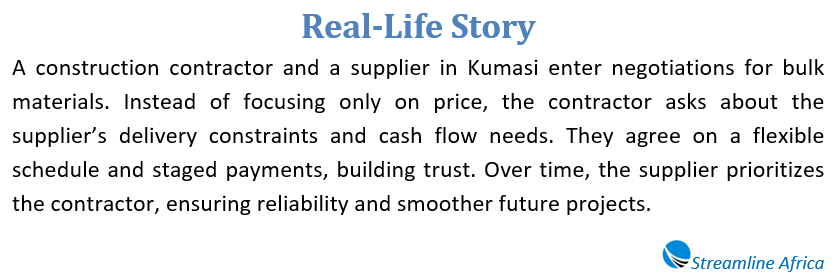
Many professionals in Ghana approach negotiation with the belief that being tough or outsmarting the other person is the only way to win. But in truth, some of the most successful negotiators are those who understand the power of relationships. Negotiation isn’t just about closing a deal—it’s about building trust and cooperation that lead to long-term success.
In Ghana’s close-knit business environment—where word travels fast—your reputation and relationships often outlast the deal itself. Whether you’re negotiating with a supplier in Makola, a client in East Legon, or a partner in Kumasi, how you treat people matters. A positive connection creates room for honesty, collaboration, and creativity—key ingredients for finding win-win outcomes. The best negotiators know that you can stand firm on your goals while remaining fair, respectful, and approachable.
Trust As A Catalyst For Better Outcomes
Trust changes everything about how negotiations unfold. When both parties trust each other, they share more meaningful information and focus on what truly matters instead of hiding behind demands. This openness helps each side find mutual benefits and design smarter, lasting solutions.
In Ghana, where business often relies on personal connections, trust can make or break a deal. Without it, discussions drag, misunderstandings multiply, and each side becomes defensive. When there’s no trust, people hesitate to be transparent about prices, timelines, or capacity, slowing progress and causing both sides to lose.
A healthy working relationship doesn’t end when the contract is signed—it continues during delivery, payment, and after-sales support. When trust exists, issues are resolved quickly and respectfully. Without it, even a minor misunderstanding—like a delayed payment or late delivery—can spiral into a full-blown dispute.

The Cost Of Mismanaging Relationships
Two common mistakes often undermine Ghanaian business negotiations. The first is trying to “buy” goodwill through unnecessary concessions. Some negotiators think offering discounts or freebies will win loyalty, but it often backfires. Over time, the other side may interpret generosity as weakness and push for even more. Genuine relationships are built through fairness, reliability, and keeping your word—not one-sided gestures.
The second mistake is assuming that relationships don’t matter. Some believe they can act ruthlessly in one deal and simply move on. But in Ghana, industries are small, and people talk. The way you behave in one meeting—whether respectful or manipulative—becomes part of your professional reputation. One bad experience can resurface later, especially when networks overlap or your counterpart moves to a new company. Treating people right pays off long after the deal is done.
Turning Negotiation Into Relationship-Building
Negotiation may not be a social event, but it’s deeply human. Building relationships in the process isn’t about flattery—it’s about creating an environment where cooperation thrives. Experienced Ghanaian negotiators understand that strong partnerships lead to smoother operations and future opportunities.
Be Intentional About Connection
Good professional relationships don’t just happen; they’re built intentionally. Before entering any negotiation—whether it’s with a client in Takoradi or a government agency in Accra—visualize the kind of relationship you want afterward. Do you want open communication and teamwork? If yes, start showing that from the start. Approach every conversation with patience, clarity, and respect. Those small actions set the tone for mutual trust.
Be Consistent And Reliable
Reliability is one of the strongest forms of credibility in Ghana’s business culture. When you promise to deliver, make sure you do—on time and as agreed. Whether it’s sending a quotation, meeting a deadline, or honoring payment terms, consistency speaks louder than words. When people trust that you’ll do what you say, they’re more likely to collaborate and share valuable insights that strengthen future negotiations.
Practice Curiosity And Active Listening
Good negotiators don’t just talk—they listen. Asking thoughtful questions helps you understand the other person’s true needs. For example, a local distributor might not only be asking for a lower price but also struggling with delayed shipping from Tema Port. Listening deeply allows you to find creative solutions that serve both sides. When people feel heard, they become less defensive and more cooperative, creating room for honest dialogue.
Balance Interests, Not Just Positions
It’s easy to focus only on what you want, but sustainable deals emerge when you consider the other side’s interests too. Finding overlap between both parties’ goals—like quality, consistency, or shared growth—creates opportunities for joint success. Instead of seeing negotiation as a contest, view it as teamwork. Every solution that benefits both parties strengthens the foundation for future collaboration.

Help The Other Side Succeed
In Ghana, many negotiations involve more than two people—there may be managers, boards, or family investors behind the scenes. Helping your counterpart justify their decision to others builds credibility and trust. When both sides can confidently defend the outcome, the deal is more likely to endure. Turning negotiation into a partnership instead of a battle creates stronger, longer-lasting agreements.
The Real Goal: From Agreement To Partnership
At its heart, negotiation is about shaping how people and organizations will work together moving forward. It’s not just about dividing money or signing a paper—it’s about setting the tone for cooperation. When both sides feel respected and heard, they’re more willing to be flexible and solve problems as they arise.
Building trust during negotiation doesn’t mean being soft or compromising your goals. It means creating a respectful atmosphere where honesty and fairness guide every exchange. By prioritizing relationships, you’re not only securing one deal—you’re building a foundation for future growth.
The Bottom Line
In Ghana’s business world, successful negotiators don’t just aim for a handshake or a signed document—they aim for trust that lasts. Being polite and fair isn’t a weakness; it’s a strength when paired with firmness and integrity. Strong relationships make negotiations smoother, agreements stronger, and outcomes more rewarding.
When you balance results with relationships, negotiation becomes more than a transaction—it becomes the start of a lasting partnership built on mutual growth, respect, and shared success.