
Businesses frequently enter into agreements expecting them to generate value, support growth, or secure future opportunities. However, changing economic conditions, operational shifts, and market fluctuations can transform once-beneficial arrangements into financial burdens. When the cost of honoring a contractual commitment becomes greater than the economic value expected from it, the agreement is known as an onerous contract.
From an accounting perspective, onerous contracts are important because they signal potential future losses. International accounting standards require companies to recognize these obligations and disclose them in their financial statements, helping investors, regulators, and stakeholders gain a clearer understanding of a company’s financial position.
Understanding how onerous contracts arise and how they are reported can help businesses manage risk more effectively and maintain transparent financial reporting practices.
What Is an Onerous Contract?
An onerous contract exists when a company determines that the unavoidable expenses associated with fulfilling a contract exceed the benefits it expects to receive from that agreement. In other words, the organization is locked into a commitment that will cost more money to complete than it will generate in return.
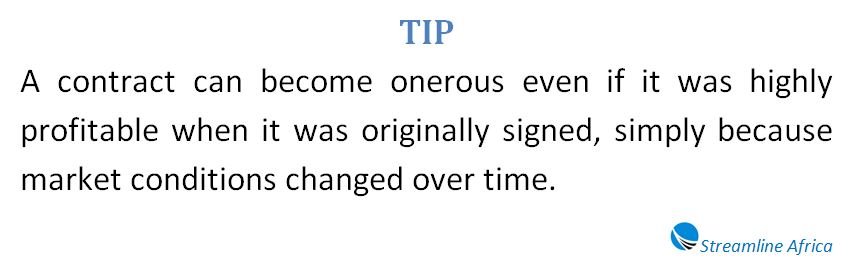
Such contracts often emerge when circumstances change after the agreement has been signed. A deal that initially appeared profitable may become disadvantageous because of declining market demand, rising costs, technological changes, or strategic business decisions.
The defining feature of an onerous contract is the expectation of a net loss. Since the company remains legally obligated to honor the agreement, it must account for the anticipated financial burden rather than waiting until the losses actually occur.
Why Onerous Contracts Matter
Contracts form the backbone of commercial activity. They establish obligations between parties and provide certainty regarding future transactions. However, when a contract becomes financially unfavorable, it can affect a company’s profitability, cash flow, and overall financial health.
Recognizing onerous contracts allows organizations to present a more accurate picture of their obligations. Investors and stakeholders rely on financial statements to evaluate risk, and undisclosed contractual losses can distort the true condition of a business.
By identifying these contracts early, management can also explore options such as renegotiation, termination, restructuring, or operational adjustments that may reduce the financial impact.

The Meaning of Unavoidable Costs
A central concept in determining whether a contract is onerous is the idea of unavoidable costs. These are the expenses a company cannot escape once it has entered into a legally binding agreement.
When evaluating a contract, accountants compare two possible outcomes. The first is the cost required to fulfill the contract according to its terms. The second is the cost of exiting the agreement, which may involve penalties, compensation payments, or other contractual consequences.
The unavoidable cost is considered to be whichever of these two alternatives is lower. This approach ensures that the liability reflects the least costly option available to the company while still recognizing the financial obligation.
For example, if completing a contract would cost $500,000 but terminating it would require paying a penalty of $300,000, the unavoidable cost would be $300,000 because it represents the lower financial sacrifice.
How Onerous Contracts Develop
Onerous contracts are often created by changing circumstances rather than poor decision-making at the outset. Many agreements are signed under assumptions that later prove inaccurate due to evolving market conditions.
A company may commit to long-term rental agreements, supply contracts, production arrangements, or service commitments expecting stable demand and predictable costs. If those assumptions change significantly, the contract may no longer make economic sense.
Economic downturns, inflation, commodity price volatility, technological disruptions, or organizational restructuring can all contribute to the emergence of onerous contracts. What was once a strategic asset can quickly become a costly obligation.
Example: Unused Commercial Property
One of the most common examples involves commercial real estate leases.
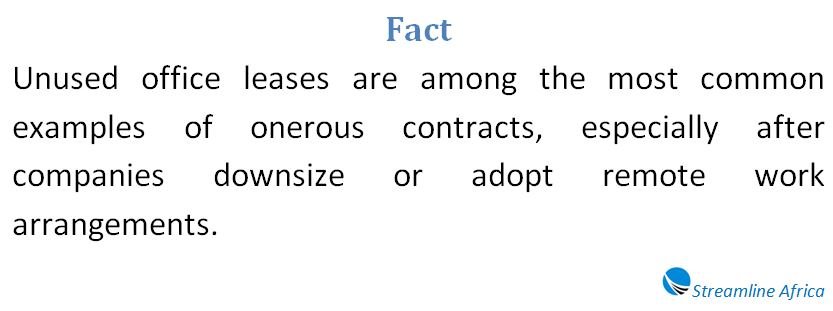
Imagine a business signs a ten-year lease for a large office building during a period of rapid expansion. Several years later, the company adopts remote work practices and significantly reduces its office space requirements. As a result, much of the leased property remains vacant.
Despite no longer benefiting from the premises, the company remains obligated to make rental payments for the remainder of the lease term. If the ongoing lease costs exceed any potential economic benefit from the property, the agreement may be classified as onerous.
In this situation, the company must evaluate the expected losses and account for the financial obligation accordingly.
Example: Resource Extraction Agreements
Natural resource industries frequently face circumstances that can lead to onerous contracts.
Consider a mining company that secures rights to extract a particular mineral from a site. At the time the agreement is signed, commodity prices are strong, making the project economically attractive.
However, if market prices later decline sharply, the cost of extraction, transportation, and processing may exceed the revenue generated from selling the resource. The company may find itself bound to an agreement that no longer produces a profit.
In such cases, the contract can become onerous because fulfilling the obligations would generate losses rather than economic gains.
Accounting Treatment Under International Standards
International accounting rules provide specific guidance on how companies should report onerous contracts.
Under International Financial Reporting Standards (IFRS), these contracts must be recognized once it becomes evident that future losses are unavoidable. Rather than waiting until losses materialize, businesses are required to record the expected obligation as a liability.
This treatment reflects the principle that financial statements should provide timely and relevant information about foreseeable obligations. Investors and creditors benefit from understanding potential losses before they affect actual cash flows.
Recognition occurs when management determines that the contract’s unavoidable costs exceed the anticipated benefits and that the loss can be reasonably estimated.
Onerous Contracts as Provisions
International accounting guidance categorizes onerous contracts as provisions. A provision represents a liability involving uncertainty regarding timing, amount, or both.
Although the exact cost may not be fully known, there is sufficient evidence that an obligation exists and will likely require future economic resources to settle.
Companies must estimate the amount necessary to satisfy the obligation using the best information available. This estimate is then recorded on the balance sheet, helping ensure that financial reports accurately reflect the organization’s commitments.
As conditions change, the provision may need to be reassessed and adjusted to reflect updated expectations.
Differences Between IFRS and U.S. GAAP
Accounting treatment for onerous contracts differs significantly between international standards and United States accounting rules.
Under IFRS, companies generally must recognize losses associated with onerous contracts once they become apparent. This proactive approach emphasizes transparency and early disclosure of financial burdens.
In contrast, U.S. Generally Accepted Accounting Principles (GAAP) do not contain a broad requirement specifically addressing onerous contracts in the same manner. As a result, many anticipated losses from such agreements are not recognized immediately under GAAP unless covered by other specific accounting guidance.
This difference can create variations in reported liabilities and financial results between organizations operating under the two accounting frameworks.
The Importance of Ongoing Contract Evaluation
Businesses cannot assume that a profitable contract today will remain beneficial throughout its lifespan. Regular contract reviews are essential for identifying potential financial risks before they become severe.
Management teams should monitor changes in market conditions, operating costs, customer demand, and strategic objectives. Early detection of loss-making agreements allows companies to assess available options and comply with applicable accounting standards.
Consistent evaluation also improves corporate governance by ensuring that contractual obligations are understood, measured, and communicated accurately to stakeholders.
Conclusion
Onerous contracts arise when the unavoidable cost of fulfilling an agreement exceeds the economic benefits expected from it. These contracts can emerge from shifting market conditions, declining demand, rising expenses, or significant business changes that alter the original value of a contractual arrangement.
Examples such as unused office leases and unprofitable resource extraction agreements demonstrate how long-term commitments can evolve into financial liabilities. Under IFRS, businesses must recognize these obligations as provisions and report them on their balance sheets, while U.S. GAAP generally follows a different approach.
By regularly reviewing contractual commitments and identifying potential losses early, organizations can strengthen financial transparency, improve risk management, and provide stakeholders with a more accurate view of their financial position.
Frequently Asked Questions
Why Do Onerous Contracts Matter?
They can create significant financial losses and must be properly identified so stakeholders understand the company’s true financial obligations.
What Causes a Contract to Become Onerous?
Changes in market conditions, rising costs, falling demand, business restructuring, or economic downturns can turn a once-profitable contract into a loss-making one.
What Are Unavoidable Costs?
Unavoidable costs are the minimum costs a company must bear, either by fulfilling the contract or paying penalties to exit it.
Can a Lease Agreement Become Onerous?
Yes. If a company leases office space it no longer needs but must continue paying rent, the lease may become an onerous contract.
How Do Commodity Price Changes Affect Contracts?
When commodity prices fall below production costs, agreements related to mining or resource extraction can become unprofitable and therefore onerous.
How Are Onerous Contracts Treated Under IFRS?
Companies must recognize expected losses as liabilities on their balance sheets as soon as the contract is identified as onerous.
Are Onerous Contracts Considered Provisions?
Yes. Under international accounting standards, they are classified as provisions because the timing or amount of the future obligation may be uncertain.
Does U.S. GAAP Require the Same Treatment?
No. U.S. GAAP generally does not require companies to recognize onerous contracts in the same broad manner as IFRS.