

Every investment, no matter how carefully planned, carries an element of uncertainty. While some risks are tied to markets, interest rates, or creditworthiness, others emerge from the political environment itself. This is what is known as political risk—the chance that decisions, policies, or instability within a political system will disrupt economic activity or undermine business value. For investors, multinational corporations, and even governments, political risk is one of the most unpredictable yet impactful challenges to manage.
Defining Political Risk
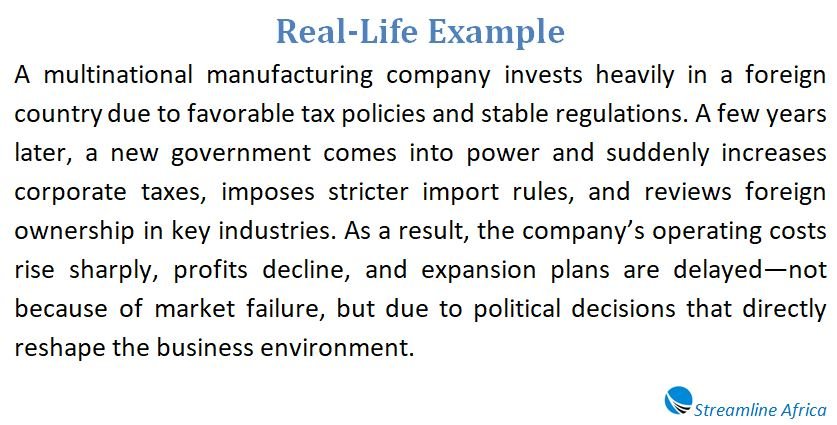
At its core, political risk represents the possibility that political actions—whether sudden or gradual—will reduce the expected return on an investment. It can take many forms: new tax regimes, currency controls, regulatory shifts, corruption, terrorism, or outright expropriation of assets.
While most discussions frame political risk as a danger, it can also create opportunities. For example, a government that deregulates an industry or signs a favorable trade agreement may create fresh avenues for business growth. Still, the term is most often used to highlight downside risks, since political decisions can alter the expected value of investments overnight.
Who Faces Political Risk?
Political risk affects a wide range of stakeholders.
- Businesses: Companies face the threat of higher costs, disrupted operations, or reputational harm when politics shift against them.
- Investors: Portfolio holders worry about sudden declines in asset values if political instability reduces confidence in a market.
- Governments: Even states themselves encounter political risk when international relations, conflicts, or domestic unrest complicate their strategies.
Although traditionally associated with developing economies, political risk is just as relevant in established democracies. Policy gridlock, populist movements, or sudden regulatory changes can unsettle markets in highly developed countries.

The Paradox of Stability
It might be tempting to assume that stable governments offer the least political risk. However, stability is not always the same as freedom. Some authoritarian regimes deliver predictable conditions for investors, but this predictability rests on tight control. When political pressure eventually boils over, the disruption can be dramatic. True political risk assessment requires looking beyond surface stability to evaluate how resilient institutions and systems are in the long run.
The Probability and Impact of Political Risk
Like many risks, political risk can be analyzed through two lenses: probability and impact. Probability reflects the likelihood that a political event will occur, while impact measures the potential effect on earnings or operations. For example, the chance of a new tax might be low, but if implemented, it could significantly reduce profits. Businesses must balance these dimensions, weighing both the likelihood and severity of outcomes when assessing whether an investment remains attractive.
Macro-Level Political Risk
Macro-level political risk involves large-scale factors that affect all investors and companies within a country or region. These risks are not tied to a single project or firm but instead shape the entire business climate. Examples include:
- Currency devaluations or exchange restrictions
- National policy shifts, such as trade barriers or new tariffs
- Widespread corruption or changes in government leadership
- Civil unrest, war, or terrorism
- Regulatory overhauls affecting entire industries
Because macro-level risks apply broadly, they are often included in country risk assessments. However, political risk differs from pure country risk because it specifically emphasizes political drivers rather than economic or financial variables.
Organizations such as the Eurasia Group and Economist Intelligence Unit publish indexes that attempt to quantify these risks, giving investors tools to compare environments across countries. While no model can fully predict instability, such indexes help highlight where vulnerabilities are most pressing.
Micro-Level Political Risk
Unlike macro risks, micro-level risks affect specific industries, projects, or firms. A government might target a particular sector with new regulations, or a project could face delays because of local opposition.
Examples include:
- Government reviews of foreign acquisitions in sensitive industries
- Expropriation or nationalization of assets in strategic sectors
- Licensing disputes or selective enforcement of regulations
- Partnerships with politically connected local firms that later backfire
These micro-level risks are often highly specific, making them harder to anticipate. Consider the case of Dubai Ports World, which attempted to purchase U.S. port operations in 2006. Despite being a global player, the company faced intense political backlash in the United States, ultimately derailing the deal. Such cases show how even seemingly straightforward investments can falter under political scrutiny.
Geopolitical Risk
When political risk moves beyond borders and involves interactions between states, it becomes geopolitical risk. This form of risk arises from conflicts, rivalries, and diplomatic disputes at the international level.
Geopolitical risks include wars, terrorism, trade conflicts, and struggles over resources or strategic routes. For instance, disputes in the South China Sea affect global shipping, while sanctions on countries like Iran influence oil markets. Businesses, financial institutions, and governments alike must consider these geopolitical dynamics when planning investments or policies.
In today’s interconnected economy, geopolitical risks rarely remain isolated. A regional conflict can ripple through supply chains, raise energy prices, and shake financial markets worldwide.
The Role of Political Risk Insurance
Given its unpredictability, many businesses and investors turn to political risk insurance as a safeguard. These insurance products cover losses caused by events such as:
- Expropriation of assets
- Currency inconvertibility or restrictions on capital transfers
- Political violence, including war or terrorism
- Governmental interference with contracts
Insurance claims tend to rise when leadership changes or when governments face fewer political constraints. While insurance cannot prevent political upheaval, it can provide a financial cushion that makes high-risk investments more feasible.

Why Political Risk Matters for Governments
Political risk is not just a business concern. Governments themselves face obstacles when pursuing projects, alliances, or diplomatic initiatives. Domestic unrest can weaken a government’s credibility abroad, while shifts in global politics can force leaders to alter strategies. Understanding political risk is thus essential for both national security and international diplomacy.
Measuring Political Risk
Unlike credit risk or market risk, political risk is difficult to quantify precisely. Still, analysts use a combination of historical data, expert assessments, and scenario modeling to estimate potential outcomes. Some firms create indices that assign risk scores to countries based on governance quality, conflict likelihood, or policy unpredictability.
Quantitative methods can be useful, but they must be supplemented by qualitative insights. Cultural understanding, knowledge of local politics, and awareness of social dynamics all play crucial roles in predicting how politics might impact business.
Political Risk in Developed Economies
It is a misconception that political risk belongs only to emerging markets. Developed economies present their own unique forms of risk. Shifts in trade policy, rising populism, polarized legislatures, and regulatory uncertainty can disrupt industries just as much as coups or riots in less developed nations.
For example, the Brexit referendum fundamentally reshaped the business environment for companies operating in the United Kingdom and across Europe. Similarly, trade tensions between the United States and China introduced uncertainties that rippled across global supply chains.
Opportunities Hidden Within Political Risk
Although the conversation often emphasizes dangers, political risk can also create opportunities. A government that reforms its regulations to attract foreign investment, signs new trade deals, or privatizes state-owned industries may open lucrative avenues for growth. Companies willing to take calculated risks in such environments can benefit from being early movers.
The challenge lies in distinguishing between risks that destroy value and those that signal emerging opportunities. Doing so requires both foresight and agility.
Managing Political Risk
Organizations cannot remove political risk altogether, but they can take steps to reduce exposure. Common strategies include:
- Diversification: Spreading operations and investments across different countries or regions to avoid overreliance on one market.
- Partnerships: Working with local stakeholders who understand the political landscape and can help navigate challenges.
- Scenario planning: Preparing for multiple possible outcomes to remain resilient when changes occur.
- Insurance: Protecting against catastrophic losses through specialized policies.
- Engagement: Building strong relationships with governments and communities to reduce hostility and build trust.
Ultimately, managing political risk requires a blend of financial safeguards, local insight, and flexibility in business strategy.
Conclusion
Political risk is an unavoidable reality of global business. Whether through regulatory changes, civil unrest, or international conflicts, politics constantly shapes the economic landscape. While impossible to eliminate, political risk can be understood, managed, and even leveraged when approached with foresight.
From macro-level disruptions that affect entire countries to micro-level obstacles targeting specific projects, political risk demands careful attention. By balancing probability and impact, diversifying investments, and using tools like insurance, organizations can pursue opportunities without being blindsided by instability. In a world where politics and economics are inseparably linked, mastering political risk management is not just a defensive measure—it is a key driver of long-term success.

Frequently Asked Questions about Political Risk
Who is affected by political risk?
It affects businesses, investors, and even governments, influencing profitability, market stability, and the ability to pursue strategic initiatives.
Does political risk only exist in developing countries?
No. While often associated with emerging economies, political risk also affects developed democracies through policy shifts, trade disputes, and regulatory uncertainty.
What are macro-level political risks?
These are broad risks that impact all businesses in a country, such as wars, currency restrictions, corruption, or sweeping regulatory changes.
What are micro-level political risks?
They are project- or sector-specific risks, like asset expropriation, unfavorable licensing decisions, or political backlash against foreign acquisitions.
How does geopolitical risk differ?
Geopolitical risk refers to international conflicts, trade disputes, or diplomatic tensions between countries that affect global markets and supply chains.
Can businesses protect themselves from political risk?
Yes. They can diversify operations, build local partnerships, buy political risk insurance, engage governments, and use scenario planning.
Can political risk also create opportunities?
Absolutely. Regulatory reforms, privatization, or new trade agreements can create growth opportunities for companies willing to take calculated risks.