

At a growing logistics company in Accra, the leadership team faced a familiar dilemma. A senior operations manager had just resigned, leaving behind a critical gap. The instinct was to search externally, post job ads, and bring in fresh talent. But before doing so, the company paused and looked inward. What they discovered changed not only their hiring strategy but also their workplace culture.
Many organizations overlook one simple truth: some of the best candidates are already sitting a few desks away. When employees see real opportunities to grow within a company, they become more engaged, committed, and willing to stretch beyond their current roles. Promoting from within is not just a hiring decision; it is a long-term investment in people.
Before rushing to the external market, it pays to take a closer look at the talent already embedded in your organization.

How to Spot Employees Ready for the Next Step
Identifying internal talent requires more than just glancing at performance metrics. It involves understanding motivation, behavior, and potential.
One effective starting point is to announce open roles internally. At a mid-sized marketing firm in Nairobi, leadership introduced internal job postings before advertising externally. The result was a surge of interest from employees who had quietly been preparing for bigger responsibilities. This approach not only revealed hidden ambition but also gave management a clearer picture of who was ready to grow.
Performance reviews are another valuable tool. In a manufacturing company in Kumasi, managers began analyzing appraisal reports more carefully. They noticed recurring comments about initiative, leadership, and adaptability among certain employees. These patterns helped identify individuals who were already operating beyond their current job descriptions.
Feedback from colleagues also plays a critical role. Sometimes, the most reliable insights come from those who work closely with a candidate every day. In one Lagos-based tech startup, team members consistently pointed to a software developer who informally mentored others and helped resolve team conflicts. When a team lead position opened, the choice became obvious.
Another strong indicator is a commitment to self-improvement. Employees who invest in courses, certifications, or additional responsibilities are often signaling readiness for advancement. For example, a customer service representative in Cape Town began taking online leadership classes and volunteering for complex client cases. When a supervisory role opened, she was already equipped with both knowledge and confidence.
Holding informal “stay conversations” can also uncover hidden ambitions. These discussions focus on what employees enjoy, what they find challenging, and where they see themselves in the future. In many cases, such conversations reveal individuals who are eager to grow but have not yet voiced their aspirations.
Traits That Signal Promotion Readiness
Recognizing promotable employees goes beyond resumes and qualifications. Certain behavioral patterns consistently point to leadership potential.
Taking Ownership Without Being Asked
Employees who naturally assume responsibility stand out quickly. In a retail chain in Accra, one supervisor noticed a sales associate who regularly stepped in to resolve customer issues, even when it was not required. This employee treated the business as if it were their own, focusing on team success rather than personal recognition.
Such individuals do not wait for instructions. They anticipate needs, act decisively, and follow through until tasks are completed.
Thinking in Terms of Solutions
Every workplace encounters challenges, but not everyone approaches them the same way. Some employees highlight problems without offering ideas, while others come prepared with possible solutions.
In a financial services firm in Johannesburg, a junior analyst gained recognition for consistently presenting alternatives during team meetings. Even when her ideas were not perfect, her willingness to think critically and act proactively set her apart.
Leaders are not expected to have all the answers, but they must be willing to search for them.
Earning Genuine Respect From Peers
Respect is not the same as popularity. It is built through consistency, fairness, and professionalism.
In a construction company in Abuja, one project coordinator became the go-to person for resolving disputes. Colleagues trusted his judgment because he remained calm under pressure and treated everyone with respect. When management considered candidates for promotion, his name surfaced repeatedly.
Without peer respect, even the most technically skilled employee will struggle in a leadership role.
Supporting the Growth of Others
Strong internal candidates often act as informal mentors. They share knowledge, guide new employees, and celebrate team successes.
In a hospitality business in Mombasa, a front desk officer became known for helping new hires adapt quickly. She created simple guides, offered advice, and ensured her colleagues felt supported. Her ability to lift others made her an ideal candidate for a managerial role.
Leadership is not just about personal performance; it is about enabling others to succeed.
Staying Composed Under Pressure
Higher roles come with increased stress, tighter deadlines, and more complex decisions. Employees who handle pressure well in their current roles are more likely to thrive after promotion.
At a telecom company in Dakar, a team leader observed how different employees reacted during system outages. While some became overwhelmed, one technician remained calm, coordinated responses, and reassured customers. This composure made him a natural choice for advancement.
Consistently Delivering Beyond Expectations
High performers rarely go unnoticed. They meet targets, exceed expectations, and maintain high standards.
However, performance alone is not enough. The key is consistency. An employee who repeatedly delivers strong results demonstrates reliability and commitment. If such individuals are not given opportunities to grow, they may eventually seek advancement elsewhere.
Why Promoting From Within Strengthens Organizations
Choosing internal candidates offers advantages that extend far beyond filling a vacant position.
One of the most immediate benefits is cost efficiency. Recruiting externally often involves advertising expenses, recruitment agencies, and lengthy onboarding processes. Internal promotions reduce these costs significantly while leveraging existing talent.
Retention also improves when employees see a clear path forward. In a consulting firm in Kigali, leadership noticed a decline in turnover after implementing a structured promotion system. Employees felt valued and were more motivated to stay and grow within the company.
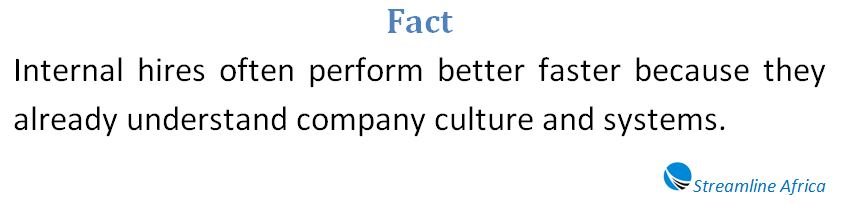
Another advantage is faster integration. Internal hires already understand the company’s systems, culture, and expectations. In a logistics company in Tema, a newly promoted manager required minimal onboarding compared to external hires, allowing operations to continue smoothly.
Cultural alignment is another critical factor. Employees who have spent time within an organization are familiar with its values and unwritten rules. This reduces the risk of hiring someone who struggles to adapt.
Perhaps most importantly, internal promotions boost morale. When employees witness their colleagues advancing, it reinforces the belief that hard work and dedication are recognized. This creates a positive cycle of motivation and performance across the organization.
When Looking Outside Makes More Sense
While internal hiring has clear advantages, it is not always the best solution.
Sometimes, no one within the organization possesses the required skills or experience. In such cases, waiting for someone to develop those capabilities may not be practical, especially when the role is critical.
External hires can also bring fresh perspectives. In a creative agency in Lagos, leadership intentionally recruited an outsider to introduce new ideas and challenge existing practices. The result was a wave of innovation that revitalized the company’s approach.
There are also situations where rapid growth creates workload pressures that the current team cannot handle. Bringing in additional talent from outside can help distribute responsibilities and prevent burnout.
Finally, certain roles may require specialized expertise that is not available internally. Whether it is adopting new technology or entering a new market, external candidates can provide the knowledge needed to move forward quickly.
Building a Balanced Approach to Hiring
The most effective organizations do not rely exclusively on internal or external hiring. Instead, they strike a balance.
In a fast-growing fintech company in Accra, leadership adopted a “look inside first” policy. Every open role was initially offered internally, giving employees the chance to step forward. If no suitable candidate emerged, the search expanded externally.
This approach ensured that internal talent was always considered while still allowing the company to bring in new skills when necessary.
Creating Opportunities for Growth
Promoting from within is not just about identifying talent; it is about developing it.
Organizations that invest in training, mentorship, and career development create a pipeline of future leaders. Employees become more confident, capable, and prepared to take on new challenges.
Managers also play a crucial role. By recognizing potential early and providing guidance, they help employees transition smoothly into higher roles.
The Takeaway
The next time a position opens in your organization, resist the urge to immediately look outward. Take a closer look at the people already contributing to your success.
Chances are, the right candidate is already there—learning, growing, and waiting for an opportunity to step up. By recognizing and nurturing that potential, you not only fill roles more effectively but also build a stronger, more committed team for the future.
Important Highlights
Promoting From Within Unlocks Hidden Talent
Many organizations already have capable employees who understand the business deeply but are often overlooked when new roles open up.
Internal Opportunities Boost Employee Motivation
When team members see real career growth paths, they become more engaged, productive, and committed to long-term success.
Performance and Attitude Matter More Than Titles
Employees who consistently exceed expectations and show initiative often signal readiness for greater responsibility.
Leadership Traits Appear Before Promotions
Future leaders usually demonstrate ownership, problem-solving ability, and accountability even before they are officially promoted.
Peer Respect Is a Key Indicator of Leadership Potential
Employees who are trusted and respected by colleagues are more likely to succeed in leadership roles.
Continuous Learning Signals Readiness for Growth
Those who invest in self-development and take on new challenges are often preparing themselves for advancement.
Internal Hiring Saves Time and Costs
Promoting from within reduces recruitment expenses and shortens onboarding since employees already know the organization.
External Hiring Still Has Its Place
When fresh ideas, specialized skills, or rapid expansion are needed, bringing in outside talent can complement internal growth.