
Executive Summary
The Republic of the Congo, commonly known as Congo-Brazzaville, presents a specialised investment environment shaped by hydrocarbon production, extensive natural resources, strategic Atlantic access, and a highly urbanised population. The country offers credible commercial opportunities in oil and gas services, mining, commercial agriculture, forestry, renewable energy, logistics, infrastructure, telecommunications, and food processing.
However, the investment climate also presents significant operational and financial risks. These include heavy dependence on petroleum exports, high public debt, infrastructure deficiencies, administrative delays, skills shortages, limited household purchasing power, and exposure to international commodity-price movements.
For foreign companies, successful market entry will generally depend on detailed regulatory due diligence, realistic financial modelling, reliable local partnerships, effective government engagement, and a long-term approach to relationship building. Investors should assess opportunities not only according to resource availability but also according to infrastructure requirements, financing conditions, customer demand, and implementation capacity.
Republic of the Congo Investment Snapshot
Capital: Brazzaville
Principal commercial and industrial centre: Pointe-Noire
Official language: French
Currency: Central African CFA franc
Main economic driver: Oil and gas
Major export product: Crude petroleum
Priority investment sectors: Energy, mining, agriculture, forestry, logistics, infrastructure, digital services, tourism, and manufacturing
Regional memberships: Economic and Monetary Community of Central Africa, Economic Community of Central African States, African Continental Free Trade Area, and World Trade Organization
Primary business locations: Brazzaville and Pointe-Noire
The Republic of the Congo is a member of the Central African Economic and Monetary Community, rather than the Common Market for Eastern and Southern Africa. CEMAC provides a regional customs and monetary framework shared with Cameroon, Gabon, Chad, the Central African Republic, and Equatorial Guinea.
Macroeconomic and Commercial Environment
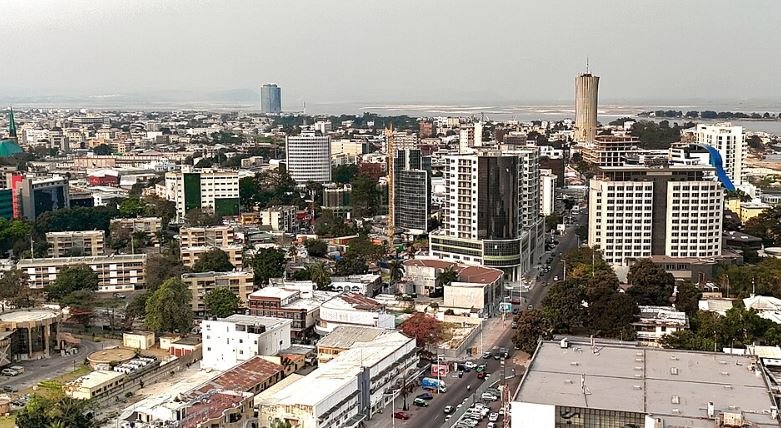
Economic activity in the Republic of the Congo is concentrated largely in Brazzaville and Pointe-Noire. Brazzaville functions as the administrative, political, and services centre, while Pointe-Noire serves as the main petroleum, industrial, logistics, and port hub.
This geographic concentration can offer practical advantages to investors. Companies can focus distribution, recruitment, marketing, and stakeholder engagement on two principal urban markets instead of establishing an extensive national footprint at the initial stage of entry.
The economy remains highly dependent on oil production and exports. Petroleum contributes a substantial share of public revenue, export receipts, and industrial output. This dependence means that changes in global oil prices, production levels, and international energy demand can quickly affect government expenditure, foreign exchange availability, business confidence, and domestic economic activity.
The World Bank reported that the economy expanded by 2.6% in 2024, supported partly by agriculture and manufacturing. However, the improvement had not yet produced a significant reduction in poverty. More recent assessments indicate that growth remained modest in 2025, while weak public investment, electricity disruptions, rising debt pressures, and constrained financing conditions affected the broader economy.
The long-term investment outlook will therefore depend on the government’s ability to strengthen public financial management, improve infrastructure, develop human capital, and expand productive activity outside the petroleum industry.
Oil, Gas and Energy Investment Opportunities
Oil and gas remain the most developed sectors of the Congolese economy. International companies have opportunities across exploration, production support, engineering, equipment supply, maintenance, marine services, environmental management, storage, transportation, and workforce training.
Companies with technical expertise may also find demand for asset integrity services, offshore support, digital monitoring systems, safety solutions, and operational efficiency programmes. Local-content expectations can create opportunities for joint ventures, supplier development, technical education, and partnerships with Congolese companies.
The transition toward lower-carbon energy creates both risk and opportunity. Declining global dependence on fossil fuels could weaken future oil revenues, but it may also encourage investment in gas-to-power projects, solar energy, hydropower, energy-efficient infrastructure, and electricity distribution.
Reliable power remains essential for mining, manufacturing, agricultural processing, and digital services. Energy projects capable of reducing supply interruptions may therefore deliver commercial value while supporting wider economic diversification.
Mining and Mineral Processing Potential
The Republic of the Congo possesses major deposits of iron ore, potash, phosphates, and other minerals. Although this resource base is commercially attractive, large-scale production remains limited in several areas.
The principal challenge is not necessarily the availability of minerals but the infrastructure required to extract, process, transport, and export them profitably. Mining projects may require substantial investment in railways, roads, electricity, water supply, processing plants, storage facilities, and port capacity.
Opportunities therefore extend beyond mineral extraction. Engineering firms, logistics companies, construction businesses, power developers, environmental consultants, equipment suppliers, and professional service providers may all participate in the development of the mining value chain.
Investors should nevertheless conduct detailed geological, legal, environmental, and infrastructure assessments. Commercial models should account for long construction periods, high capital expenditure, commodity-price volatility, and potential regulatory delays.
Agriculture and Food-Processing Opportunities
Agriculture is one of the strongest areas for economic diversification. A large portion of the workforce depends on subsistence farming, small-scale agriculture, forestry, or related low-income activities. However, domestic commercial production remains below its potential.
Investment opportunities include mechanised farming, irrigation, seed production, fertiliser distribution, agricultural machinery, animal production, fisheries, storage, cold-chain facilities, packaging, food processing, and wholesale distribution.
Businesses that can replace imported food with locally produced alternatives may benefit from recurring domestic demand. Opportunities may be particularly relevant in poultry, grains, vegetables, fruit, edible oils, livestock products, and processed foods.
Investors should evaluate land access, transport conditions, seasonal risks, water availability, labour productivity, and proximity to urban markets. Projects located near Brazzaville or Pointe-Noire may benefit from stronger consumer demand and easier access to distribution networks.
Forestry and Sustainable Timber Development
The country’s extensive forests support opportunities in timber harvesting, wood processing, furniture production, construction materials, paper products, and biomass energy. However, investors must consider environmental regulation, forest certification, community engagement, and international sustainability standards.
A shift from raw timber exports toward local processing could increase domestic value creation and employment. Companies with expertise in certified forestry, traceable supply chains, efficient sawmilling, furniture manufacturing, and sustainable land management may be well positioned.
Investors should establish strong environmental, social, and governance controls because forestry projects can attract scrutiny relating to biodiversity, land rights, carbon emissions, and community livelihoods.

Transport, Port and Logistics Opportunities
Pointe-Noire gives the Republic of the Congo direct access to the Atlantic Ocean and serves as an important commercial gateway for Central Africa. The city’s port, petroleum infrastructure, and industrial base support opportunities in freight forwarding, shipping services, warehousing, customs support, cargo handling, fleet management, and supply-chain technology.
Infrastructure investment is also required to improve connections between production areas, cities, mining sites, agricultural zones, and export facilities. Opportunities may arise in road construction, rail development, bridge maintenance, storage facilities, and inland transport.
Brazzaville’s location directly opposite Kinshasa creates potential access to one of Africa’s largest urban markets. However, the Republic of the Congo and the Democratic Republic of the Congo operate under separate legal, customs, regulatory, and tax systems. Cross-border commerce therefore requires dedicated planning rather than assumptions of automatic market access.
Digital Services and Telecommunications
Digital services represent an emerging area of opportunity. Businesses and public institutions increasingly require mobile connectivity, digital payments, enterprise software, cybersecurity, data management, cloud solutions, and technology-enabled administrative services.
Financial technology may help address gaps in conventional banking access, particularly for individuals and small businesses. Opportunities may also exist in mobile commerce, digital identity, payroll technology, logistics platforms, online education, and agricultural information services.
Investors should assess infrastructure reliability, internet costs, data-protection requirements, customer affordability, and the availability of technical talent before entering the market.
Special Economic Zones and Industrial Development
The government has identified special economic zones as instruments for reducing dependence on oil and attracting investment into non-hydrocarbon sectors. The national investment promotion agency identifies four proposed zones designed to support industrial and commercial activity.
Companies operating in qualifying zones may be eligible for tax, customs, land, or administrative benefits, depending on the applicable legal framework and implementation status. Investors should verify whether a particular zone is operational, whether supporting infrastructure has been completed, and whether announced incentives are available in practice.
Potential zone-based activities include mineral processing, timber transformation, agro-industry, manufacturing, logistics, and export production.
Recommended Market Entry Strategy
Foreign companies should begin with a structured market assessment covering demand, competition, regulation, taxation, licensing, infrastructure, labour availability, and potential partners.
An initial presence in Brazzaville or Pointe-Noire may provide the most practical route into the market. Brazzaville is generally preferable for companies that require frequent engagement with ministries, regulators, and public institutions. Pointe-Noire may be more suitable for energy, logistics, industrial, maritime, and supply-chain businesses.
A phased entry strategy can reduce financial exposure. Companies may begin through a representative office, distributor, project partnership, local agent, or joint venture before establishing a larger permanent operation.
Partner selection requires careful due diligence. Investors should review ownership structures, financial records, political exposure, litigation history, operational capability, reputation, and compliance practices. Informal introductions should not replace legal and commercial verification.
Establishing a Business
The Republic of the Congo is broadly open to foreign participation in many commercial sectors. Foreign investors can establish companies, enter partnerships, and lease or acquire property subject to applicable legislation and sector-specific requirements.
Business registration is coordinated through the Congolese Agency for Business Creation and its one-stop service centres. Although the system is intended to simplify incorporation, investors should prepare for documentary requirements, administrative processing, and possible delays.
Legal counsel should review the proposed company structure, shareholder arrangements, licensing obligations, employment contracts, tax registration, land rights, and profit-repatriation arrangements before operations begin.
Taxation and Investment Incentives
Companies may fall under different tax regimes depending on their size, turnover, investment level, activity, and location. Projects in designated development areas or special economic zones may be eligible for preferential treatment.
Potential incentives may include customs relief, tax reductions, exemptions on certain imported equipment, or benefits linked to export-oriented production. However, incentives should not be assumed solely on the basis of promotional material.
Investors should obtain written confirmation of eligibility and model the project under both incentivised and non-incentivised scenarios. This provides protection if approvals are delayed, modified, or applied differently than expected.
Investor Risk Matrix
| Risk Area | Potential Business Effect | Recommended Mitigation |
|---|---|---|
| Oil-price volatility | Reduced public spending, weaker demand, and lower foreign-exchange inflows | Apply conservative pricing assumptions and conduct scenario analysis |
| High public debt | Tighter financing conditions and increased payment risk | Assess sovereign exposure and limit dependence on public contracts |
| Infrastructure deficiencies | Higher transport, power, and operating costs | Conduct infrastructure audits before selecting project locations |
| Electricity disruptions | Production delays and equipment damage | Include backup power and energy-resilience plans |
| Regulatory delays | Slower registration, licensing, and project execution | Retain experienced local legal and regulatory advisers |
| Skills shortages | Recruitment challenges and lower productivity | Introduce technical training and workforce localisation programmes |
| Limited household income | Reduced demand for premium consumer products | Use customer segmentation and affordable pricing models |
| Partner and compliance risk | Financial loss, reputational damage, or legal exposure | Complete enhanced due diligence and maintain compliance controls |
| Commodity dependence | Revenue volatility for mining and resource projects | Diversify buyers and use realistic commodity-price forecasts |
| Political sensitivity | Stakeholder and reputational complications | Maintain neutrality and implement responsible engagement procedures |
Republic of the Congo and Democratic Republic of the Congo
The Republic of the Congo should not be confused with the Democratic Republic of the Congo. The Republic of the Congo is also called Congo-Brazzaville, while the Democratic Republic of the Congo is frequently called Congo-Kinshasa.
They are independent countries with different governments, laws, investment agencies, tax systems, currencies, and commercial environments. Although their capitals face each other across the Congo River, companies entering one market do not automatically obtain operating rights in the other.
This distinction is particularly important when conducting legal research, reviewing market data, applying for licences, or searching for local business partners.
Business Culture and Professional Engagement
French is the principal language of government, contracts, formal communication, and business negotiation. Companies without French-speaking personnel should use qualified interpreters, bilingual lawyers, or local advisers.
Business relationships are often built through personal engagement and trust. Meetings, introductions, and sustained communication may influence progress as much as formal correspondence. International companies should therefore allow sufficient time for relationship development.
Professional etiquette is generally formal, particularly during initial meetings. Investors should respect organisational hierarchy, use appropriate titles, and avoid overly direct negotiation styles.
Political and ethnic discussions should be approached cautiously. Conservative standards of public behaviour are also common, and visible tattoos or public displays of affection may be viewed negatively in some professional settings.
Frequently Asked Questions
Is the Republic of the Congo open to foreign investment?
The country is generally open to foreign investors across many sectors. However, licensing, registration, tax, labour, environmental, and sector-specific requirements must be satisfied before operations begin.
What are the best sectors for investment in Congo-Brazzaville?
The strongest potential opportunities include oil and gas services, mining, agriculture, food processing, forestry, renewable energy, transport, logistics, infrastructure, telecommunications, and digital services.
What are the main business risks?
Major risks include oil dependence, high public debt, infrastructure gaps, administrative delays, electricity shortages, weak household purchasing power, skills limitations, and commodity-price volatility.
Can foreign investors own companies?
Foreign investors can establish and own businesses in many sectors, although certain activities may require additional approvals, local participation, or specific licences.
What language is used for business?
French is the main language used in government administration, legal documentation, contracts, regulatory engagement, and formal commercial discussions.
Where should an investor establish operations?
Brazzaville is the preferred location for government and professional services, while Pointe-Noire is more suitable for petroleum, shipping, logistics, industrial, and port-related businesses.
Does the Republic of the Congo belong to COMESA?
No. The Republic of the Congo belongs to CEMAC and ECCAS. The Democratic Republic of the Congo is the country that holds membership in COMESA.
Are special economic zone incentives available?
The country has established a policy for four special economic zones. The practical availability of incentives depends on the project, location, regulatory approval, and operational status of the relevant zone.
Is the domestic consumer market attractive?
Opportunities exist, particularly in the major cities, but poverty and low wages restrict purchasing power. Consumer-oriented investors should conduct detailed market segmentation and affordability studies.
What is the most suitable entry model?
The appropriate structure depends on the sector and project size. Options include distributors, agents, local partnerships, joint ventures, representative offices, subsidiaries, and project-specific companies.
Investment Outlook
The Republic of the Congo is best suited to investors with sector expertise, sufficient capital, reliable local networks, and the ability to operate within a complex emerging-market environment.
The strongest opportunities are likely to arise in projects that reduce dependence on imports, improve infrastructure, support energy reliability, process natural resources locally, expand agricultural production, or develop regional logistics capacity.
Investors should avoid relying exclusively on the country’s natural-resource potential. Commercial success will depend on implementation conditions, infrastructure access, customer demand, financing costs, governance standards, and the quality of local partnerships.
A disciplined market-entry process should include legal and tax due diligence, political and economic risk assessment, environmental and social analysis, conservative financial modelling, stakeholder mapping, and a clear exit or expansion strategy.