
Protectionism refers to a set of government strategies designed to limit the flow of goods and services across borders in order to strengthen domestic industries. Rather than allowing unrestricted international trade, governments intervene through policies that make foreign products less competitive within their markets. These measures are often justified as a way to preserve jobs, support local businesses, and maintain economic stability.
The idea itself is not new. Nations have long attempted to shield their economies from external pressures, especially during periods of uncertainty or industrial transition. While some policymakers argue that protectionism offers a necessary buffer against global competition, others contend that it distorts markets and undermines long-term growth. The debate remains one of the most enduring in economic policy.
The Core Instruments of Trade Protection
Governments employ a range of tools to implement protectionist policies. Among the most widely used are tariffs, which are taxes imposed on imported goods. By increasing the cost of foreign products, tariffs make locally produced alternatives more attractive to consumers. Although tariffs historically served as a major source of government revenue, their modern application is largely focused on protecting domestic industries.
Another common instrument is the use of import quotas. These place a cap on the quantity of specific goods that can enter a country over a given period. Unlike tariffs, which affect prices directly, quotas restrict supply, often leading to higher demand for locally produced goods. In extreme cases, governments may enforce embargoes, completely banning the importation of certain products.
Beyond these visible measures, countries also rely on less obvious mechanisms. Administrative regulations, such as strict safety standards or complex certification requirements, can act as barriers to entry for foreign goods. While these rules are often justified on the basis of public health or environmental protection, they may also serve to favor domestic producers.
Financial support in the form of subsidies is another key component. Governments may provide direct payments, tax incentives, or low-interest loans to local industries, helping them compete against international rivals. Similarly, export subsidies encourage domestic firms to expand into foreign markets by lowering their operational costs.
Exchange rate policies can also play a role. By deliberately weakening their currency, governments can make exports cheaper and imports more expensive, effectively achieving protectionist outcomes without imposing formal trade barriers.
Arguments in Favor of Protectionism
Supporters of protectionism often frame it as a practical response to global economic realities. One of the most common arguments is job preservation. When domestic industries face intense competition from cheaper imports, businesses may downsize or close, leading to unemployment. Protectionist measures are therefore seen as a way to safeguard livelihoods.
Another argument centers on national development. Emerging industries, particularly in developing economies, may struggle to compete with established international firms. Temporary protection can provide these “infant industries” with the space needed to grow, innovate, and eventually compete on a global scale.
There is also a strategic dimension. Certain sectors, such as agriculture, energy, and technology, are considered vital to national security. Governments may choose to protect these industries to ensure self-sufficiency and reduce dependence on foreign suppliers.
In addition, protectionism can generate government revenue through tariffs, which can then be reinvested in public services or infrastructure. For policymakers facing budget constraints, this can be an appealing advantage.
The Case Against Trade Barriers
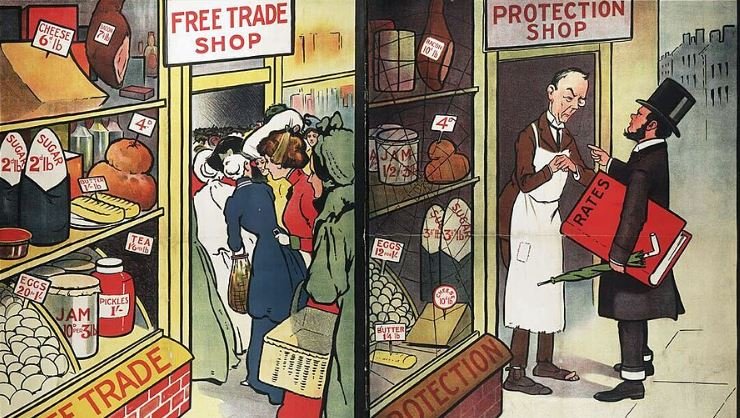
Despite these arguments, many economists remain skeptical of protectionism. One of the primary criticisms is that it raises prices for consumers. When imports become more expensive due to tariffs or quotas, households must either pay more or settle for fewer choices. This disproportionately affects lower-income groups, who spend a larger share of their income on goods.
Protectionism can also reduce efficiency within the economy. Without the pressure of international competition, domestic firms may have less incentive to innovate or improve productivity. Over time, this can lead to stagnation and a decline in global competitiveness.
Another concern is retaliation. When one country imposes trade restrictions, others may respond with similar measures, leading to a cycle of escalating barriers. Such trade disputes can disrupt global supply chains and reduce overall economic activity.
Furthermore, protectionism often benefits a narrow group while imposing costs on the broader population. Industries that receive protection may gain, but exporters and consumers typically bear the burden. This imbalance raises questions about fairness and economic efficiency.
Economic Effects on Growth and Welfare
Research in economics generally suggests that open trade contributes positively to growth and living standards. By allowing countries to specialize in areas where they have a comparative advantage, free trade increases overall productivity and expands the availability of goods and services.
Protectionist policies, on the other hand, can create inefficiencies known as deadweight losses. These represent lost economic value that neither producers nor consumers recover. In simple terms, resources are not being used in the most productive way.
However, the reality is more nuanced. While trade liberalization tends to generate long-term benefits, it can also lead to short-term disruptions. Workers in industries exposed to foreign competition may lose their jobs, and regions dependent on those industries may experience economic decline. This has fueled ongoing debates about how to balance openness with social protection.
Protectionism in Developing Economies
For developing nations, the question of protectionism is particularly complex. On one hand, access to global markets can drive industrial growth, create jobs, and raise incomes. On the other hand, exposure to international competition can overwhelm fragile domestic industries.
Some economists acknowledge that limited, temporary protection may help new industries establish themselves. However, this approach carries risks. Governments must be able to identify which sectors have genuine growth potential, and they must also be willing to remove protection once those industries become competitive. In practice, both conditions are difficult to meet.
There are numerous examples where prolonged protection has led to inefficiency and dependency, rather than sustainable growth. As a result, many experts advocate for policies that combine openness with targeted support for affected workers and industries.
Intellectual Property and Hidden Protectionism
Modern trade policy extends beyond tariffs and quotas to include intellectual property rights. International agreements set standards for patents, copyrights, and trademarks, which can influence the flow of goods and knowledge across borders.
While these rules are intended to encourage innovation, critics argue that they can also act as a form of protectionism. By limiting the production of generic goods, such as pharmaceuticals, they may keep prices high and restrict access in lower-income countries.
The debate becomes especially intense in areas like public health, where access to affordable medicines can be a matter of life and death. Efforts to balance intellectual property protection with humanitarian concerns continue to shape global trade discussions.
Historical Patterns of Protectionism
History shows that protectionism tends to rise during periods of economic stress. In the early stages of industrialization, many countries relied on trade barriers to nurture domestic industries. Over time, as these industries matured, some nations shifted toward more open trade policies.
The interwar period of the twentieth century offers a cautionary example. Widespread tariff increases contributed to a decline in global trade, deepening the economic downturn of that era. While protectionism was not the sole cause of the crisis, it played a role in amplifying its effects.
In contrast, the decades following the Second World War saw a gradual reduction in trade barriers, accompanied by significant economic growth. This period reinforced the argument that openness can support long-term prosperity.
Contemporary Trends in Global Trade
In recent years, protectionism has experienced a resurgence. Economic uncertainty, geopolitical tensions, and concerns about globalization have led many countries to adopt more restrictive trade policies. Measures such as tariffs, subsidies, and local content requirements have become increasingly common.
At the same time, international cooperation remains a key feature of the global economy. Trade agreements continue to shape the rules of commerce, even as nations seek to protect their interests. This coexistence of openness and restriction reflects the complex realities of modern trade.
Striking a Balance
The challenge for policymakers is not simply choosing between protectionism and free trade, but finding a balance that maximizes benefits while minimizing harm. Completely open markets can create vulnerabilities, while excessive protection can stifle growth and innovation.
Effective trade policy requires careful consideration of both economic and social factors. Supporting workers affected by trade, investing in education and infrastructure, and fostering innovation can help countries adapt to a changing global landscape.
Ultimately, protectionism is neither wholly beneficial nor entirely harmful. Its impact depends on how it is applied, the context in which it operates, and the broader policies that accompany it. Understanding these nuances is essential for navigating the evolving dynamics of international trade.
Frequently Asked Questions
Why do governments choose protectionist policies?
Governments use protectionism to protect jobs, support struggling industries, and reduce dependence on foreign goods. It can also be a strategic move to strengthen key sectors like agriculture or technology.
How do tariffs affect everyday consumers?
Tariffs make imported goods more expensive, which often leads to higher prices in shops. While local businesses may benefit, consumers usually pay more and have fewer choices.
What is the difference between tariffs and quotas?
Tariffs are taxes on imports that increase their prices, while quotas limit the quantity of goods that can be imported. Both aim to reduce foreign competition but work in different ways.
Does protectionism help economic growth?
In the short term, it can help certain industries grow. However, over time, it may slow overall economic progress by reducing competition, innovation, and efficiency.
Who benefits the most from protectionism?
Local producers and workers in protected industries often benefit the most. However, consumers and export-driven businesses may lose out due to higher costs and reduced global trade opportunities.
Can protectionism lead to trade conflicts?
Yes, it often triggers retaliation from other countries. When one nation imposes trade barriers, others may respond with their own restrictions, leading to trade tensions or even economic disputes.
What is meant by “infant industry” protection?
This refers to shielding new or developing industries from international competition until they are strong enough to compete globally. The idea is to give them time to grow and stabilize.
How does protectionism affect developing countries?
It can help emerging industries survive early competition, but long-term reliance may lead to inefficiency. Many economists believe balanced trade policies work better than strict protectionism.
Is protectionism still relevant today?
Yes, many countries still use it, especially during economic downturns or global uncertainty. Even in a highly connected world, nations continue to balance openness with protective measures.