
Running a business successfully requires more than just selling products or delivering services. It also involves mastering the flow of documents that support every transaction. Among the most commonly misunderstood terms in accounting and operations are sales orders and invoices. While they may seem similar at first glance, they serve entirely different roles in the lifecycle of a transaction.
This guide breaks down these two essential documents in a clear, practical way, helping you understand how they work, when they are used, and why they matter.
Sales Order vs Invoice: The Core Distinction
At a fundamental level, a sales order and an invoice exist at different stages of a transaction. A sales order is created when a customer expresses interest in purchasing something, acting as confirmation that the seller can fulfill the request. An invoice, on the other hand, is issued after the goods or services have been delivered and serves as a formal request for payment.
In simple terms, the sales order starts the process, while the invoice brings it to a financial close.
What Exactly Is a Sales Order?
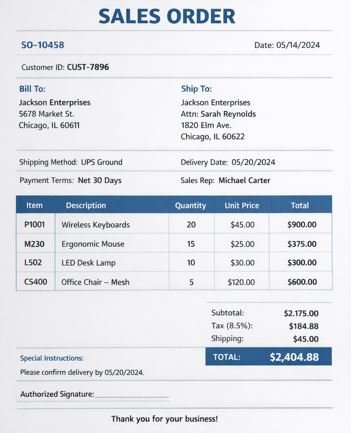
A sales order is a document generated by a business once a customer indicates they want to buy a product or service. It confirms the details of the transaction before fulfillment begins.
Think of it as a structured acknowledgment: the business is saying, “We understand what you need, and we’re preparing to deliver it.”
This document typically includes details such as the type of product or service requested, quantities, agreed pricing, delivery timelines, and customer information. It helps internal teams coordinate activities, from inventory checks to logistics planning.
Beyond confirming intent, sales orders also play a key role in capturing customer data. This information is often stored in company systems and used to improve order processing, customer service, and future sales interactions.
Common Types of Sales Orders
Businesses operate in different ways, and sales orders can vary depending on the situation. Here are some widely used formats.
Immediate Payment Orders
In this case, a customer places an order, pays right away, and receives the goods almost instantly. This is common in retail environments where transactions are completed on the spot.
Priority or Expedited Orders
Sometimes customers need items urgently. These orders are processed faster than usual, often with delivery happening the same day or within a shortened timeframe. Payment may occur after delivery, depending on the agreement.
Scheduled Delivery Agreements
For ongoing business relationships, companies may set up agreements that outline multiple deliveries over time. These sales orders specify quantities and delivery dates in advance, allowing both parties to plan accordingly.
Third-Party Fulfillment Orders
In certain situations, the seller does not directly deliver the goods. Instead, a third-party supplier handles fulfillment. This arrangement is common among small businesses that rely on external partners for logistics.
What Is an Invoice?
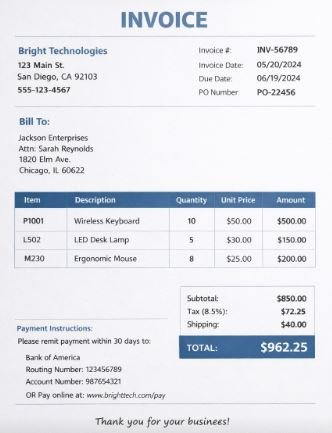
An invoice is a document sent by a seller to request payment from a buyer after delivering goods or services. It is a formal financial record that outlines what the customer owes.
Invoices typically contain detailed information, including a breakdown of items or services provided, quantities, pricing, payment terms, due dates, and contact details for both parties. They may also include reference numbers such as purchase order numbers and unique invoice identifiers.
Unlike sales orders, invoices are directly tied to revenue and accounting. They serve as proof that a transaction has occurred and that payment is expected.
Different Types of Invoices
Not all invoices are created equal. Depending on the nature of the transaction, businesses may use different formats.
Preliminary (Pro Forma) Invoice
This type of invoice is more like an estimate than a demand for payment. It provides a preview of costs before the transaction is finalized. Businesses often use it for large or complex projects where the total cost needs to be outlined in advance.
It is especially useful in international trade or when customers want clarity before committing fully.
Progress-Based Invoice
For long-term projects, businesses may issue invoices in stages rather than waiting until completion. These invoices correspond to milestones or phases of work, allowing payments to be spread out over time.
This approach benefits both parties. The seller maintains steady cash flow, while the buyer avoids a large one-time payment.
Final Invoice
This is the standard invoice most people are familiar with. It is issued once the transaction is complete and includes all necessary details for payment. It represents the final financial obligation of the buyer.
Key Differences Between Sales Orders and Invoices
Although both documents relate to the same transaction, their roles are quite distinct.
Timing in the Process
Sales orders are created at the beginning, when the customer places a request. Invoices come later, after the order has been fulfilled and payment is due.
Purpose and Function
A sales order is primarily used for internal coordination and confirmation. It helps businesses organize resources and plan deliveries. An invoice, however, is a financial document used to request and track payments.
Role in Accounting
Invoices are recorded in accounting systems because they represent revenue and affect financial statements. Sales orders, in contrast, are usually not part of official accounting records since they do not represent completed transactions.
Document Dates
The date on a sales order reflects when the order was initiated. The invoice date indicates when billing occurs and typically determines the payment deadline.
Why Sales Orders Matter
Sales orders play a critical role in ensuring smooth operations. They give businesses a clear picture of customer demand, helping teams prepare for production, inventory allocation, and delivery scheduling.
They also provide flexibility. Since they are not final financial documents, they can be adjusted if customer needs change. This adaptability is valuable in dynamic business environments.
Additionally, sales orders act as a bridge between sales and operations teams, ensuring that everyone is aligned before execution begins.
Why Invoices Are Essential
Invoices are the backbone of a company’s revenue cycle. Without them, it would be difficult to track who owes what and when payments are due.
They also serve as legal and financial records. In the event of audits or disputes, invoices provide documented proof of transactions. This makes them indispensable for compliance and financial transparency.
For customers, invoices act as official records of expenses, which can be used for budgeting, reporting, or tax purposes.
Frequently Asked Questions
Which comes first: sales order or invoice?
The sales order is created first, marking the beginning of the transaction. The invoice is issued later, after the goods or services have been delivered.
What is the main goal of a sales order?
Its primary purpose is to confirm the details of a transaction and ensure the seller is prepared to fulfill the customer’s request.
Is an invoice the same as a purchase order?
No. A purchase order is created by the buyer to request goods or services, while an invoice is issued by the seller to request payment.
When should a business use a sales order?
Whenever a customer places an order that requires confirmation and internal coordination, a sales order should be created.
How does a receipt differ from an invoice?
An invoice requests payment, while a receipt confirms that payment has already been made.
Is an order confirmation the same as an invoice?
No. An order confirmation simply acknowledges that a request has been received, whereas an invoice demands payment after fulfillment.
Streamlining Processes Through Automation
As businesses grow, managing sales orders and invoices manually can become inefficient. Automation offers a smarter way to handle these processes.
Real-Time Order Tracking
Automated systems allow businesses to monitor sales orders from creation to delivery. This visibility improves communication with customers and helps manage expectations more effectively.
Intelligent Invoice Processing
Technologies like optical character recognition enable businesses to extract data from invoices automatically. This reduces manual entry, minimizes errors, and speeds up processing.
Matching Documents Accurately
Automation can compare invoices with related documents such as sales orders and delivery records. This ensures consistency and helps prevent discrepancies before payments are made.
Faster Approval Workflows
Instead of relying on physical paperwork, automated systems route invoices to the right people for approval. Notifications and reminders keep the process moving, reducing delays and improving cash flow.
Bringing It All Together
Understanding the difference between sales orders and invoices is essential for anyone involved in business operations or finance. These documents are not interchangeable; they serve unique purposes at different stages of a transaction.
A sales order sets the process in motion by confirming what the customer wants and how it will be delivered. An invoice concludes the process by requesting payment for what has been provided.
Together, they create a structured workflow that supports efficiency, accuracy, and financial clarity. When used correctly—and enhanced with automation—they help businesses operate smoothly and maintain healthy cash flow.
Mastering these fundamentals is not just about terminology; it is about building a reliable system that supports growth and long-term success.
Frequently Asked Questions
When is a sales order created in a transaction?
It is created at the very beginning, right after a customer places an order or agrees to purchase goods or services.
Why do businesses rely on sales orders?
They help teams organize fulfillment, track customer requests, and prepare for delivery without committing to final accounting records.
What role does an invoice play in business operations?
An invoice formally requests payment and serves as a financial record for both the seller and the buyer.
Can a sales order be changed after creation?
Yes, it is flexible and can be updated if order details such as quantity or delivery timing change.
Are invoices important for accounting and audits?
Absolutely. Invoices are recorded in financial systems and act as proof of transactions during audits or financial reviews.
What types of invoices are commonly used?
Businesses often use pro forma invoices for estimates, interim invoices for staged payments, and final invoices for completed transactions.
How does automation improve sales order and invoicing processes?
Automation speeds up tracking, reduces errors, improves accuracy, and ensures faster approvals and payments.