
In Accra, a young entrepreneur named Kofi Mensah set out to launch a mobile food delivery service focused on local dishes. His concept was solid, his research thorough and his enthusiasm undeniable. Yet when he approached lenders, he hit an immediate wall: no revenue, no loan.
This dilemma is common across startup ecosystems worldwide. Financing typically flows toward businesses that already demonstrate financial performance. Yet startups need capital precisely because they have not reached that stage. The absence of revenue, audited statements or operating history makes lenders cautious, regardless of how promising the idea may be.
Despite this structural challenge, early-stage funding is not unattainable. It simply requires navigating alternative channels where evaluation criteria extend beyond revenue. Understanding these pathways—and how lenders assess risk in their absence—is essential for any founder starting from zero.
Why banks hesitate when revenue is missing
Traditional lenders operate on risk-based underwriting models. They assess applicants using metrics such as historical cash flow, tax filings, balance sheets and credit profiles. A startup without revenue cannot supply these signals, which positions it as a speculative borrower.
Consider Ama Boateng, who launched a digital bookkeeping service in Kumasi. Despite having clients lined up informally, she lacked documented income. Her bank declined her application, citing insufficient financial history rather than questioning her business model.
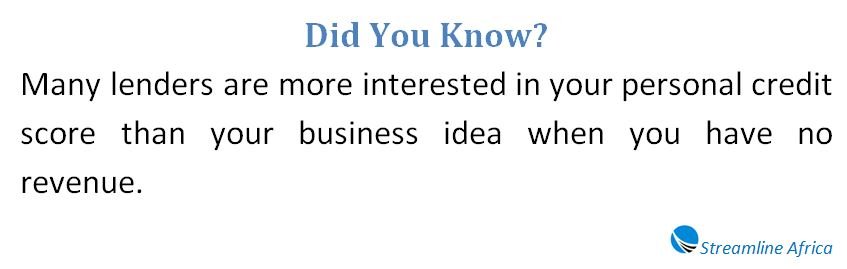
In such scenarios, lenders pivot from business metrics to personal indicators. They evaluate the founder’s creditworthiness, asset base and willingness to assume personal liability. This shift redefines the funding landscape, opening doors to financing options tailored for early-stage ventures.
Microloans designed for early-stage ventures
Microfinance institutions and community-based lenders often provide one of the most accessible entry points for startups. These programs typically offer modest funding amounts but apply more flexible underwriting standards.
For example, Kojo Adjei, a craft furniture maker in Cape Coast, secured a small loan through a nonprofit lending group. Instead of requiring extensive financial records, the lender evaluated his business plan, skills and local demand for handmade furniture.
Microloans usually come with structured repayment terms and moderate interest rates. They are commonly used for purchasing inventory, tools or initial operating supplies. In many cases, lenders also provide mentorship or technical support, which can be as valuable as the capital itself.
However, borrowers should not mistake flexibility for leniency. Repayment expectations remain firm, and failure to meet them can affect both personal credit and future funding opportunities.
Using personal loans as a startup bridge
When business financing is unavailable, founders frequently rely on personal loans to get started. This approach shifts the focus entirely to individual financial standing rather than business performance.
Take the case of Nana Yaw, who launched a photography studio in Takoradi. With a strong personal credit profile, he obtained a personal loan to purchase equipment and secure a workspace. The process was fast, and funds were available within days.
The benefits are clear: quick approval, flexible use of funds and minimal business documentation. However, the risks are equally significant. The borrower assumes full personal liability, interest rates may be higher and loan limits are often constrained.
Additionally, blending personal and business finances can complicate accounting and legal separation. For this reason, personal loans are best viewed as short-term solutions rather than foundational financing strategies.
Credit cards as flexible startup capital
Business credit cards represent another accessible funding mechanism for pre-revenue startups. Approval typically depends on the founder’s personal credit score rather than business performance.
Abena Owusu, who started an online fashion boutique in Tema, used a credit card to fund initial inventory and digital marketing campaigns. An introductory zero-interest period allowed her to operate without immediate financing costs.
Beyond funding, credit cards help establish a business credit profile and simplify expense tracking. Many also offer rewards or cashback incentives.
However, this convenience comes with potential downsides. Once promotional periods expire, interest rates can rise sharply. Carrying balances at high rates can quickly erode profitability, especially if revenue growth is slower than expected.
Used strategically, credit cards can support early operations, but they require disciplined repayment to avoid long-term financial strain.
Equipment financing anchored in tangible assets
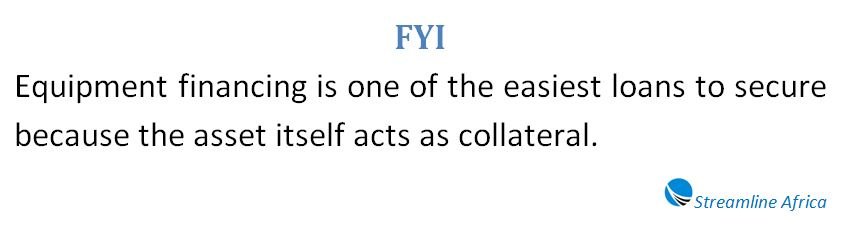
For startups that rely on physical tools or machinery, equipment financing offers a practical route to capital. In this model, the asset being purchased serves as collateral, reducing the lender’s exposure.
Yaw Mensima, who opened a small bakery in Tamale, financed his industrial oven through such a program. The lender based approval primarily on the equipment’s value and resale potential rather than the bakery’s nonexistent revenue.
This structure often allows for higher approval rates and, in some cases, full financing without upfront payment. It is particularly relevant in industries such as food service, construction and manufacturing.
The underlying principle is straightforward: if the borrower defaults, the lender can recover value by repossessing the equipment. This built-in security makes equipment financing one of the more viable options for startups with operational asset needs.
Grants and competitions as non-repayable funding
Grants represent one of the most attractive funding sources because they do not require repayment. However, they are highly competitive and often tied to specific objectives.
In Nairobi, a tech startup led by Amina Hassan secured funding through Small Business Innovation Research. The grant supported the development of a health-tech solution without requiring equity or repayment.
Programs like Small Business Technology Transfer also provide funding for research-driven ventures. These initiatives typically target innovation and technological advancement rather than traditional small businesses.
Outside of government programs, private competitions and accelerators offer additional opportunities. While the probability of success may be low, these platforms can provide not only funding but also mentorship and exposure.
Founders should treat grants as complementary rather than primary funding strategies due to their uncertainty and long timelines.
Informal funding and the rise of crowdfunding
When institutional funding is out of reach, many entrepreneurs turn to personal networks. Friends and family often serve as early backers, willing to invest based on trust rather than financial metrics.
However, informal funding should be approached with the same rigor as formal financing. Clear agreements, documented terms and defined expectations are essential to avoid misunderstandings.
Crowdfunding introduces a more structured alternative. Platforms like Kickstarter and Indiegogo allow founders to raise funds by pre-selling products or offering incentives.
Equity-based platforms such as Wefunder and StartEngine enable startups to exchange ownership stakes for capital. This approach broadens access to investors but introduces regulatory and reporting obligations.
Crowdfunding also serves as a validation tool. If customers are willing to pay before a product exists, it signals genuine market demand.

Strengthening your chances of approval
Regardless of the funding path, preparation significantly influences outcomes. Founders should prioritize building strong personal credit, as it often becomes the primary evaluation metric.
A well-structured business plan is equally critical. It should outline market analysis, cost structure, revenue projections and a clear use of funds. Lenders and investors alike look for evidence of strategic thinking and realistic expectations.
Starting with smaller funding amounts can also improve approval odds. Successfully managing and repaying initial financing builds credibility and opens access to larger opportunities over time.
Finally, founders should explore sector-specific programs. Certain industries offer targeted funding initiatives that may not appear in general searches, providing an additional edge for those who investigate thoroughly.
From idea to income: navigating early-stage financing
The absence of revenue does not eliminate funding opportunities; it reshapes them. Early-stage entrepreneurs must rely on alternative financing mechanisms that prioritize personal credibility, asset value or innovative potential over financial history.
Each option—whether microloans, personal financing, credit cards, equipment funding, grants or crowdfunding—comes with distinct trade-offs. The optimal choice depends on the business model, capital requirements and the founder’s risk tolerance.
For entrepreneurs like Kofi in Accra, the journey from concept to profitability begins with strategic financial decisions. Early funding may be limited, more expensive or more personal in nature, but it serves a critical purpose: bridging the gap between vision and execution.
Once revenue begins to flow, the financial landscape expands dramatically. Until then, success depends on preparation, adaptability and a clear understanding of the tools available to navigate the startup funding paradox.
Key Takeaways
Funding a startup without revenue is possible, but requires a different strategy
You’re not locked out of funding just because your business hasn’t made money yet—you simply need to explore alternative paths that don’t rely on financial history.
Lenders focus on you when your business has no track record
In early stages, your personal credit score, financial habits and reliability matter more than your business idea alone.
Traditional bank loans are rarely the starting point
Banks typically want proven cash flow, which means most startups must look beyond conventional lending in their first phase.
Microloans can open the first door
Small, community-based loans are often more flexible and supportive, especially for first-time founders or underserved entrepreneurs.
Personal loans can help—but carry personal risk
They’re quick and accessible, but you’re fully responsible for repayment, which can put pressure on your personal finances.
Credit cards can work as short-term fuel
They’re useful for early expenses and building credit, but high interest rates can become a problem if balances aren’t managed carefully.
Equipment financing works when assets are essential
If your business depends on tools or machinery, lenders are more willing to fund you because the equipment itself reduces their risk.
Grants are attractive but highly competitive
Free money sounds ideal—and it is—but winning grants takes time, effort and often a strong innovation angle.
Friends, family and crowdfunding rely on trust and validation
These options can provide early capital, but they require clear communication, proper agreements and, in the case of crowdfunding, real market interest.
Preparation is your biggest advantage
Strong credit, a clear business plan and starting small can dramatically improve your chances of getting approved and growing sustainably.