
As investment advisory professionals assessing African markets, we view Sudan as a country with substantial natural and commercial potential, but also one of the most difficult operating environments on the continent. Its agricultural land, mineral wealth, oil infrastructure, and cultural heritage present meaningful long-term opportunities. However, these advantages are currently overshadowed by armed conflict, institutional fragmentation, economic instability, and a severe humanitarian emergency.
For investors, Sudan cannot be approached as a conventional growth market. Any commercial assessment must begin with security exposure, sanctions compliance, regulatory uncertainty, logistics disruption, and the weakness of public institutions. The country may eventually support major investment in agriculture, mining, energy, industry, and tourism, but immediate participation requires exceptional caution, deep local knowledge, and a high tolerance for political and operational risk.
Political Conflict and Its Commercial Consequences
Sudan’s political transition initially created expectations of institutional reform and renewed investor confidence following the removal of its long-standing authoritarian government. Those expectations deteriorated as tensions between competing military factions intensified.
The conflict between the Sudanese Armed Forces and the Rapid Support Forces, which escalated in April 2023, has caused widespread destruction, population displacement, and economic disruption. Khartoum and other major commercial centres have suffered extensive damage, while transport networks, warehouses, offices, factories, and public services have been severely affected.
From an investment perspective, the conflict has undermined nearly every component required for stable business operations. Companies face difficulties protecting employees, securing assets, transporting goods, accessing banking services, and maintaining communication with customers and suppliers. Consumer demand has also weakened sharply as households lose income and communities are displaced.
Until a credible ceasefire and political settlement are achieved, we believe Sudan will remain unsuitable for most conventional foreign investment strategies.
Read Also: Egypt Investment Outlook: Key Opportunities, Market Risks, and Business Entry Insights
Macroeconomic and Regulatory Conditions
Sudan’s economy faced serious structural problems before the outbreak of war. High inflation, currency depreciation, limited access to finance, weak productivity, and administrative inefficiencies had already reduced investor confidence.
The current conflict has accelerated economic contraction and disrupted both formal and informal markets. Supply shortages, rising operating costs, reduced purchasing power, and instability in the financial system have made commercial planning extremely difficult.
Foreign investment is legally permitted in selected areas, but access to several sectors remains restricted. Overseas investors may face limitations in transport services, telecommunications, broadcasting, newspaper publishing, electricity generation, airport operations, and financial services. State-owned enterprises and government-linked institutions also maintain a strong presence in parts of the economy.
Foreign land ownership remains limited. Investors are generally more likely to obtain leasehold rights in designated areas than unrestricted property ownership. This makes legal due diligence especially important when assessing agricultural, industrial, or infrastructure projects.
We advise investors to treat regulatory approvals, land arrangements, licensing procedures, and contractual enforcement as major areas of risk.

Agricultural Investment Potential
Agriculture is among Sudan’s most promising long-term sectors. The country has extensive cultivable land, access to the Nile, and established production of sesame, cotton, sorghum, groundnuts, gum arabic, livestock, and other commodities.
In our assessment, the strongest opportunities are not limited to primary production. Considerable investment potential exists in irrigation, mechanised farming, storage, cold-chain infrastructure, food processing, packaging, transport, and agricultural technology.
Sudan exports many commodities in raw or minimally processed form. Expanding local processing could increase export value, reduce post-harvest losses, improve food security, and create employment. Investors may eventually find opportunities in edible oils, animal feed, textiles, livestock processing, and packaged food products.
Climate exposure must, however, be incorporated into every agricultural project. Sudan is highly vulnerable to drought, desertification, flooding, and rising temperatures. Successful investments would require efficient irrigation, drought-resistant crops, climate-smart farming methods, and resilient supply-chain planning.
Oil and Energy Opportunities
Oil remains an important component of Sudan’s economy and continues to offer commercial potential despite declining output and prolonged instability. Existing pipelines, refineries, and related infrastructure retain strategic value.
Sudan also plays an important role in the transport of crude oil from South Sudan. This creates potential for future investment in pipeline rehabilitation, storage, refining, maintenance, and supporting logistics.
Nevertheless, the sector carries significant political and security risks. Oil facilities may be exposed to physical damage, territorial disputes, production interruptions, and conflict between armed groups. Revenue allocation also remains politically sensitive.
We believe energy opportunities should be considered only after detailed assessments of ownership, sanctions exposure, infrastructure condition, political control, and physical security.
Mining and Mineral Development
Sudan possesses important mineral resources, particularly gold. The mining sector has attracted local and foreign interest, but much of the activity remains informal, fragmented, and weakly regulated.
There is potential for investment in geological exploration, responsible mining, mineral processing, refining, equipment supply, and export logistics. Modernising the sector could increase government revenue and reduce losses associated with informal trading and smuggling.
However, gold and other minerals may be connected to armed groups, politically exposed individuals, or sanctioned entities. Investors must establish the true ownership of licences, operating companies, and trading partners.
Environmental compliance and community relations are also critical. Mining projects that fail to address land use, water consumption, worker safety, and local livelihoods may face resistance and reputational damage.
Industrial and Manufacturing Prospects
Sudan’s industrial sector remains underdeveloped and is concentrated mainly in food processing, textiles, construction materials, and oil-related production.
The country’s raw materials could support a broader manufacturing base in the future. Agricultural commodities could feed food-processing and textile industries, while minerals could support construction and industrial production.
The main constraints include unreliable electricity, damaged roads, limited technical skills, weak access to finance, and disruption to imports. Investors would also need to consider the availability of spare parts, machinery, fuel, and secure warehousing.
For manufacturing investment to become commercially attractive, Sudan will require substantial reconstruction and greater regulatory stability.
Tourism and Cultural Heritage
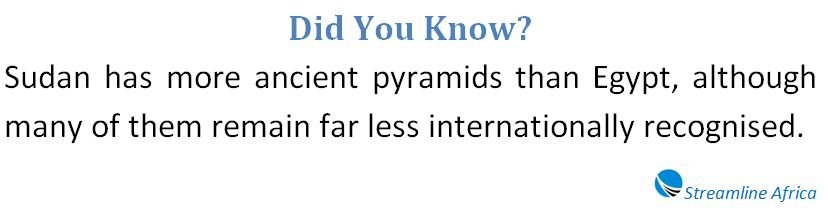
Sudan possesses important cultural and archaeological assets, including ancient Nubian sites and a large number of pyramids. Locations such as Meroë could support heritage tourism, academic travel, and cultural research.
The Red Sea coast also offers potential for diving, marine tourism, hospitality, and related services.
At present, however, tourism opportunities remain largely theoretical. Conflict, weak infrastructure, limited international connectivity, and personal security concerns prevent meaningful sector development.
In a stable future environment, tourism could provide Sudan with a valuable source of foreign exchange while supporting local businesses, employment, and heritage conservation.
Business Culture and Local Engagement
Arabic is the principal language used in government administration and business communication. Foreign investors without Arabic-speaking personnel will generally require interpreters, legal advisers, or trusted local representatives.
Commercial relationships in Sudan often depend heavily on personal trust. Meetings, social interaction, and relationship-building can be as important as formal negotiations.
Gift-giving may be culturally accepted in some settings, but investors must maintain clear anti-bribery standards. Internal approval procedures, payment controls, and employee training should be established before local engagement begins.
As Sudan is predominantly Muslim, foreign executives should respect local customs. Modest dress, appropriate behaviour, and sensitivity to religious practices can help strengthen relationships and avoid unnecessary offence.
Sanctions, Compliance, and Reputational Risk
Sanctions compliance is one of the most important considerations for investors evaluating Sudan. Transactions involving government bodies, military-linked organisations, public officials, or local companies may create legal and reputational exposure.
We recommend comprehensive screening of shareholders, directors, beneficial owners, banks, suppliers, and intermediaries. Payments should be fully documented, and all agreements should undergo specialist legal review.
Investors must also consider human rights risks. Companies operating in conflict-affected areas may be associated with displacement, forced labour, land disputes, or armed actors, even unintentionally.
Strong environmental, social, and governance controls are therefore essential.
Investment Advisory Outlook
Our assessment is that Sudan retains considerable long-term potential in agriculture, mining, oil, logistics, manufacturing, and tourism. However, these opportunities cannot be separated from the country’s current security and humanitarian realities.
For most investors, the appropriate strategy is market monitoring rather than immediate entry. Companies may consider regional research, remote due diligence, local relationship development, and scenario planning while waiting for conditions to improve.
Any future investment decision should be supported by political-risk insurance, security planning, sanctions screening, legal due diligence, and clear exit arrangements.
Sudan’s investment environment could improve significantly if the country achieves a lasting ceasefire, restores civilian governance, rebuilds infrastructure, and introduces more transparent commercial regulation. Until then, we regard Sudan as a highly speculative market suited only to investors with specialist expertise, strong risk controls, and a long-term strategic horizon.
Frequently Asked Questions
Why is Sudan considered a high-risk investment market?
Sudan faces armed conflict, political instability, damaged infrastructure, inflation, sanctions exposure, and weak institutions. These conditions make business operations unpredictable and increase financial, legal, and security risks.
What are Sudan’s strongest long-term investment opportunities?
The most promising sectors include agriculture, mining, oil, food processing, logistics, manufacturing, and tourism. However, most opportunities depend on improved security and political stability.
Why is agriculture important to Sudan’s economy?
Sudan has extensive farmland, access to the Nile, and strong production potential in sesame, cotton, sorghum, gum arabic, livestock, and groundnuts. Investment in processing and storage could significantly increase value.
What opportunities exist beyond primary farming?
Investors could explore irrigation, agricultural technology, cold storage, packaging, food processing, mechanised farming, animal feed production, and export logistics.

Is Sudan’s oil industry still commercially relevant?
Yes. Sudan’s pipelines, refineries, and oil-processing infrastructure remain strategically important. The country also supports the transportation of crude oil from South Sudan.
What makes the mining sector attractive?
Sudan has substantial gold and mineral resources. Opportunities exist in exploration, responsible extraction, refining, equipment supply, and mineral processing, although informal mining remains widespread.
What are the main risks in Sudan’s mining industry?
Key concerns include unclear ownership, smuggling, environmental damage, weak regulation, armed-group involvement, and possible dealings with sanctioned individuals or companies.
Can foreign investors own businesses and land in Sudan?
Foreign investors may operate in approved sectors, but restrictions apply in areas such as transport, finance, telecommunications, media, and electricity. Land access is generally provided through leasehold arrangements.
How has the conflict affected businesses?
The war has destroyed commercial assets, interrupted supply chains, weakened consumer demand, displaced workers, and reduced access to banking, transport, electricity, and essential services.
What compliance issues should investors consider?
Investors must screen business partners, shareholders, officials, banks, and suppliers for sanctions exposure. Payments, contracts, and ownership arrangements should be carefully documented.
Does Sudan have tourism potential?
Sudan has ancient Nubian sites, numerous pyramids, archaeological attractions, and Red Sea tourism potential. However, insecurity and weak infrastructure currently limit commercial development.
What strategy should investors adopt?
Most investors should focus on market monitoring, remote research, local relationship-building, scenario planning, and risk assessment rather than immediate large-scale investment.