
Latest posts
-
Meaning of Economic Entity Principle in Accounting

At the heart of reliable accounting lies a simple but strict rule: a business must be treated as financially independent from the people who own or manage it. This rule, known as the economic entity principle, requires that every transaction recorded in the books belongs clearly to a specific organization and not to an individual…
-
Sales Order vs Invoice: Key Differences, Uses, and Business Impact

Running a business successfully requires more than just selling products or delivering services. It also involves mastering the flow of documents that support every transaction. Among the most commonly misunderstood terms in accounting and operations are sales orders and invoices. While they may seem similar at first glance, they serve entirely different roles in the…
-
Accounts Payable vs Accounts Receivable: The Ultimate Guide to Mastering Cash Flow and Business Finances

Understanding how money moves through your business is essential if you want to stay financially healthy. Two of the most important components in this process are accounts payable and accounts receivable. While they may sound similar, they represent very different sides of your financial operations. One tracks what you owe, and the other tracks what…
-
Deferred vs Prepaid Expenses: Key Differences, Examples, and Financial Impact for Businesses

In the day-to-day operations of a business, it is not unusual for payments to be made before the actual benefit of a service or asset is received. These early payments are an essential part of financial management and are treated carefully in accounting to ensure accurate reporting. Two important concepts that arise from such transactions…
-
Income vs. Revenue: What’s the Difference?
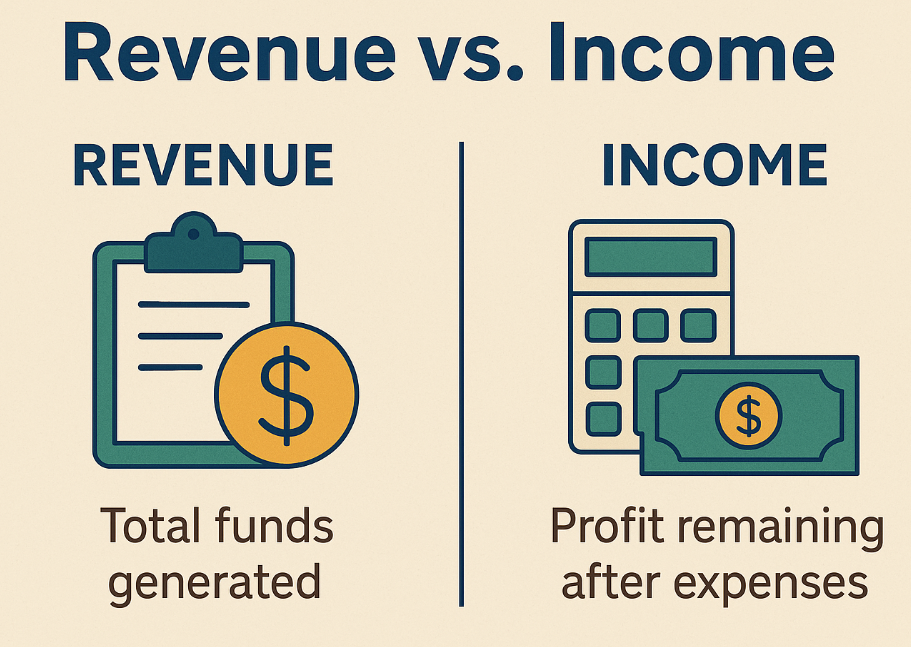
Many business owners mistakenly use “revenue” and “income” as if they mean the same thing. While they are both key financial terms, they represent very different parts of a company’s financial picture. Knowing the difference helps ensure more accurate reporting, smarter decisions, and clearer communication with accountants, investors, and lenders. This guide breaks down the…