
Tunisia occupies an important position in North Africa’s labour market. The country combines a sizeable public sector, export-oriented manufacturing, tourism, agriculture and a growing services economy. Yet the amount earned by an individual worker can look very different from the national average.
Tunisia’s average gross salary is estimated at around TND1,200 per month, equivalent to roughly TND14,400 annually. The median monthly income, however, is considerably lower at approximately TND600. This difference matters because average salaries can be pushed upward by executives, specialised professionals and employees in higher-paying industries.
For a worker such as Karim, employed by a small distribution company outside Monastir, the national average may therefore bear little resemblance to his monthly payslip. Understanding Tunisia’s wage environment requires looking beyond a single headline figure to minimum wages, working hours, taxes, industries and purchasing power.
Understanding Tunisia’s Salary Numbers
Tunisia’s estimated TND1,200 average monthly salary largely reflects earnings within the formal economy. The public sector remains an important employer, while private-sector salaries vary substantially according to industry, qualifications, location and company structure.
The median salary of around TND600 provides another perspective. If half of workers earn below this level, the experience of the typical employee may be considerably different from what the national average suggests.
Geography also influences earning opportunities. Greater Tunis and established commercial centres along the coast generally provide stronger access to formal employment and higher-paying occupations than many inland communities.
A software specialist working for an export-focused technology business around Ariana, for example, may earn several times the income of a seasonal agricultural worker in the interior. Both participate in the same national economy, but their labour-market realities are very different.
Tunisia’s Minimum Wage System
Tunisia does not operate with one simple minimum wage covering every worker. Instead, statutory wage floors depend partly on working arrangements and economic activity.
Under the 48-hour SMIG regime for non-agricultural workers, the monthly minimum is approximately TND480, which translates into about TND2.31 per hour. Employees covered by a 40-hour schedule receive a lower monthly minimum of around TND416, although their hourly rate is higher because they work fewer hours.
Agricultural workers fall under the SMAG framework, where the equivalent monthly wage is around TND400 based on the applicable daily rate.
These distinctions matter for employers preparing payroll budgets and for workers evaluating job offers. An advertised monthly salary cannot be properly assessed without understanding the employee’s working schedule, occupation and applicable collective arrangements.
Because labour rules and statutory rates can be revised, employees and businesses should confirm the latest official figures before making payroll, hiring or compensation decisions.
What Workers Actually Take Home
Gross salary is not the same as disposable income. Tunisian employees make social security contributions and may also pay personal income tax under the country’s progressive tax system.
At an average level of earnings, take-home income has been estimated at roughly 85% of gross compensation, although the precise percentage varies according to taxable income and individual circumstances.
Consider Salma, an administrative coordinator earning TND1,200 gross each month. She should not assume the entire amount will be available for rent, transport, groceries and household expenses. Statutory deductions reduce the amount that ultimately reaches her bank account.
Benefits can also affect overall compensation. Certain collective agreements provide year-end bonuses or additional employment benefits. Tunisia, however, does not generally operate with a universal statutory 13th-month salary for all workers.
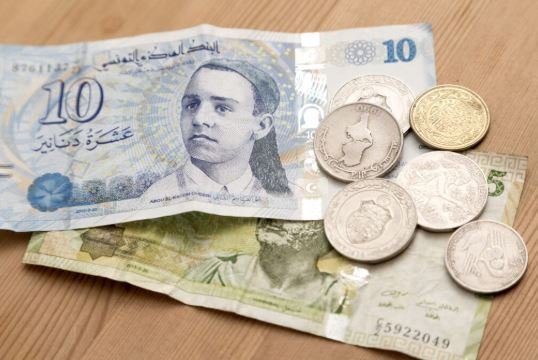
How Far Does the Minimum Wage Go?
Exchange rates provide only a partial picture of living standards. Tunisia’s minimum wage has been estimated at approximately $0.74 per hour when converted directly into U.S. dollars, but workers spend most of their earnings locally.
Purchasing power parity offers a more useful comparison. After adjusting for differences in living costs, the purchasing strength of Tunisia’s minimum wage has been estimated at around $2.57 per hour in U.S. purchasing-power terms.
Even with that adjustment, household affordability depends heavily on circumstances. Housing costs, family size, transportation needs and food prices can determine whether the same wage feels manageable or highly restrictive.
A young employee sharing accommodation in Nabeul could face a considerably different financial situation from a parent supporting several dependants on an identical salary.
At roughly TND480 per month, the 48-hour minimum wage represents about 40% of Tunisia’s estimated average gross monthly salary. That gap highlights the distance between the legal wage floor and earnings available in stronger-paying sectors.
How Minimum Wages Have Changed
Tunisia has periodically adjusted its statutory minimum wage in response to economic conditions, labour negotiations and rising living costs.
Historical increases show a gradual upward trend in nominal pay. A commonly cited benchmark places the monthly minimum at around TND382 in 2019, followed by successive increases to TND403, TND420, TND440, TND460 and eventually TND480.
This represents nominal growth of roughly 26% over that period.
Nominal increases, however, should not automatically be interpreted as equivalent improvements in living standards. Inflation can absorb part of a wage increase by raising the cost of food, housing, utilities and transportation.
The more meaningful question for households is therefore not simply whether wages are rising, but whether earnings are keeping pace with essential living expenses.
Working Hours and Overtime
Working time is another important part of Tunisia’s compensation structure. The traditional standard in many industrial and service activities is a 48-hour week, although 40-hour arrangements are increasingly common in offices and some service-sector roles.
Where eligible employees work beyond their normal hours, overtime compensation can increase their effective earnings. Daytime overtime beyond standard hours may attract a 75% premium, resulting in payment at around 1.75 times the ordinary rate. Different provisions may apply to night work, holidays and other categories of additional hours.
For workers comparing job opportunities, this means monthly base salary should never be considered in isolation. Working hours can significantly change the real value of a compensation package.
An offer with a slightly higher salary may be less attractive if it requires substantially longer working hours, while a lower base salary with shorter hours, strong benefits and paid overtime may provide better overall value.
Why Salaries Differ Across Tunisia
Sector choice can have a major influence on earnings. Export-oriented businesses, specialised professional services and parts of the energy economy generally offer stronger compensation opportunities than low-margin agriculture or labour-intensive manufacturing.
Textiles illustrate the challenge. Tunisia has an established apparel manufacturing industry connected to international markets, but many production jobs remain relatively close to statutory wage floors.
Skills also matter. Engineers, finance professionals, technology specialists and experienced managers generally have stronger earning potential than employees entering occupations requiring limited specialised training.
Location reinforces these differences. Tunis and surrounding commercial districts concentrate corporate offices, government institutions and professional services, while coastal centres benefit from tourism, manufacturing and trade. Interior areas often have fewer formal employment opportunities and lower average household incomes.
Experience, language ability, professional certifications and access to international employers can also influence salary levels substantially.
Tunisia in the African Wage Landscape
International wage comparisons require careful interpretation because exchange rates, labour laws and living costs differ widely.
Tunisia’s minimum wage has historically fallen within a similar nominal range to several African economies with statutory wage floors, including countries in West and Southern Africa. Its estimated average salary also places it around the middle of the continental wage spectrum rather than among either the highest- or lowest-paying markets.
Comparisons with wealthier economies produce much larger nominal gaps. Minimum wage levels in countries such as Germany, France, the United Kingdom and the United States are substantially higher when converted directly into common currencies.
Yet exchange-rate comparisons alone cannot measure differences in rent, taxation, transport costs, healthcare, public services or household purchasing power. For that reason, purchasing-power comparisons are often more informative than simple currency conversions.
What Tunisia’s Wage Data Really Tells Us
Tunisia’s labour market cannot be understood through its average annual salary alone. The much lower median income shows that many workers earn substantially less, while minimum-wage employees operate on an even narrower financial margin.
For employers, the figures highlight the importance of benchmarking compensation by occupation, sector, working schedule and location rather than relying exclusively on national averages. Competitive salaries may need to sit meaningfully above statutory minimums when businesses are recruiting scarce technical or professional talent.
For employees, the same data offers a practical lesson: evaluate the complete employment package. Gross pay, take-home income, hours, overtime, bonuses, benefits and local living costs all influence what a salary is actually worth.
Tunisia’s wage framework continues to evolve alongside inflation, labour-market conditions and broader economic reforms. Rather than focusing only on a single salary figure, the most useful approach is to examine how wages compare with living costs, productivity, skills and employment opportunities.
That broader perspective provides a more durable understanding of what people earn in Tunisia and what those earnings can realistically support.
Important Questions and Answers
What is the average salary in Tunisia?
The average gross salary is estimated at around TND1,200 per month, or approximately TND14,400 annually. Actual earnings vary considerably by profession, experience, industry and location.
What is the median salary in Tunisia?
The median monthly income is estimated at about TND600. This suggests that many Tunisian workers earn substantially less than the headline national average.
Why is Tunisia’s average salary higher than the median?
Higher salaries earned by executives, specialists and employees in well-paying industries push the average upward. The median often gives a better picture of what a typical worker earns.
What is the minimum wage in Tunisia?
Under the 48-hour SMIG system, the minimum is approximately TND480 per month, or around TND2.31 per hour. Different rates apply to 40-hour schedules and agricultural workers.
How much do agricultural workers earn?
Agricultural workers are covered by the SMAG framework rather than the standard SMIG system. The referenced agricultural minimum is equivalent to roughly TND400 per month.
How much salary do Tunisian workers take home?
Take-home pay depends on income tax and social security deductions. At average earnings, net income has been estimated at roughly 85% of gross salary.
How long is the standard working week in Tunisia?
Many industrial and service-sector employees work a 48-hour week. However, 40-hour arrangements are increasingly common in offices and certain service industries.
How is overtime paid in Tunisia?
Eligible daytime overtime may be compensated at approximately 1.75 times the normal rate. Night, holiday and other overtime arrangements can be subject to different rules.
Which sectors tend to pay more in Tunisia?
Specialised professional services, technology, export-oriented companies and parts of the energy sector can offer stronger salaries. Agriculture and some labour-intensive manufacturing jobs tend to pay closer to minimum-wage levels.
Does location affect salaries in Tunisia?
Yes. Greater Tunis and major coastal commercial centres generally provide more formal and higher-paying opportunities, while some interior regions have fewer high-paying jobs.
Is Tunisia’s minimum wage enough to live on?
That depends heavily on housing, family size, transportation and other household expenses. Minimum-wage workers generally have considerably less financial flexibility than employees earning the national average.
What should workers consider when comparing salaries?
Workers should look beyond gross monthly pay. Take-home income, working hours, overtime, bonuses, benefits, job security and local living costs provide a clearer picture of an offer’s real value.