
Money is one of the most powerful tools in our lives. It fuels our ability to meet daily needs, pursue ambitions, and enjoy life’s comforts. Yet, money itself does not grow without intention. To make it work for you, it must be managed wisely—and one of the most trusted ways to do that is through investments. Among the safest and most reliable investment options available to Ghanaians today are bonds.
Bonds are more than just a financial instrument—they represent a partnership between an investor and a borrower, usually the government or a reputable organization. For individuals who want to grow their wealth steadily without taking on high risk, bonds offer a dependable pathway.
What Exactly Are Bonds?
A bond is essentially a loan that you, the investor, give to a government or company. In return, they agree to pay you back the principal amount at a specific date in the future, along with interest at regular intervals. Think of it as lending your money to the government or a business in exchange for a promise: they get to use your money now, and you earn a profit later.
For example, when the Government of Ghana issues bonds, it’s borrowing money from citizens and institutions to fund national projects—such as road construction, energy initiatives, or education reforms. These bonds are often issued with different maturity periods, ranging from short-term (one to three years) to long-term (ten years or more).
The beauty of bonds lies in their predictability. You know how much interest you’ll earn and when you’ll receive it. This makes them especially appealing to investors who prefer stability over speculation.

The Bond Market in Ghana
The Ghanaian bond market is a structured and regulated platform that allows investors to buy and sell bonds. This market operates under the Ghana Fixed Income Market (GFIM), which was established to enhance transparency and efficiency in trading government and corporate bonds.
GFIM is managed by several key financial bodies, including the Bank of Ghana, the Ghana Stock Exchange (GSE), the Central Securities Depository (CSD), the Ministry of Finance, and the Ghana Association of Bankers. Together, these institutions ensure that the bond market remains credible, transparent, and beneficial to both the government and the investing public.
The GFIM is not only for large investors or institutions—ordinary Ghanaians can also participate. Whether you’re a teacher, entrepreneur, or professional, you can access the bond market through authorized financial intermediaries such as banks or licensed brokers.
How to Buy and Sell Bonds in Ghana
You don’t need to walk into the offices of the Ghana Fixed Income Market to purchase a bond. The process is simpler than many imagine. To invest, you can go through:
- Commercial Banks – Most banks in Ghana offer investment services that include bond purchases.
- Licensed Brokers or Dealers – These professionals are approved by the Ghana Stock Exchange to buy and sell securities on behalf of investors.
When you contact a bank or broker, they will guide you through the process of setting up an investment account. This is known as a depository account, which serves as a record of your bond holdings. It functions much like a bank account, except it tracks your investments rather than cash deposits.
Once your account is active, you can begin buying bonds based on your budget and investment goals. You’ll receive periodic statements from the Central Securities Depository Ghana Limited, which show the number, type, and value of bonds you hold. If you wish to sell your bonds before they mature, your broker can help you do that on the secondary market.
Why People Invest in Bonds
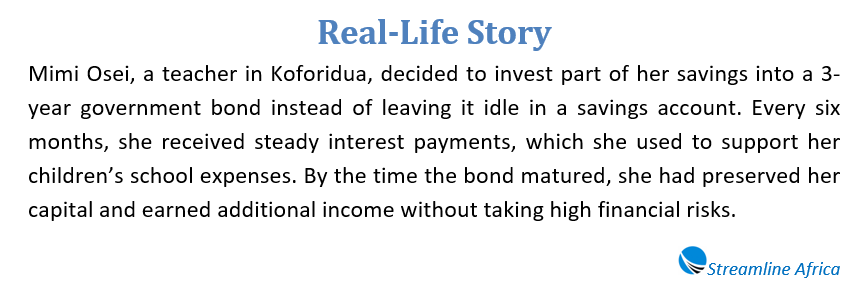
Ghanaians invest in bonds for several reasons. Firstly, bonds offer steady income through interest payments, often made every six months or annually. This makes them ideal for retirees or anyone seeking predictable returns.
Secondly, bonds are generally safer than stocks. While the stock market can fluctuate wildly, bond returns are fixed. If you buy a 5-year government bond with a 15% interest rate, you’re guaranteed that income regardless of how the economy shifts—provided the issuer remains solvent.
Finally, bonds are a good way to diversify your investment portfolio. Instead of keeping all your savings in a single form—like cash or real estate—bonds provide a balanced mix that reduces overall financial risk.
Factors That Affect Bond Prices
Although bonds are considered stable, their prices can change over time. Several factors influence these price movements:
- Interest Rates: When general interest rates in the economy rise, the value of existing bonds often falls because newer bonds may offer higher returns. Conversely, when rates drop, the value of older bonds increases.
- Economic Conditions: Inflation, currency depreciation, and government fiscal policies can affect investor confidence and bond prices.
- Time to Maturity: Bonds with longer maturity periods are more sensitive to market changes. A 10-year bond, for example, carries greater uncertainty than a 2-year bond, which means it may fluctuate more in value.
- Creditworthiness of the Issuer: The reliability of the government or company issuing the bond plays a big role. If investors believe the issuer might struggle to repay, bond prices may drop.
These dynamics make the bond market an ever-evolving space, but one that rewards patience and informed decision-making.
Read More: Understanding Exchange Rates and Their Impact on Ghana’s Economy
Understanding Bond Risks
While bonds are among the safer investments available, they are not completely without risk. Investors should be aware of a few key challenges:
- Default Risk: This is the possibility that the issuer—whether a company or even a government—may fail to repay the borrowed amount or the interest. While Ghana government bonds are considered very secure, corporate bonds carry slightly more risk.
- Inflation Risk: Over time, rising prices may reduce the real value of the interest you earn from your bond. For example, if inflation exceeds your bond’s interest rate, your purchasing power effectively declines.
- Liquidity Risk: Selling a bond before it matures might be difficult if there are no buyers in the market. You might have to sell it at a discount, which means taking a loss.
- Interest Rate Risk: If market interest rates increase after you buy your bond, the market value of your bond may decrease because investors can now get better deals elsewhere.
To manage these risks, financial experts recommend diversification—spreading your investments across different asset types rather than putting all your money into bonds.
The Role of the Ghana Fixed Income Market
The Ghana Fixed Income Market (GFIM) is at the heart of bond trading in the country. It serves as a digital platform where transactions are transparent, regulated, and traceable. All trades executed through GFIM are monitored by the Ghana Stock Exchange and the Bank of Ghana to ensure investor protection.
The market lists different types of securities, including Treasury bills, corporate bonds, and government notes. By participating in this market, investors directly contribute to national development since their funds help finance infrastructure, energy, and social projects.

Steps to Begin Your Bond Investment Journey
If you’re ready to get started, here’s a straightforward approach:
- Consult a Financial Advisor or Bank: Get guidance on the best bond options available based on your goals and risk tolerance.
- Open a Depository Account: Your bank or broker will set this up for you to hold your investments securely.
- Decide on Investment Amount and Duration: Bonds are available in varying denominations and maturity periods. Choose one that fits your budget and timeline.
- Purchase Through a Licensed Dealer: Ensure all transactions go through authorized brokers or banks to guarantee safety.
- Track Your Investment: Monitor your periodic statements from the Central Securities Depository and keep an eye on interest payments.
Why Bonds Matter for Ghanaians
Bonds represent more than just a personal investment tool—they are a way to build the nation. When you buy a government bond, you are helping Ghana fund its schools, hospitals, and infrastructure while earning income for yourself. It’s a mutually beneficial relationship: your savings grow, and the country develops.
In a world full of volatile markets and unpredictable returns, bonds stand out for their reliability. They may not make you rich overnight, but they are a solid foundation for long-term financial growth.
The Takeaway
Investing in bonds is a practical and empowering step for anyone seeking stability and growth in Ghana’s evolving financial landscape. It’s a chance to make your money work while supporting national progress.
By understanding how bonds function, the risks involved, and the structures that support the market, you can make informed decisions that secure your financial future. As the saying goes, “Don’t work for money—make money work for you.” Bonds offer one of the most secure and sustainable ways to do exactly that.
Frequently Asked Questions about Bonds in Ghana
Why Do People Invest in Bonds?
People invest in bonds because they’re generally safer than other investments. Bonds offer predictable returns and help investors grow their money steadily.
How Does the Bond Market Work in Ghana?
In Ghana, bonds are traded through the Ghana Fixed Income Market (GFIM), a platform overseen by the Bank of Ghana and the Ghana Stock Exchange to ensure fair and transparent transactions.

Who Can Buy Bonds in Ghana?
Both individuals and institutions can buy bonds in Ghana. You can invest through a licensed bank or a registered broker-dealer.
What Do I Need to Buy a Bond?
You’ll need to open a depository account, similar to a bank account. This account records all the bonds you buy or sell and helps track your investments securely.
How Do I Earn from Bonds?
You earn from bonds through interest payments made at regular intervals—usually every six months or once a year—depending on the bond terms.
Can I Sell My Bond Before It Matures?
Yes, you can sell your bond on the secondary market before it matures. However, the price you get depends on market conditions and interest rates at the time.
What Factors Affect Bond Prices?
Bond prices fluctuate based on interest rates, inflation, and the issuing government or company’s creditworthiness. When rates rise, bond prices usually fall.
Are Bonds a Risk-Free Investment?
No investment is entirely risk-free. While bonds are relatively safe, there’s always a chance the issuer might fail to repay the principal or interest.

Why Do Some Bonds Offer Higher Interest Rates?
Bonds with higher interest rates often come from riskier issuers. The increased return compensates investors for taking on more risk.
How Can I Track My Bond Investment?
You’ll receive regular statements from the Central Securities Depository (Ghana) Limited showing your bond holdings and their performance.
Is Investing in Bonds Right for Me?
If you prefer a stable and low-risk way to grow your money—especially for long-term goals—bonds can be a smart addition to your investment portfolio.