

The Concept of Purchasing Power Parity
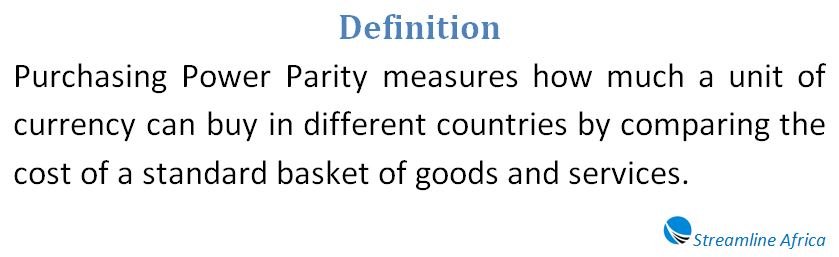
Purchasing Power Parity, often shortened to PPP, is an economic principle that helps economists and policymakers compare how far money can stretch across different countries. At its heart, PPP asks a simple but powerful question: if you took the same amount of money to two different nations, what would it buy you in each place? To answer this, economists use what is called a “basket of goods,” which includes a variety of everyday products and services. By comparing the cost of this basket in multiple countries, they can estimate how much one currency should be worth relative to another.
In theory, if a basket of identical goods costs the same when priced in two different currencies at a specific exchange rate, then the currencies are considered at parity. This approach allows for a more realistic comparison of living standards and productivity levels than raw currency exchange rates might suggest.
A Practical View
A freelance graphic designer travels between two countries while working remotely. In one country, $20 easily covers lunch, transportation, and coffee for the day. In another country, the same $20 barely pays for a simple meal. Even though the amount of money is identical, its purchasing power is very different in each place. Economists use comparisons like this to estimate purchasing power parity, helping them understand how living costs and currency values affect real standards of living across countries.
How Economists Measure PPP
Calculating PPP is more than simply comparing prices of a few items. Instead, it involves looking at a broad range of goods and services, from food and clothing to rent, education, and healthcare. The goal is to get a representative snapshot of everyday expenses in each country.
The simplest formula compares the price of one good in two different currencies. For example, if a laptop costs 500 units of currency in one country and 1,000 in another, the PPP exchange rate between the two would be 1:2. In practice, economists use far more complex models that factor in hundreds of products and services.
Because data collection is so extensive, large international collaborations are required. One notable effort is the International Comparison Program, launched in 1968 by the University of Pennsylvania and later supported by the United Nations. Through global surveys, this program compiles price data across regions, creating a foundation for PPP estimates used worldwide.
Read Also: What Is a Recession? Causes, Indicators, History, and How It Affects You
Why PPP Matters in Global Analysis
PPP plays an important role in economic studies because it gives a clearer view of the relative wealth and well-being of nations. Simply using market exchange rates to compare countries can be misleading. Exchange rates are influenced by speculation, interest rates, and government policies, which may not reflect the real cost of living.
By contrast, PPP-based comparisons reveal how much actual goods and services people can afford. This makes it easier to assess whether one country’s citizens enjoy a higher standard of living than another’s, regardless of fluctuations in currency markets.
Organizations like the International Monetary Fund (IMF) and the Organization for Economic Cooperation and Development (OECD) rely heavily on PPP data when making policy recommendations or projections. Similarly, the World Bank regularly publishes reports using PPP-adjusted figures to provide a clearer perspective on global development and inequality.
PPP and the Measurement of GDP
Gross Domestic Product, or GDP, measures the total value of goods and services produced in a country. While nominal GDP uses current exchange rates, PPP-adjusted GDP modifies this figure to account for price differences across countries.
This adjustment often changes how we view the global economy. For instance, when GDP is measured using exchange rates, wealthier nations with stronger currencies tend to dominate. But when adjusted for PPP, emerging economies may rise significantly in the rankings because goods and services are cheaper in those countries.
For example, consider two countries producing identical goods. If one sells the same product at half the price due to lower costs of living, its nominal GDP might look smaller than the other’s. Yet once adjusted for PPP, the two economies could appear closer in size, highlighting that residents of the lower-cost country still enjoy a similar standard of consumption.
A Simple Illustration of PPP in Action
Imagine buying a pair of shoes in two different countries. In the United States, the shoes cost $50, while in another country, the same pair costs 200 units of local currency. If the exchange rate translates 200 local units into $100, the shoes appear more expensive abroad. According to PPP, the dollar is stronger in that context, since it buys more of the same product.
These kinds of comparisons show why PPP is valuable: it helps uncover whether currencies are undervalued or overvalued, which can guide trade, investment, and government policy decisions.
The Big Mac Index: A Fun Take on PPP
Since the 1980s, The Economist magazine has run a lighthearted but surprisingly useful tool known as the “Big Mac Index.” By comparing the price of a McDonald’s Big Mac across different countries, the index offers a quick glimpse into whether currencies are misaligned.
The appeal of the Big Mac lies in its consistency. Because the burger is made with similar ingredients and processes worldwide, price differences highlight local economic conditions such as labor costs, rent, and supply expenses. While not a perfect scientific tool, the Big Mac Index has become a cultural and economic reference point, making PPP accessible to the public.
Challenges and Limitations of PPP
While PPP provides valuable insights, it has limitations that economists and policymakers must keep in mind.
One challenge is transportation costs. Imported goods may carry higher prices due to shipping, tariffs, and import duties, making comparisons less straightforward. Taxes also complicate matters, since value-added taxes or sales taxes differ across countries and directly affect consumer prices.
Another limitation involves non-tradable services. For example, the cost of getting a haircut or paying for local utilities may differ dramatically between two countries and cannot be equalized by trade. Labor costs, competition, and government intervention also create distortions. A monopoly in one country may artificially inflate prices, while in another, strong competition could keep them lower.
In short, PPP works best as a long-term measure of economic potential rather than a precise short-term predictor of currency values.
PPP and Financial Markets
Investors and foreign exchange traders often look at PPP to evaluate whether a currency is underpriced or overpriced relative to its peers. For example, if PPP suggests that one currency should buy more than it currently does, traders may conclude it is undervalued and anticipate a future correction.
Similarly, investors in international companies use PPP data to estimate how exchange rate changes might affect profits and risks. If a country’s currency is significantly overvalued, the real returns on foreign investments could be lower once adjusted back into the investor’s home currency.
Using a Common Currency for Comparisons
To make meaningful global comparisons, economists often convert local currencies into a single standard unit. This is usually the U.S. dollar or an “international dollar,” a hypothetical unit designed solely for comparison purposes. Using this common base helps level the playing field when examining productivity, income, and living standards across nations.
Countries with the Lowest PPP
PPP also shines a light on inequality across nations. Some countries consistently appear at the lower end of PPP rankings, meaning their citizens face much higher costs for basic goods compared to their incomes. For example, based on recent assessments, Burundi has ranked among the lowest in PPP-adjusted GDP, reflecting both economic challenges and reduced purchasing power among its population.
The Value and Limits of PPP
PPP remains a central tool in global economics because it strips away distortions caused by currency markets and highlights real differences in purchasing power. It allows for fairer comparisons of income, production, and living standards. Policymakers, investors, and researchers depend on it to make informed decisions that affect trade, growth, and development.
At the same time, PPP cannot perfectly capture reality. Local differences in culture, competition, and government policies ensure that identical products will rarely cost exactly the same worldwide. Nevertheless, as a long-term analytical tool, it remains one of the most useful concepts in modern economics.
Conclusion
Purchasing Power Parity is much more than a formula—it is a window into how people around the world live, spend, and produce. By comparing what money can truly buy across countries, PPP helps reveal hidden truths about global inequality, investment potential, and economic growth. While it is not without flaws, its insights remain indispensable for anyone seeking to understand the real value of currencies and the standards of living they represent.
Read Also: What Is Supply-Side Economics? Definition, Examples, and Key Policies
Frequently Asked Questions about Purchasing Power Parity
Why is PPP important for global economics?
PPP allows fairer comparisons of living standards and economic productivity between nations by stripping out distortions caused by fluctuating exchange rates.
How is PPP calculated?
PPP is calculated by comparing the prices of identical goods or services in two currencies, then determining the exchange rate at which the costs would be equal.
What role does PPP play in GDP comparisons?
When GDP is adjusted for PPP, it gives a more accurate view of economic output and living standards, especially in lower-cost countries where goods and services are cheaper.
What is the Big Mac Index?
The Big Mac Index, created by The Economist, humorously tracks the price of a Big Mac worldwide to illustrate how currencies may be under or overvalued compared to PPP benchmarks.
What are some limitations of PPP?
PPP faces challenges from factors like transport costs, tariffs, tax differences, non-traded services, and market competition, which make prices vary across countries.
How do investors and traders use PPP?
Currency traders use PPP to spot potentially undervalued or overvalued currencies, while investors use it to gauge how exchange rate movements might impact foreign investments.
Which countries have low PPP rankings?
Nations like Burundi often rank among the lowest, meaning incomes there buy significantly fewer goods and services compared to wealthier nations.