
Accounting rules require each cost to be classified according to how long it is expected to benefit the organization. Some expenditures support only the current period, while others continue generating value for several years. This difference determines whether the amount is recorded immediately as an expense or first recognized as an asset.
The distinction matters because the chosen treatment affects profit, assets, cash flow presentation, and performance ratios. The financial statements report the economic effect differently. Accountants must therefore look beyond payment timing and consider the period in which the related benefits will be consumed.
The Basic Decision Rule
A practical starting point is to ask whether the expenditure is expected to create economic value beyond the next twelve months. When the benefit is likely to continue for more than one year, the cost is generally capitalized. When the benefit will be used up within the current reporting period or operating cycle, the cost is normally expensed.
Capitalization means placing the expenditure on the balance sheet as an asset. The company then gradually transfers the asset’s cost to the income statement through depreciation or amortization. Depreciation usually applies to physical assets, including equipment, vehicles, buildings, and machinery. Amortization generally applies to intangible assets, such as eligible software, patents, and certain acquired rights.
Expensing follows a more immediate route. The full cost is charged to the income statement during the period in which it is incurred or consumed. Routine salaries, advertising, utilities, repairs, and office supplies commonly fall into this category because their benefits are short term.
Why Costs Are Spread Across Years
Capitalization supports the matching principle, which seeks to report expenses in the same periods as the revenue or benefits they help produce. Charging the entire cost of a long-lived asset against one year’s income could make that year appear unusually weak, even though the asset will contribute to operations for many future periods.
Suppose a delivery company buys a warehouse for $3.6 million and expects to use it for thirty years. Assuming no residual value and straight-line depreciation, the annual depreciation expense would be $120,000. The building initially appears on the balance sheet at its purchase cost, while a portion of that amount is recognized as expense each year.
When Immediate Expense Recognition Is Appropriate
A cost should usually be expensed when its benefit is brief, recurring, or connected to ordinary daily operations. Consider a company that spends $18,000 on a one-month promotional campaign. Once the campaign ends, the business is unlikely to control a measurable resource that will provide benefits over several years. The amount should therefore be recognized as a marketing expense during the campaign period.
Inventory requires more careful explanation. Goods purchased for resale are initially recorded as current assets rather than immediate expenses. They become cost of goods sold when customers purchase them. Because inventory is generally sold within the normal operating cycle, it is short term, but its cost recognition follows inventory rules rather than the depreciation approach used for long-term assets.
Common Costs Found in Each Category
Long-term property purchases, major equipment, vehicles, factory improvements, patents, purchased software, and qualifying development expenditures are often capitalized. These items usually create resources that management expects to use repeatedly.
The classification is not always automatic. A repair that merely restores equipment to normal condition is typically expensed. However, an upgrade that significantly extends useful life, improves capacity, or enhances performance may qualify for capitalization. Materiality policies also matter. Many companies expense low-cost equipment immediately, even when it may last several years, because tracking and depreciating small purchases would not meaningfully improve the financial statements.
Special Considerations for Software Costs
Software spending can involve either treatment depending on the project stage and applicable accounting requirements. Purchased software used internally may be capitalized and amortized over its expected life. Certain direct costs incurred while developing internal systems may also qualify after the project reaches the appropriate development phase.
Eligible amounts may include payments to programmers working directly on the application, fees paid to external developers, and costs of configuring a customer management or financial reporting platform. Preliminary research, staff training, maintenance, data conversion, and unsuccessful exploration are more likely to be expensed.
Effects on Profit and the Balance Sheet
Capitalizing a cost generally produces higher profit in the early period because only depreciation or amortization is recognized instead of the full expenditure. Assets and equity are also higher than they would be under immediate expensing. In later years, however, the recurring depreciation or amortization reduces earnings even though no new cash payment may occur.
Immediate expensing creates the opposite pattern. Current profit falls because the entire cost is recognized at once, but future periods avoid depreciation or amortization related to that expenditure. Over the asset’s complete life, total expense is usually similar; the major difference is timing.
Influence on Financial Ratios
The treatment can alter return on assets and return on equity. Capitalization raises both net income and asset balances initially. The profitability improvement may cause early-period returns to appear stronger, although the larger denominator can offset part of that effect. Later, depreciation lowers profit while the remaining asset balance continues influencing the ratios.
Expensing usually depresses initial earnings and equity, producing weaker early returns. In subsequent years, the absence of related depreciation may improve reported profitability. Analysts therefore examine accounting policies before comparing companies, especially when businesses exercise judgment over development, maintenance, and improvement costs.
Applying Sound Judgment and Consistency
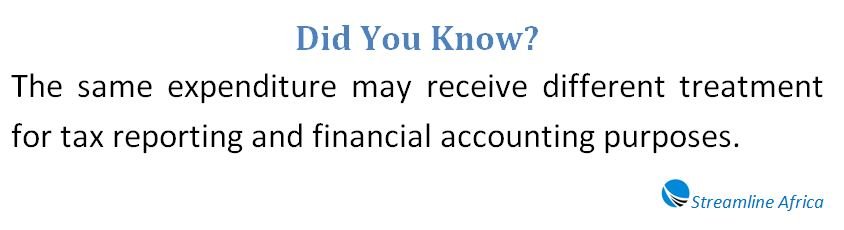
The decision should reflect economic substance rather than management’s preferred profit outcome. Accountants must evaluate useful life, expected future benefits, control of the resource, materiality, and the relevant reporting standards. Tax rules may also differ from financial reporting requirements, creating temporary differences between book values and tax values.
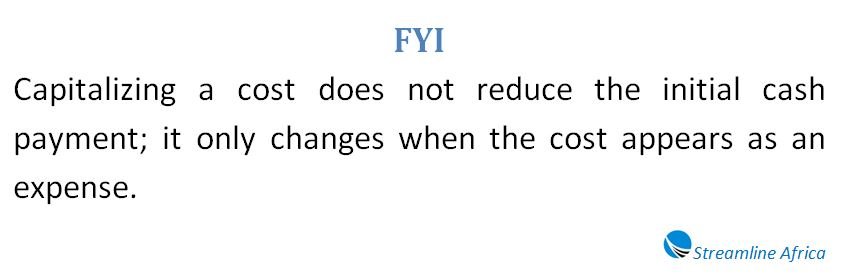
Consistent policies, supporting records, and clear disclosures help users understand the financial statements. When a company changes its capitalization threshold or treatment of a major cost category, it should explain the change and its impact. Proper classification does not change the amount of cash spent, but it ensures that costs are recognized in the periods that best represent how the business receives value.
Frequently Asked Questions
When Should a Business Capitalize a Cost?
A cost is generally capitalized when it is expected to provide economic benefits for more than one year.
When Should a Cost Be Expensed?
A cost should usually be expensed when its benefit is short term, recurring, or fully consumed within the current accounting period.
Why Do Companies Capitalize Long-Term Assets?
Capitalization helps match the cost of an asset with the periods in which the business benefits from using it.
What Is the Role of Depreciation?
Depreciation gradually allocates the cost of a physical asset, such as machinery or a building, over its estimated useful life.
How Is Amortization Different From Depreciation?
Amortization applies mainly to intangible assets, including eligible software, patents, and acquired rights, while depreciation applies to physical assets.
Is Inventory Immediately Recorded as an Expense?
No. Inventory is first recorded as a current asset and becomes an expense through cost of goods sold when it is sold.
Can Software Development Costs Be Capitalized?
Some software development costs may be capitalized if they meet accounting requirements. Research, training, maintenance, and early planning costs are often expensed.
How Does Capitalizing Affect Profit?
Capitalizing usually increases profit in the early years because the full cost is not recognized immediately. Future profits are reduced by depreciation or amortization.
Why Is Consistency Important in Cost Classification?
Consistent accounting policies improve transparency and make it easier for investors, managers, and analysts to compare financial results across periods.