
The law of demand is one of the most important principles in economics because it explains how buyers generally respond to changes in price. In simple terms, when the price of a good or service rises, consumers usually purchase less of it. When the price falls, they usually purchase more. This relationship is central to how markets function, how businesses set prices, and how consumers make purchasing decisions.
For business leaders, policymakers, investors, and market analysts, the law of demand is more than an academic theory. It provides a practical framework for understanding customer behavior, forecasting sales, assessing price sensitivity, and evaluating market opportunities. When combined with the law of supply, it helps explain how prices are formed and why they fluctuate over time.
What the Law of Demand Means
The law of demand states that price and quantity demanded usually move in opposite directions. If the price of a product increases, the quantity demanded tends to decrease. If the price decreases, the quantity demanded tends to increase, assuming other factors remain unchanged.
This principle is based on the reality that consumers have limited resources. Individuals, households, and businesses must constantly choose how to allocate money among competing needs. A household in Kumasi may want to buy fuel, groceries, school supplies, and mobile data in the same week, but its income may not allow all of these purchases at the desired level. As prices change, priorities are adjusted.
The law of demand therefore reflects a basic decision-making pattern: buyers are more willing to purchase a product when it offers greater value relative to its price.
Why Consumers Buy Less at Higher Prices
One major reason behind the law of demand is diminishing marginal utility. This concept means that each additional unit of the same product usually provides less extra satisfaction than the previous one.
Consider a professional attending an outdoor conference in Ho. The first bottle of cold water may be highly valuable because the person is thirsty. A second bottle may still be useful, but less urgent. A third bottle may only be attractive if the price is very low. As the benefit of each additional bottle declines, the buyer becomes less willing to pay the same amount for more.
This pattern applies across many products and services. A customer may value the first internet data bundle of the month because it supports work, communication, and entertainment. A second bundle may still be useful, but if prices rise sharply, the customer may reduce usage, switch networks, or delay another purchase.
From a consulting perspective, this is why businesses must carefully assess how customers perceive value. Pricing cannot be considered in isolation. It must be evaluated against customer need, available alternatives, income levels, and perceived usefulness.
How the Demand Curve Illustrates Consumer Behavior
Economists often use a demand curve to show the relationship between price and quantity demanded. Price is usually placed on the vertical axis, while quantity demanded is placed on the horizontal axis. The curve typically slopes downward from left to right, showing that lower prices are associated with higher quantities demanded.
For example, imagine a food company in Takoradi selling packaged fruit juice. At 18 cedis per bottle, customers may buy 300 bottles per week. At 14 cedis, sales may rise to 500 bottles. At 10 cedis, weekly purchases may increase further. The lower price attracts more buyers and encourages existing customers to buy more.
This downward slope is important for businesses. It shows that price increases may protect margins in the short term, but they can also reduce sales volume. Similarly, price reductions may increase volume, but they must be managed carefully to avoid weakening profitability.
Demand Versus Quantity Demanded
A common error in economic analysis is confusing demand with quantity demanded. These terms are related, but they do not mean the same thing.
Quantity demanded refers to the specific amount of a good or service that consumers are willing to buy at a particular price. When only the price changes, and other factors remain constant, there is movement along the existing demand curve.
Demand, however, refers to the overall relationship between price and quantity across different possible price levels. When demand changes, the entire demand curve shifts. This happens when factors other than price influence consumers’ willingness or ability to buy.
For instance, if a restaurant in Accra reduces the price of lunch from 60 cedis to 45 cedis and more customers buy meals, that is an increase in quantity demanded. But if a new office complex opens nearby and more workers begin eating at the restaurant at every price level, demand itself has increased.
This distinction is particularly important for market strategy. A price promotion may increase quantity demanded temporarily, but a change in customer income, location, preference, or competition can shift demand more permanently.
Factors That Can Shift Demand
Several factors can cause demand to increase or decrease. Income is one of the most common. When consumers earn more, they may demand more normal goods such as better housing, restaurant meals, private transport, quality clothing, or digital services. When incomes fall, demand for such goods may decline as households focus on essential spending.
Substitutes also influence demand. If one brand of cooking oil becomes expensive, customers may switch to another brand with similar quality. The availability of close substitutes reduces dependence on a single product and makes consumers more responsive to price changes.
Complementary goods can also affect demand. When smartphones become more affordable, demand for phone accessories, data bundles, mobile payment services, and repair services may rise. These products gain value because they are used together.
Other demand-shifting factors include consumer expectations, product quality, trends, weather, regulation, and cultural events. If customers expect fuel prices to rise next week, they may buy more today. If a brand is perceived to have reduced quality, demand may fall even before prices change.
How the Law of Supply Complements Demand
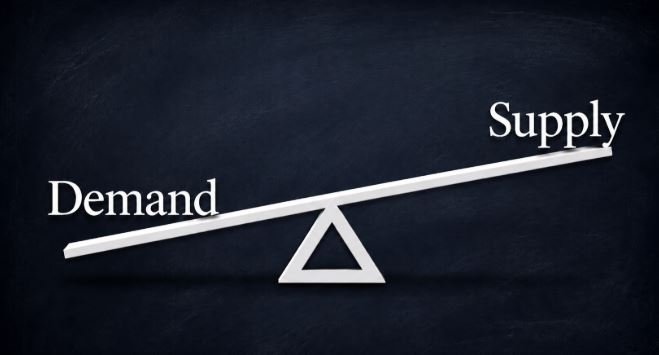
The law of demand explains the buyer’s side of the market, but pricing outcomes also depend on supply. Supply refers to the quantity of a good or service that sellers are willing and able to provide at different price levels.
Generally, when prices rise, suppliers are more willing to produce or sell because potential returns are higher. When prices fall, some suppliers may reduce production because the reward no longer justifies the cost.
Market prices are shaped by the interaction between demand and supply. If demand for maize rises while supply remains limited, prices are likely to increase. If supply later expands due to a strong harvest and demand remains stable, prices may fall. For decision-makers, understanding both sides of the market is essential for pricing, procurement, production planning, and investment decisions.
Real-Life Business Applications
The law of demand appears in everyday commercial decisions. When fuel prices rise, transport companies may reduce non-essential trips, renegotiate delivery fees, or optimize routes. When subscription prices increase, customers may cancel, downgrade, or switch to a competitor. When supermarkets introduce discounts on household essentials, purchase volumes often rise.
Businesses use this principle to test pricing models, design promotions, manage inventory, and forecast revenue. A company launching a new product must estimate how much customers are willing to buy at different price points. A retailer planning seasonal discounts must determine whether higher sales volumes will compensate for lower margins.
For consulting teams, the law of demand supports pricing strategy, market entry analysis, customer segmentation, and revenue planning. It helps answer a critical question: how will customers likely respond if the price changes?
A Simple Way to Understand the Concept
The law of demand can be understood through a basic example. If a cup of coffee costs 5 cedis, a customer may buy it every morning. If the price rises to 20 cedis, the customer may reduce consumption, prepare coffee at home, or switch to tea. The customer may still like coffee, but the higher price changes the purchasing decision.
This is the core message of the law of demand: price affects behavior.
Exceptions to the Law of Demand
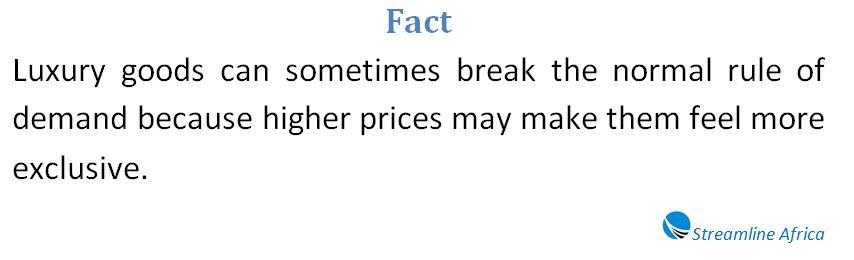
Although the law of demand applies to most goods and services, there are rare exceptions. Veblen goods are luxury items that may become more desirable as their prices rise because they signal status, exclusivity, or prestige. Examples may include luxury watches, designer bags, or rare collectibles.
Giffen goods are another unusual category. These are basic necessities for which demand may rise when prices increase, usually because consumers have very limited alternatives and must reduce spending on other goods.
These exceptions do not weaken the general principle. Rather, they show that consumer behavior can be shaped by social status, necessity, income pressure, and limited choice.
The Bottom Line
The law of demand states that, all else being equal, consumers tend to buy more when prices fall and less when prices rise. This inverse relationship between price and quantity demanded is a foundation of economic analysis.
For businesses and decision-makers, the principle offers practical value. It helps explain customer behavior, supports pricing decisions, guides sales forecasts, and clarifies how markets respond to changing conditions. By understanding the difference between demand and quantity demanded, and by monitoring the factors that shift demand, organizations can make better commercial and strategic decisions.
Important Questions and Answers
What Is The Law Of Demand?
The law of demand explains that when the price of a product rises, people usually buy less of it. When the price falls, they usually buy more.
Why Is The Law Of Demand Important?
It helps businesses, policymakers, and consumers understand how price changes affect buying decisions, sales volume, and market behavior.
How Does Price Affect Consumer Choices?
Price influences how much value buyers feel they are getting. If a product becomes too expensive, consumers may reduce purchases, delay buying, or choose alternatives.
What Does Quantity Demanded Mean?
Quantity demanded refers to the specific amount of a product consumers are willing to buy at a particular price.
Is Demand The Same As Quantity Demanded?
No. Quantity demanded changes when price changes, while demand changes when other factors such as income, taste, substitutes, or expectations shift.
Why Does The Demand Curve Slope Downward?
It slopes downward because buyers generally purchase more at lower prices and less at higher prices.
What Is Diminishing Marginal Utility?
Diminishing marginal utility means each additional unit of a product gives less extra satisfaction than the previous one.
How Do Substitutes Affect Demand?
Substitutes reduce demand for a product because consumers can switch to another option that meets the same need.
How Do Complementary Goods Affect Demand?
Complementary goods increase demand because they are used together. For example, cheaper smartphones may increase demand for data bundles and phone accessories.
How Can Businesses Use The Law Of Demand?
Businesses can use it to set prices, plan promotions, forecast sales, manage inventory, and understand customer sensitivity to price changes.
Can The Law Of Demand Have Exceptions?
Yes. Luxury status goods and some basic necessities may behave differently, but such cases are uncommon.
What Is The Main Lesson From The Article?
The main lesson is that price strongly affects buying behavior, but demand can also change because of income, competition, product quality, expectations, and consumer preferences.