

Small businesses are the backbone of Ghana’s economy. From roadside food vendors and neighborhood retail shops to agro-processing startups and tech-enabled service firms, small enterprises drive employment, innovation, and local development. Yet, while many businesses are launched every year, only a portion manage to survive beyond the first few years. The difference between success and failure is rarely luck alone. It usually comes down to a combination of preparation, decision-making, discipline, and adaptability to Ghana’s unique business environment.
Operating a business in Ghana involves navigating fluctuating costs, inconsistent power supply, regulatory requirements, customer price sensitivity, and limited access to affordable financing. Entrepreneurs who understand these realities early and plan accordingly stand a much better chance of building sustainable ventures.
Financial Readiness and Cash Flow Discipline
One of the most common reasons small businesses fail in Ghana is poor financial planning. Many entrepreneurs underestimate how much money is required not only to start a business but to keep it running consistently. Initial capital often goes into rent, equipment, inventory, permits, and basic setup, leaving little room for unexpected expenses such as repairs, price increases, or delayed customer payments.
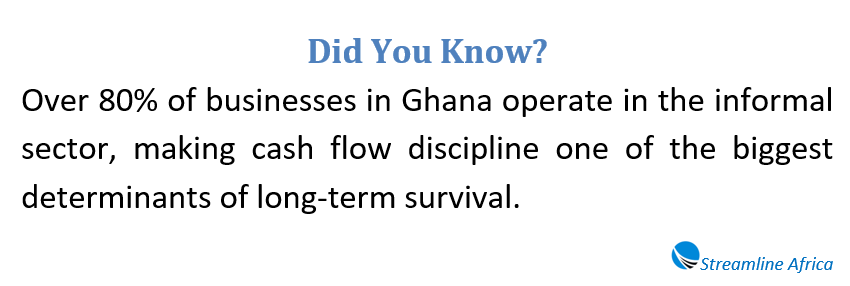
Cash flow management is especially critical in Ghana, where sales can be seasonal and customer payments are often delayed. A business may appear profitable on paper but still struggle to survive if cash is constantly tied up in stock or unpaid invoices. Entrepreneurs who mix business funds with personal spending further weaken their financial position, making it difficult to track performance or reinvest in growth.
Successful businesses usually build a habit of separating personal and business finances, budgeting conservatively, and keeping emergency reserves. They understand that steady cash flow, not just revenue, is what keeps the doors open.
The Role of the Business Owner’s Skills and Mindset
In Ghana, many people start businesses because of necessity rather than training. While entrepreneurship is admirable, running a business requires more than passion or technical skill. Owners must make decisions about pricing, hiring, customer service, compliance, and long-term direction. Without basic management skills, even a good business idea can quickly collapse.
Poor record-keeping, inconsistent supervision, and emotional decision-making often undermine progress. Some owners struggle to delegate effectively, while others hand over control too quickly without proper systems in place. Both extremes create problems.
Entrepreneurs who succeed tend to invest time in learning. They seek basic financial literacy, customer management skills, and operational discipline. They also develop resilience, understanding that slow months, unexpected losses, and operational mistakes are part of the journey, not signs of immediate failure.
Hiring, Managing, and Retaining the Right People
People play a major role in the success or failure of small businesses in Ghana. Many enterprises rely heavily on family members or acquaintances for staffing, which can work well initially but often creates challenges if expectations are unclear. When roles are undefined and accountability is weak, productivity suffers.
Hiring the wrong people can be costly. Theft, absenteeism, poor customer service, and lack of commitment are common complaints among small business owners. These issues are often symptoms of rushed hiring, lack of training, or unclear performance expectations.
Businesses that perform well usually take time to explain roles, train employees properly, and set basic rules around attendance, conduct, and performance. Even small gestures such as fair pay, timely salaries, respect, and opportunities to learn can significantly improve staff loyalty and output. In a competitive labor market, treating employees well becomes a strategic advantage.

Understanding the Business From the Ground Up
Many Ghanaian businesses struggle because the owner does not fully understand how all parts of the operation work. When a business owner depends entirely on a single employee to manage sales, accounting, or procurement, the business becomes vulnerable. If that person leaves suddenly, operations may grind to a halt.
Successful entrepreneurs usually take time in the early stages to learn every critical function of their business. They understand how inventory moves, how prices are set, how customers are acquired, and how money flows in and out. This knowledge allows them to identify problems early and make informed decisions when challenges arise.
Being hands-on does not mean doing everything forever, but it does mean knowing enough to supervise effectively and step in when necessary.
Location, Visibility, and Accessibility
In Ghana, location plays a major role in business performance. For physical businesses, visibility, foot traffic, and accessibility can make the difference between steady sales and daily losses. A shop hidden inside a compound or located far from customer movement may struggle even if it offers good products.
Digital presence is becoming equally important. Many customers now discover businesses through WhatsApp, Instagram, Facebook, or Google searches. Businesses without a basic online presence miss opportunities to reach new customers, promote products, and communicate updates.
Entrepreneurs who succeed usually choose locations that align with their target market and invest in simple but effective visibility strategies, whether through signage, word-of-mouth, or social media engagement.
Understanding Customers and Market Demand
One major cause of failure among small businesses in Ghana is poor understanding of customer needs. Some businesses offer products or services without properly assessing whether customers are willing or able to pay for them. Others price their offerings too high without clearly communicating value.
Ghanaian consumers are highly price-sensitive and often compare options carefully. Businesses that ignore this reality struggle to attract repeat customers. On the other hand, businesses that listen to feedback, adjust pricing, improve service quality, and respond to customer complaints tend to build loyalty over time.
Market research does not have to be complex. Simple conversations with customers, observation of competitors, and trial sales can provide valuable insights. Businesses that adapt their offerings based on real demand are more likely to survive.
Managing Competition and Industry Pressure
Competition is intense in many sectors in Ghana, especially retail, food services, transportation, and trading. New entrants often underestimate how crowded the market already is. Without a clear differentiator, businesses may find themselves competing purely on price, which reduces margins and increases risk.
Successful businesses usually find ways to stand out, whether through better customer service, consistent quality, convenience, or reliability. Some focus on niche markets, while others build strong relationships with suppliers or customers that competitors find hard to replicate.
Understanding the competitive landscape helps business owners position themselves realistically rather than relying on assumptions.
Adapting to Economic and Regulatory Changes
Ghana’s economic environment can be unpredictable. Inflation, currency fluctuations, fuel price increases, and changes in taxes or regulations all affect small businesses. Those who fail to adapt quickly often experience sudden losses.
Businesses that survive usually monitor their costs closely and adjust pricing, sourcing, or operations when conditions change. They also take compliance seriously, ensuring they meet basic regulatory requirements to avoid fines or shutdowns.
Adaptability is not about reacting in panic, but about staying informed and making timely, measured adjustments.
Learning, Networking, and Seeking Support
Many small business owners in Ghana operate in isolation, trying to solve every problem alone. This often leads to repeated mistakes and missed opportunities. Entrepreneurs who engage with peers, mentors, and support networks tend to gain valuable insights and encouragement.
Learning can come from workshops, trade associations, online resources, or even informal conversations with experienced business owners. Exposure to different perspectives helps entrepreneurs refine their strategies and avoid common pitfalls.
A willingness to ask for help and learn continuously is a powerful driver of long-term success.
Purpose, Discipline, and Long-Term Thinking
Beyond skills and systems, mindset plays a critical role in business outcomes. Entrepreneurs who treat their businesses casually or rely solely on short-term gains often struggle to build stability. In contrast, those who define clear goals, maintain discipline, and think long-term are more likely to weather challenges.
Purpose provides motivation during difficult periods, while discipline ensures consistency in operations. Long-term thinking helps business owners make decisions that support sustainability rather than quick wins.
In Ghana’s challenging but opportunity-rich environment, these qualities separate businesses that fade out from those that grow steadily.
Conclusion: Building Sustainable Small Businesses in Ghana
Small business success in Ghana is shaped by many interconnected factors. Financial discipline, management skills, people practices, customer understanding, adaptability, and mindset all play a role. Failure usually results from a combination of weak planning, poor execution, and resistance to change rather than a single mistake.
Entrepreneurs who approach business with preparation, humility, and a willingness to learn increase their chances of building enterprises that last. While the journey is rarely smooth, understanding these success and failure factors provides a strong foundation for growth and resilience.