
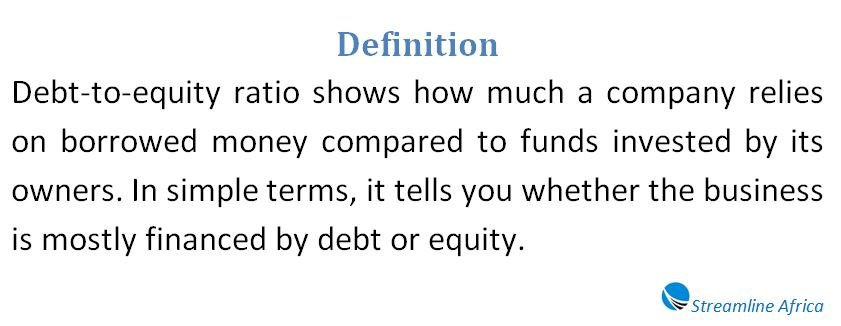
The debt-to-equity ratio, often shortened to D/E ratio, is a widely used financial indicator that helps explain how a business funds its operations. At its core, it compares what a company owes to what it owns outright through shareholders’ investments. By examining this relationship, analysts, investors, and business owners can better understand how much risk a company is taking on through borrowing.
Rather than simply looking at profit or revenue, this ratio focuses on structure. It highlights whether a firm relies more on external financing, such as loans and credit, or on internal funding provided by shareholders. Because of this, the D/E ratio is considered one of the most important tools for evaluating financial stability and long-term sustainability.
Breaking Down the Formula
To calculate the D/E ratio, you divide total liabilities by total shareholders’ equity. The formula is simple, but the meaning behind the numbers requires careful interpretation.
Total liabilities include everything a company owes, such as loans, accounts payable, and other obligations. Shareholders’ equity represents the residual value of assets after liabilities are subtracted. In other words, it reflects what would remain for owners if all debts were paid off.
These figures are usually obtained from the balance sheet. While the calculation itself is straightforward, understanding the quality of the underlying data is essential. Certain accounting elements, like retained earnings or intangible assets, can influence the final result and should be reviewed closely.

Why the D/E Ratio Matters in Business Analysis
The D/E ratio provides insight into how aggressively a company is using debt to finance its activities. A higher ratio suggests that a firm leans heavily on borrowed funds, while a lower ratio indicates a stronger reliance on equity.
This distinction is important because debt comes with obligations. Interest payments must be made regularly, and failure to meet them can lead to financial distress. Equity financing, on the other hand, does not require repayment in the same way, though it may dilute ownership.
Investors often use the D/E ratio to gauge risk. Companies with higher leverage may offer greater returns during periods of growth, but they are also more vulnerable during economic downturns. Those with lower leverage tend to be more stable but may grow at a slower pace.
Interpreting High and Low Ratios
A high D/E ratio can signal that a company is aggressively expanding using borrowed money. This strategy can be effective if the returns generated from investments exceed the cost of borrowing. However, it also increases financial pressure, especially if market conditions change or revenue declines.
On the other hand, a very low D/E ratio might indicate that a company is being overly cautious. While this reduces risk, it could also mean the business is missing opportunities to grow by leveraging affordable debt.
The key lies in balance. There is no universal “perfect” ratio. What is considered healthy varies depending on the industry, company size, and growth strategy.
Industry Differences and Comparisons
One of the most important aspects of analyzing the D/E ratio is context. Different industries operate under different financial structures, and comparing companies across unrelated sectors can be misleading.
For example, industries that require heavy investment in infrastructure, such as utilities or transportation, often carry higher levels of debt. These businesses typically generate stable and predictable cash flows, making it easier to service loans. As a result, a high D/E ratio in such sectors may not be a cause for concern.
In contrast, companies in fast-changing industries with uncertain revenues might need to maintain lower debt levels to remain flexible. This is why it is more meaningful to compare a company’s D/E ratio with its direct competitors rather than with businesses in entirely different fields.
Adjusting the Ratio for Better Insights
While the standard formula uses total liabilities, analysts sometimes refine the calculation to gain a clearer understanding. One common adjustment is to focus only on long-term debt, excluding short-term obligations.
Long-term debt is generally considered riskier because it extends over a longer period and is more sensitive to changes in interest rates. By isolating it, analysts can better evaluate a company’s long-term financial commitments.
Short-term liabilities, such as accounts payable, are usually settled within a year and are often part of normal business operations. Including them in the ratio can sometimes exaggerate the level of financial risk.
Another adjustment involves reviewing items like preferred stock, which can be classified differently depending on the analysis. These variations highlight the importance of not relying solely on a single version of the ratio.
The Role of Debt in Business Growth
Debt is not inherently negative. In many cases, it plays a crucial role in helping businesses expand. Borrowing allows companies to invest in new projects, acquire assets, or enter new markets without giving up ownership.
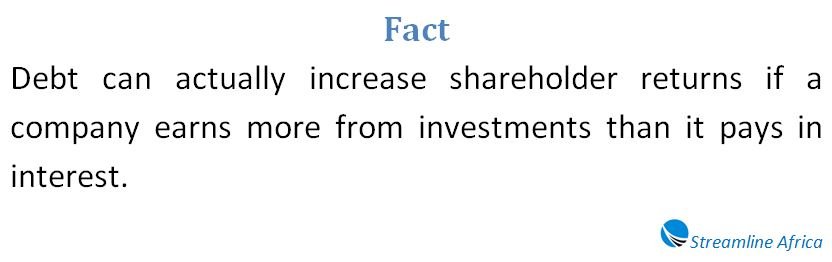
When managed effectively, debt can amplify returns. If a company earns more from its investments than it pays in interest, shareholders benefit from increased profitability. This concept is known as financial leverage.
However, the opposite can also occur. If borrowing costs rise or investments fail to generate expected returns, the burden of debt can outweigh the benefits. This is why understanding the D/E ratio is essential for assessing whether a company’s growth strategy is sustainable.
Looking Beyond the Ratio
Although the D/E ratio is valuable, it should not be used in isolation. A complete financial analysis requires examining other metrics alongside it.
Liquidity ratios, such as the current ratio and cash ratio, help determine whether a company can meet its short-term obligations. Profitability measures provide insight into how efficiently a business generates earnings. Growth indicators reveal whether the company is expanding or stagnating.
By combining these perspectives, investors can develop a more comprehensive understanding of a company’s financial health. The D/E ratio serves as one piece of a larger puzzle rather than a standalone answer.
Applying the D/E Ratio to Personal Finance
Interestingly, the concept behind the D/E ratio can also be applied to individuals. In personal finance, it compares total debts to net worth, offering insight into financial stability.
A person with significant assets and relatively low debt is generally in a stronger position than someone with high liabilities and limited assets. Lenders often consider this ratio when evaluating loan applications, as it helps them assess the likelihood of repayment.
For individuals, maintaining a balanced ratio can improve financial security and increase access to credit. It also provides a clearer picture of long-term financial planning.
Limitations You Should Be Aware Of
Despite its usefulness, the D/E ratio has several limitations. One major challenge is that accounting practices can vary, affecting how assets and liabilities are recorded. This can make comparisons between companies less straightforward.
Additionally, the ratio does not capture the timing of debt repayments. A company with large long-term obligations may appear similar to one with short-term liabilities, even though their risk profiles differ significantly.
Another limitation is that the ratio does not directly measure a company’s ability to generate cash. A business might have a high D/E ratio but still manage its debt effectively if it produces consistent revenue.
Because of these factors, it is essential to interpret the ratio within a broader analytical framework.
What Is Considered a Healthy Ratio?
Determining a “good” D/E ratio depends largely on context. In general, a ratio below 1 suggests that a company relies more on equity than debt, which is often viewed as conservative. Ratios above 2 may indicate higher risk, particularly in industries where borrowing is less common.
However, these benchmarks are not absolute. Some sectors naturally operate with higher leverage, while others require more cautious financial structures. The key is to evaluate the ratio relative to industry norms and historical trends.
A rising D/E ratio over time may signal increasing dependence on debt, which could become problematic if not managed carefully. Conversely, a declining ratio might indicate improving financial strength.
Final Thoughts on Using the D/E Ratio Effectively
The debt-to-equity ratio is a powerful tool for understanding how a company finances its operations and manages risk. By comparing liabilities with shareholders’ equity, it provides a snapshot of financial leverage and strategic decision-making.
However, its true value lies in thoughtful interpretation. Looking at trends, industry standards, and complementary metrics can transform a simple calculation into a meaningful insight. Whether used by investors, business owners, or individuals managing their finances, the D/E ratio remains an essential part of financial analysis.
Ultimately, the goal is not to find a perfect number but to understand the story behind it.
Commonly Asked Questions and Answers
Why is the D/E ratio important for investors?
Investors use it to understand risk. A higher ratio can mean greater potential returns but also higher financial pressure, especially if the company struggles to repay its debts.
How is the D/E ratio calculated?
It is calculated by dividing total liabilities by shareholders’ equity. Both figures are found on the company’s balance sheet.
What does a high D/E ratio indicate?
A high ratio suggests the company depends heavily on borrowing. This can boost growth but also increases the risk of financial trouble during tough economic periods.
Is a low D/E ratio always a good sign?
Not necessarily. While it indicates lower risk, it may also mean the company is not taking advantage of opportunities to grow using borrowed funds.
Why should companies be compared within the same industry?
Different industries have different financial structures. Comparing companies in the same sector provides a more accurate understanding of whether a ratio is healthy or concerning.
Can the D/E ratio be adjusted for better analysis?
Yes. Analysts sometimes focus only on long-term debt to better assess long-term financial risk, since short-term liabilities are usually less risky.
How does debt affect a company’s growth?
Debt can help businesses expand by funding new projects or investments. However, if returns don’t exceed borrowing costs, it can hurt profitability.
What are the limitations of the D/E ratio?
It doesn’t show how easily a company can repay its debt or generate cash. It also depends on accounting methods, which can vary between companies.
Can individuals use the D/E ratio concept?
Yes. People can apply it to personal finances by comparing their total debts to their net worth to understand their financial health.