
A depreciable basis is the portion of a long-term tangible asset’s cost that a business expects to allocate as depreciation over the asset’s useful economic life. It establishes the total amount that can gradually be recognized as depreciation expense after considering the value the asset is expected to retain when it is eventually retired, sold, or replaced.
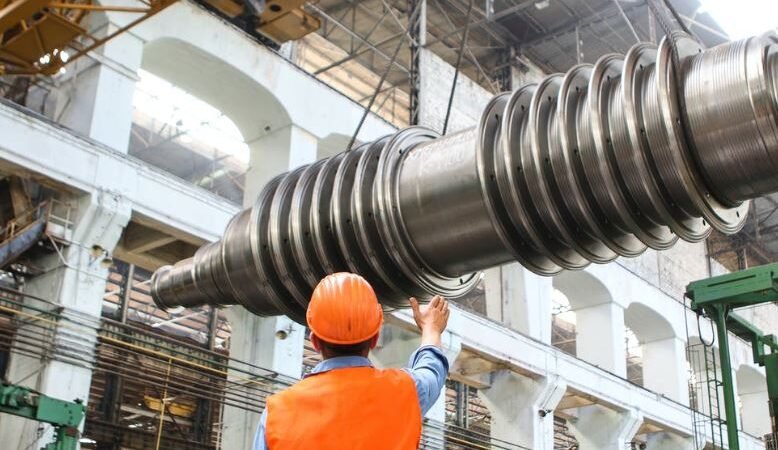
Businesses commonly apply this concept to property, plant, and equipment, often referred to collectively as PP&E. Examples include production machinery, delivery vehicles, office equipment, warehouse systems, agricultural equipment, and certain buildings. These assets normally remain in operation for several accounting periods rather than being consumed immediately.
Because their economic benefits extend beyond the period in which they are purchased, the full cost is generally not treated as an immediate operating expense. Instead, the depreciable portion of the asset is allocated across the years in which the asset contributes to business operations.
Understanding the depreciable basis is therefore essential for accurate financial reporting, fixed-asset planning, budgeting, tax analysis, and financial modeling.
How the Depreciable Basis Is Determined
The calculation begins with the asset’s total acquisition cost. Importantly, acquisition cost does not always mean the amount shown on the supplier’s invoice alone. Businesses may incur several additional expenditures before an asset is ready for its intended use.
Suppose a logistics company purchases a specialized grain-handling machine. Beyond the purchase price, the business may pay freight charges, installation costs, testing expenses, engineering fees, or modification costs. Where those expenditures are necessary to place the machine into operating condition, they may form part of the asset’s capitalized cost.
From this total cost, the company deducts the estimated salvage value.
Salvage value, sometimes called residual value, represents the amount the business expects to recover from the asset when its useful life ends. An old vehicle, for example, may still have resale value, while industrial equipment may retain value because of reusable components or scrap material.
Consequently, the depreciable basis represents the amount of an asset’s recorded cost that management expects will be consumed during its useful life.
Depreciable Basis Formula
The basic calculation is:
Depreciable Basis = Total Capitalized Asset Cost – Estimated Salvage Value
Consider a commercial printing company in Kumasi that acquires an automated printing system for GH¢3.6 million. Management expects the equipment to be worth GH¢600,000 when it reaches the end of its estimated useful life.
The depreciable basis would therefore be:
GH¢3.6 million – GH¢600,000 = GH¢3 million
The GH¢3 million represents the amount that can be allocated as depreciation expense over the machine’s estimated operating life.
If management expects the machine to provide economic benefits for 12 years and applies straight-line depreciation, the annual depreciation expense would be:
Annual Depreciation Expense = Depreciable Basis ÷ Useful Life
GH¢3 million ÷ 12 years = GH¢250,000 per year
Under this approach, GH¢250,000 would generally be recognized as depreciation each year until the equipment reaches its projected residual value.
Why Salvage Value Matters
The salvage value assumption directly influences the depreciable amount. A higher expected residual value produces a smaller depreciation base, while a lower residual value increases the amount available for depreciation.
For some assets, companies may conclude that salvage value is insignificant and use zero or a relatively small residual value. This approach may be reasonable for equipment that becomes technologically outdated, heavily worn, or commercially unattractive by the end of its useful life.
However, management should not simply select a low salvage value for the purpose of increasing depreciation. Accounting estimates should be supportable and based on reasonable expectations regarding the asset’s future condition, resale possibilities, market environment, and disposal costs.
Salvage values and useful-life assumptions may also require reassessment when circumstances change significantly.
The Connection Between Depreciation and Taxes
Depreciation affects reported profitability because it is recognized as an expense on the income statement. A larger depreciation expense generally reduces accounting profit before tax, assuming other factors remain unchanged.
For example, suppose two otherwise identical companies each generate GH¢5 million in operating profit before depreciation. One records GH¢300,000 in depreciation while the other records GH¢500,000. The second business would report lower profit before tax because more depreciation has been recognized.
This relationship creates what is often described as a depreciation tax shield because allowable depreciation deductions can reduce taxable income.
However, financial accounting depreciation and tax depreciation should not automatically be treated as identical. Tax authorities may establish their own capital allowance rules, asset classifications, rates, and deduction periods. As a result, depreciation recorded for financial reporting can differ significantly from deductions permitted for tax purposes.
Useful Life and the Depreciation Base
Once the depreciable basis has been established, management must determine how long the asset is expected to generate economic benefits.
Useful life is an accounting estimate rather than simply the maximum number of years an asset can physically survive. A vehicle might technically remain operational for 15 years, for instance, while a company may expect to replace it after seven years because repair costs, efficiency, or operational requirements make continued use unattractive.
The estimated useful life therefore affects the timing of depreciation expense.
Under straight-line depreciation, a shorter useful life produces a larger annual expense because the same depreciable amount is allocated across fewer periods. A longer life spreads the expense across more years and reduces the annual depreciation charge.
Businesses normally consider factors such as expected usage, maintenance requirements, technological change, production demands, physical deterioration, and replacement policies when determining useful life.
Different Methods of Allocating Depreciation
Determining the depreciable basis answers how much of an asset can ultimately be depreciated. A separate decision determines how that amount should be distributed across accounting periods.
The straight-line method is one of the simplest approaches. It recognizes an equal depreciation expense in each year of the asset’s estimated useful life. This method is often appropriate when the asset is expected to provide relatively consistent economic benefits over time.
Accelerated depreciation methods allocate more depreciation to earlier periods and less to later periods. The double-declining-balance method is a common example. Such approaches may better reflect assets that lose value or productive efficiency rapidly during their early years.
Another alternative is the units-of-production method. Instead of allocating depreciation primarily according to time, it links the expense to actual usage. A mining machine, for example, might be depreciated according to tonnes processed, while manufacturing equipment could be depreciated according to units produced.
Regardless of the method selected, the depreciable basis establishes the total amount available for allocation.
Practical Depreciable Basis Example
Assume Coastal Packaging Ltd., a fictional manufacturer operating in Takoradi, buys a production line for GH¢8 million. The company spends an additional GH¢300,000 transporting the equipment, GH¢400,000 installing it, and GH¢100,000 conducting required testing.
Its total capitalized cost is therefore GH¢8.8 million.
Management expects the equipment to have a residual value of GH¢800,000 after eight years.
The depreciable basis becomes:
GH¢8.8 million – GH¢800,000 = GH¢8 million
Using straight-line depreciation, the annual depreciation expense would be:
GH¢8 million ÷ 8 years = GH¢1 million
Coastal Packaging would therefore recognize GH¢1 million of depreciation each year, assuming no changes in estimates and no impairment or disposal before the end of the useful life.
This example also demonstrates why all qualifying acquisition-related expenditures must be identified before calculating depreciation.
Building a PP&E Roll-Forward Schedule
Financial models frequently track fixed assets through a PP&E roll-forward schedule. The schedule connects beginning asset balances, new capital expenditure, depreciation, disposals, and ending balances.
A simplified relationship is:
Ending PP&E Balance = Beginning PP&E Balance + Capital Expenditure – Depreciation
Consider the Coastal Packaging example. The business begins Year 1 with an asset balance of GH¢8.8 million. Assume no additional capital expenditure occurs during the following eight years.
After recognizing GH¢1 million in straight-line depreciation during Year 1, the carrying amount falls to GH¢7.8 million. That ending amount becomes the opening balance for Year 2.
The same process continues throughout the asset’s estimated useful life. After eight years, accumulated depreciation totals GH¢8 million, leaving a carrying value of GH¢800,000.
That final carrying amount corresponds with the original salvage value estimate.
A roll-forward schedule provides analysts with a structured way to forecast depreciation, monitor capital spending, estimate future carrying values, and connect PP&E assumptions across the income statement, balance sheet, and cash flow statement.
Why Depreciable Basis Matters in Financial Analysis
Depreciable basis may appear to be a relatively straightforward accounting calculation, but its influence extends across multiple areas of financial analysis.
Because depreciation affects operating expenses, different assumptions can alter reported operating profit, earnings before tax, net income, and certain profitability ratios. The carrying value of PP&E on the balance sheet is also affected as accumulated depreciation increases over time.
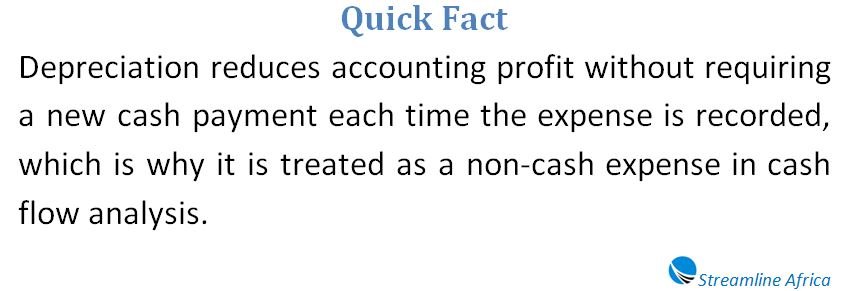
Cash flow analysis adds another dimension. Depreciation itself is a non-cash expense, meaning no cash payment occurs when the expense is recorded. Consequently, depreciation is normally added back when reconciling net income to operating cash flow under the indirect method.
Capital expenditure, by contrast, represents an actual cash investment and normally appears under investing activities.
Analysts therefore need to understand the difference between purchasing an asset, establishing its depreciable basis, recording depreciation, and tracking the related cash movements.
Final Perspective
The depreciable basis represents the amount of a fixed asset’s capitalized cost that a company expects to allocate as depreciation during its useful economic life. It is generally calculated by deducting estimated salvage value from the asset’s total qualifying acquisition cost.
Once that amount has been established, management selects an appropriate depreciation method and useful-life assumption to determine when depreciation will be recognized.
Whether a company uses straight-line depreciation, an accelerated approach, or a production-based method, the depreciable basis remains the foundation of the calculation. When incorporated into a PP&E roll-forward schedule, it also becomes an important component of financial forecasting and three-statement modeling.
For accountants, business owners, investors, and financial analysts, correctly understanding the depreciable basis provides a clearer view of how long-term assets move from an initial capital investment to periodic expense recognition over time.
Frequently Asked Questions
How is the depreciable basis calculated?
It is generally calculated by subtracting the asset’s estimated salvage value from its total capitalized cost.
What costs can be included in an asset’s purchase cost?
Beyond the purchase price, qualifying costs may include transportation, installation, testing, modifications, and other expenses required to make the asset ready for use.
What is salvage value?
Salvage value is the estimated amount a business expects to recover from an asset when it reaches the end of its useful economic life.
Why does salvage value affect depreciation?
A higher salvage value reduces the depreciable basis, while a lower salvage value increases the total amount that can be depreciated.
What is the basic depreciable basis formula?
The formula is: Depreciable Basis = Total Capitalized Asset Cost – Estimated Salvage Value.
How does useful life affect annual depreciation?
Under straight-line depreciation, a shorter useful life produces a higher annual depreciation expense, while a longer useful life spreads the cost across more years.
What is straight-line depreciation?
Straight-line depreciation allocates the depreciable basis evenly across the asset’s estimated useful life, resulting in the same depreciation expense each year.
Can businesses use depreciation methods other than straight-line?
Yes. Businesses may use accelerated methods such as double-declining balance or usage-based approaches such as the units-of-production method when these better reflect how the asset provides economic benefits.
How does depreciation affect company profit?
Depreciation is recorded as an expense, so it reduces reported operating profit and profit before tax even though no cash payment occurs when depreciation is recognized.
What is a depreciation tax shield?
A depreciation tax shield refers to the potential tax benefit created when allowable depreciation deductions reduce taxable income and, consequently, the amount of tax payable.
Why is depreciable basis important in financial modeling?
It helps analysts forecast depreciation expense, PP&E balances, accumulated depreciation, profitability, taxes, and the relationship between capital expenditure and the three financial statements.