

The cost principle, often referred to as the historical cost concept, is a foundational rule that guides how businesses record assets in their financial statements. At its core, it requires that assets be recognized at the amount paid to acquire them at the time of purchase. This value becomes the official figure recorded in the accounting system, regardless of any future changes in market conditions.
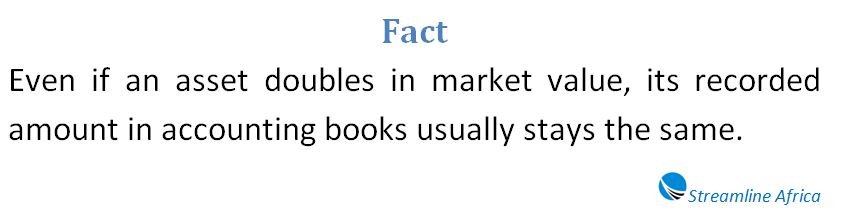
This approach emphasizes objectivity and reliability. By anchoring asset values to actual transactions, accountants avoid speculation and ensure that financial reports are based on verifiable data. In practice, this means that once an asset is recorded, its value remains fixed in the books, except in specific, limited circumstances.
Why Historical Cost Matters
The logic behind using historical cost is straightforward: it provides a clear, documented, and unbiased measure of value. Market prices can fluctuate due to inflation, economic trends, or shifts in demand, but the original purchase price is a concrete figure supported by invoices or contracts.
This consistency is particularly important for stakeholders such as investors, auditors, and regulators. When financial statements are prepared using stable and comparable figures, users can better assess a company’s performance over time without the noise of frequent revaluations.
However, this stability comes with a trade-off. While historical cost ensures reliability, it may not always reflect current economic reality. An asset purchased years ago may be worth significantly more—or less—today, yet its recorded value remains unchanged.

Recording Asset Purchases
Under the cost principle, the total acquisition cost of an asset includes not only the purchase price but also any additional expenses necessary to bring the asset into use. These may include transportation, installation, or legal fees. The full amount is capitalized and entered into the accounting records at the time of acquisition.
For example, if a company acquires machinery for 50,000 in cash, that amount becomes its recorded value. If instead the company pays 20,000 upfront and agrees to settle the remaining 30,000 later under reasonable terms, the asset is still recognized at the full 50,000. The method of payment does not alter the recorded cost; what matters is the total agreed value of the transaction.
This principle ensures uniformity in reporting, regardless of how the purchase is financed.
Depreciation and Asset Allocation
When a business acquires a long-term asset such as equipment or vehicles, the cost principle does not imply that the asset’s value remains untouched indefinitely. Instead, the asset’s cost is systematically allocated over its useful life through depreciation.
Depreciation reflects the gradual consumption of the asset’s economic benefits. Each accounting period, a portion of the asset’s cost is transferred from the balance sheet to the income statement as an expense. Over time, this reduces the asset’s book value through accumulated depreciation.
It is important to note that accumulated depreciation can never exceed the original cost of the asset. This constraint preserves the integrity of the historical cost framework, ensuring that recorded values do not drop below zero or become distorted.
Land is typically excluded from depreciation because it is assumed to have an indefinite useful life.
Limits on Recognizing Assets
A critical implication of the cost principle is that only assets acquired through measurable transactions can be recorded. This means that internally generated value—no matter how significant—often does not appear on the balance sheet.
For instance, a company may have an exceptional management team, strong brand recognition, or proprietary processes developed over many years. While these elements contribute substantially to business success, they are not recorded as assets unless they are acquired externally in a transaction that establishes a clear monetary value.
This restriction can lead to situations where a company’s financial statements understate its true economic worth. Internally developed intangible assets remain invisible in formal accounting records, even though they may be central to competitive advantage.
Acquired Intangible Assets
In contrast, when intangible assets are purchased from another entity, they can be recognized under the cost principle. The transaction provides a verifiable basis for valuation, making it acceptable to record the asset.
Consider a scenario where a company buys a competitor’s trademark for 3 million. Because this acquisition involves a clear exchange of value, the trademark is recorded as an asset at its purchase price. This treatment applies even if the trademark later becomes more valuable or declines in relevance.
The distinction between internally developed and externally acquired assets highlights a key boundary of the cost principle: recognition depends on objective evidence, not perceived value.
Balancing Reliability and Relevance
The cost principle remains widely used because it prioritizes accuracy and consistency. By relying on actual transaction data, it minimizes subjectivity and reduces the risk of manipulation in financial reporting.
At the same time, users of financial statements must be aware of its limitations. Historical cost does not always capture current market conditions, and some valuable resources may be excluded entirely. As a result, financial analysis often requires supplementary information and professional judgment to form a complete picture.
In essence, the cost principle provides a stable foundation for accounting, but it is only one piece of the broader financial reporting framework.
Frequently Asked Questions about the Cost Principle
Why do accountants rely on historical cost instead of market value?
Because the original purchase price is objective and verifiable, making financial statements more reliable and less open to manipulation.
Does the value of an asset ever change in the books?
Not due to market fluctuations. However, its book value can decrease over time through depreciation or impairment.
How are assets recorded if they are bought on credit?
They are still recorded at the full purchase price, regardless of whether payment is made upfront or spread over time.
What role does depreciation play under the cost principle?
Depreciation spreads the cost of an asset over its useful life, reflecting how it is gradually used up in business operations.
Can a company record internally developed assets like brand value?
No, unless there is a transaction that assigns a clear monetary value. Internally built assets are typically not recognized.
Why are some valuable assets missing from financial statements?
Because the cost principle only allows assets acquired through transactions to be recorded, leaving out intangible but internally developed value.
Are there any exceptions to the cost principle?
Yes, certain financial assets like short-term investments in actively traded stocks may be adjusted to reflect current market value.