
The dividend payout ratio is a financial measure that explains how a company distributes its profits between shareholders and internal use. In simple terms, it shows what portion of a firm’s earnings is returned to investors as dividends rather than being kept within the business. This metric is especially useful for anyone trying to understand whether a company prioritizes rewarding shareholders immediately or reinvesting for future expansion.
Every business generates profits with choices attached. Some firms distribute a large share of those profits to investors, while others prefer to retain earnings to fund innovation, reduce debt, or build reserves. The payout ratio provides a clear snapshot of that decision-making balance.
Breaking Down the Formula
At its core, the dividend payout ratio compares total dividends paid to total net income. The relationship can also be expressed on a per-share basis, which is often easier for investors to interpret. In that case, dividends per share are divided by earnings per share.
Another way to look at it is through the retention ratio, which represents the portion of profits kept within the company. When you subtract the retention ratio from one, you arrive at the payout ratio. This alternative perspective highlights the trade-off between reinvestment and distribution.
For example, if a company earns substantial profits but only distributes a small fraction as dividends, its payout ratio will be low, indicating a stronger focus on growth. Conversely, a high payout ratio suggests that most earnings are being returned to shareholders.

A Practical Calculation Example
Imagine a company that reports total dividends of $4 million and net income of $20 million for the year. Dividing dividends by net income gives a payout ratio of 20 percent. This means the company distributes one-fifth of its earnings while retaining the rest.
Looking at it per share can provide even more clarity. Suppose the same company has earnings per share of $5 and pays dividends of $1 per share. Dividing $1 by $5 produces the same 20 percent payout ratio. Both approaches lead to the same conclusion, just from different angles.
Using Spreadsheet Tools for Calculation
Spreadsheet software like Microsoft Excel can make this process straightforward. By entering dividend data and earnings figures into separate cells, you can quickly compute both dividends per share and earnings per share. From there, calculating the payout ratio becomes a simple division exercise.
This method is particularly helpful for investors analyzing multiple companies or comparing performance across several years. Automating calculations ensures accuracy and saves time when dealing with large datasets.
Why the Ratio Matters to Investors
The dividend payout ratio plays a critical role in evaluating whether a company’s dividend policy is reasonable and sustainable. Investors often rely on it to determine if the payments they receive today are likely to continue in the future.
A ratio in a moderate range—often around 30 to 50 percent—is typically seen as balanced. It indicates that a company is rewarding shareholders while still maintaining enough capital to support growth. However, this range is not universal and can vary depending on industry norms and company strategy.
Interpreting High and Low Ratios
A very low payout ratio may suggest that a company is focused on expansion. This is common among newer or fast-growing firms that need capital to scale operations, enter new markets, or develop products. While such companies may not provide immediate income through dividends, they may offer potential for capital appreciation.
On the other hand, a high payout ratio often signals a mature company with stable cash flows. These businesses may have fewer growth opportunities and therefore return a larger portion of earnings to shareholders. However, if the ratio becomes excessively high, it could raise concerns about long-term sustainability.
The Role of Business Maturity
The stage of a company’s lifecycle significantly influences its payout decisions. Early-stage businesses tend to reinvest heavily, resulting in little or no dividend payments. In contrast, established firms with consistent earnings are more likely to distribute profits regularly.
A well-known example is Apple Inc., which went many years without paying dividends. As its revenue streams became more stable and cash reserves grew substantially, it eventually introduced regular dividend payments. This shift reflected its transition from a high-growth company to a more mature, income-generating one.
Assessing Dividend Sustainability
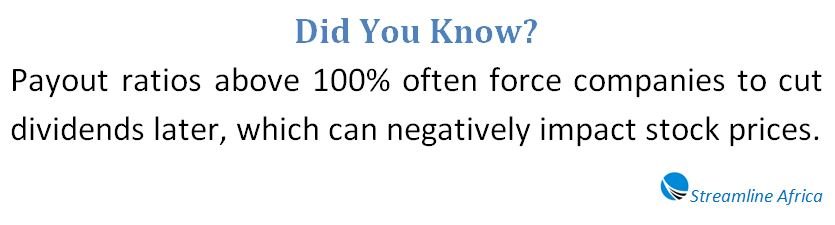
One of the most important uses of the payout ratio is evaluating whether a company can maintain its dividend payments over time. A ratio exceeding 100 percent is a red flag, as it indicates that the company is paying out more than it earns. This situation is usually unsustainable and may lead to future dividend cuts.
Companies are generally cautious about reducing dividends because such actions can negatively affect investor confidence and stock prices. As a result, many firms strive to maintain stable or gradually increasing payouts, even during challenging periods.
Monitoring trends over time is also essential. A steadily rising payout ratio may indicate a company maturing in a healthy way. However, a sudden spike could signal financial strain or an attempt to appease shareholders despite underlying issues.

Industry Differences in Dividend Policies
Dividend practices vary widely across industries, making it important to compare companies within the same sector. For instance, real estate investment trusts are often required to distribute a large portion of their income, resulting in high payout ratios. Similarly, certain partnership structures tend to prioritize income distribution.
In contrast, technology startups and growth-oriented businesses often retain most or all of their earnings. Comparing these companies directly with high-payout firms would not provide meaningful insights due to their fundamentally different objectives.
Beyond Dividends: A Broader View of Returns
While dividends are a common way to reward shareholders, they are not the only method. Many companies also use share buybacks to return value. To capture a more complete picture, some analysts consider an adjusted payout ratio that includes both dividends and stock repurchases.
This broader approach helps investors understand whether a company is focusing on short-term shareholder rewards or balancing them with long-term investments. Excessive emphasis on payouts may limit a firm’s ability to innovate or expand.
Comparing Payout Ratio and Dividend Yield
It is important to distinguish between the dividend payout ratio and dividend yield, as they serve different purposes. The payout ratio focuses on how much of a company’s earnings are distributed, while the yield measures the return an investor receives based on the stock’s price.
Dividend yield is calculated by dividing annual dividends per share by the current share price. This figure shows how much income an investor earns for each dollar invested in the stock.
Although yield is often more visible, the payout ratio provides deeper insight into sustainability. A high yield may look attractive, but if it is supported by an unsustainably high payout ratio, it could signal potential risks.
Real-World Illustration
Consider a company that earns $6 per share and pays $1.20 in annual dividends. Dividing the dividend by earnings results in a payout ratio of 20 percent. This indicates a conservative approach, leaving ample room for reinvestment while still providing shareholders with a steady income stream.
Such a balance is often appealing to long-term investors who value both growth potential and reliable dividends.
Why This Metric Deserves Attention
The dividend payout ratio is more than just a number; it reflects a company’s financial priorities and strategic direction. By analyzing this metric, investors can gain insights into management’s approach to growth, risk, and shareholder returns.
Understanding the ratio also helps investors align their choices with their financial goals. Those seeking regular income may prefer companies with stable and moderate payout ratios, while growth-oriented investors might look for lower ratios that indicate reinvestment.
Final Thoughts
Businesses generate profits with options attached, and the dividend payout ratio reveals how those options are exercised. Whether a company distributes earnings, reinvests them, or strikes a balance between the two, this metric provides a clear and valuable perspective.
For investors, it serves as a practical tool for evaluating dividend policies, assessing sustainability, and comparing companies within the same industry. When used alongside other financial indicators, it can significantly improve decision-making and help build a well-rounded investment strategy.
Dividend Payout Ratio – Frequently Asked Questions
What does the dividend payout ratio represent?
It shows the share of a company’s profits that is distributed to shareholders as dividends instead of being reinvested back into the business.
How is the dividend payout ratio calculated?
It is calculated by dividing total dividends by net income, or by dividing dividends per share by earnings per share.
Why is this ratio important to investors?
It helps investors understand whether a company’s dividend payments are sustainable and aligned with its financial health.
What is considered a healthy payout ratio?
A range of about 30% to 50% is often viewed as balanced, though this can vary depending on the industry and company strategy.
What does a low payout ratio indicate?
It usually suggests the company is reinvesting most of its profits to grow, expand, or innovate rather than paying high dividends.
What does a high payout ratio mean?
It indicates that a large portion of earnings is being returned to shareholders, which is common for mature companies but may raise concerns if too high.
Can a payout ratio exceed 100%?
Yes, but it’s typically a warning sign that the company is paying more in dividends than it earns, which may not be sustainable.
How does company maturity affect the ratio?
Younger companies tend to have low or zero payout ratios, while older, established firms often have higher ratios due to stable earnings.
What is the difference between payout ratio and retention ratio?
The payout ratio shows what is paid out, while the retention ratio reflects the portion of earnings kept for reinvestment.
How does the payout ratio differ from dividend yield?
The payout ratio focuses on earnings distribution, whereas dividend yield measures the return an investor gets based on the stock price.
Why should investors track payout ratio trends over time?
Consistent or gradually increasing ratios can signal stability, while sudden spikes may indicate financial stress or unsustainable policies.