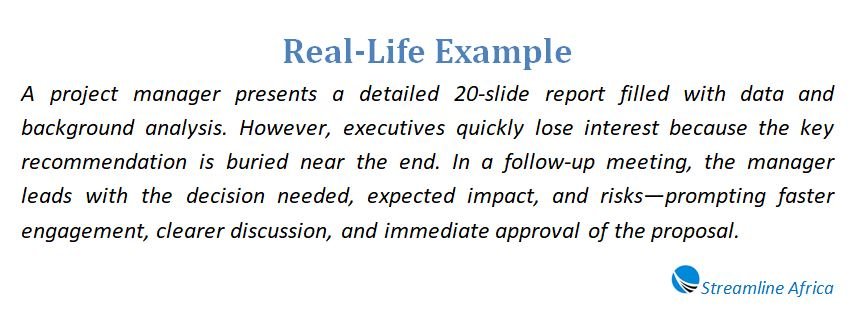
Many skilled professionals struggle when presenting to senior leaders. On paper, they have everything they need: well-researched data, strong logic, clear visuals and confidence in the work they’ve done. Yet when the moment comes to present in the boardroom, the message often falls flat. Initiatives stall, decisions are delayed and credibility is quietly put at risk.
This is not because the presenters lack knowledge or talent. In most cases, the issue lies in the gap between how presenters communicate and how executives listen. While many presenters prioritize thorough detail, leaders are focused on decisions, outcomes and risks. They don’t just want to understand what happened; they want to know what happens next.
If organizations want to accelerate progress and avoid wasted time, energy and opportunity, it’s essential to help teams learn how to present in a way that meets executives where they are.
Understanding the Executive Lens
Senior leaders operate under intense pressure. Their schedules are packed, their responsibilities are vast and the decisions they make often affect entire business units or company-wide strategies. They rarely have time to dive into the granular details of every project presented to them.
What they care most about is clarity. They ask themselves:
- What problem are we solving?
- Why does this matter now?
- What is the potential gain or risk?
- What decision is being asked of me?
- How will this impact the business long term?
Executives do not want to sift through a 20-minute explanation to get to the core request. And they don’t want to just receive information. They expect an open conversation—one where the presenter can respond confidently and thoughtfully when challenged.
Many presenters don’t anticipate this shift. They come prepared to deliver, not to discuss. They expect the slides to speak for them instead of treating the meeting as a dialogue. This disconnect leads to misunderstandings and missed opportunities.

The Cost of Ineffective Presentations
When executive presentations fail, the consequences ripple. A project that deserved support might be overlooked. A leader might question the presenter’s preparedness or strategic capability. And the company itself pays a price in time, productivity and stalled movement.
Research has shown that ineffective communication drains weeks of executive attention each year. That wasted time represents lost progress, lost revenue and lost momentum. Meanwhile, the presenter may struggle to regain trust for future proposals.
The problem is rarely a lack of effort — it is a lack of preparation for the type of conversation executives expect.
Preparing Teams to Present with Impact
Improving executive presentations is not just a matter of polishing slides. It requires shifting how people think about communication, decision-making and influence. The following strategies help create presenters who are not only informative, but persuasive and strategic.
Establish Executive Communication as a Core Skill
Communication at the executive level should not be mistaken for a “soft” skill. It is strategic. It determines how fast decisions are made, how smoothly teams collaborate and how effectively the business evolves.
Organizations that treat executive communication as an essential competency—not a bonus—open the door for stronger leadership at every level.
Make it a formal expectation: something people are evaluated on, coached in and rewarded for. Doing so signals that presenting well is not a performance extra — it is part of advancing the business.
Pair Rising Talent with Senior Mentors
One of the most effective ways to prepare someone for a high-stakes presentation is to pair them with someone who has already navigated those rooms. Sponsorship programs, whether formal or informal, give presenters access to guidance, historical context and strategic insight.
A sponsor can:
- Review presentation drafts before they go to senior leadership
- Help the presenter understand what questions are likely to come up
- Offer feedback on tone, pacing and clarity
- Advocate for the presenter when the conversation continues after the meeting
This type of support builds confidence while preventing avoidable mistakes.
Train Teams Specifically for Executive Audiences
Most presentation skills programs focus on delivery — posture, vocal tone, slide design and pacing. While those skills matter, they are not enough. Presenters need training that teaches:
- How to frame a presentation around business outcomes, not just information
- How to speak concisely and lead with the key takeaway
- How to handle interruptions without becoming defensive or flustered
- How to support recommendations with strategic reasoning, not just data
- How to ask for a decision clearly and confidently
This training should include practice sessions, role-playing and real-time feedback so presenters learn to respond under pressure—not just rehearse a script.
Build Feedback into the Process
Feedback should not be something presenters receive only after a presentation goes poorly. Instead, organizations should create a culture in which previewing and refining executive presentations is expected. Teams should rehearse in front of peers, mentors or leaders who can ask challenging questions.
Feedback must become:
- Timely
- Constructive
- Specific
- Iterative (not one-and-done)
This shift reduces anxiety and improves quality long before the presentation reaches the boardroom.
Make Communication Part of Everyday Culture
The ability to present effectively to executives is strengthened by everyday habits. It is easier to speak clearly in the boardroom when clarity is valued in emails, meetings and team discussions. Companies should weave communication coaching into onboarding, leadership development and performance reviews.
When clarity becomes cultural, presenting with impact becomes second nature.
Leading by Example Matters
Executives themselves play an important role in shaping communication culture. When leaders model concise messaging, direct decision-making and thoughtful dialogue, the rest of the organization learns by observing. When leaders engage presentations respectfully—even when asking tough questions—they encourage presenters to think strategically rather than fear the room.
Leadership behavior teaches far more than any workshop.
A High-Value Investment
Strengthening executive presentation skills is not just about improving communication—it’s about improving business outcomes. When presenters can articulate impact, risk, and strategic value effectively, decisions become easier. Projects move faster. Innovation accelerates.
The result is a company where strong ideas don’t get lost in translation.
Organizations that treat executive communication as a strategic priority build teams that are more confident, more influential and more capable of driving change. And those are the teams that move companies forward.