

When evaluating a company’s financial health, one of the most insightful tools analysts rely on is the total debt-to-total assets ratio. This measure reveals how much of a company’s resources are funded through borrowing rather than ownership capital. In simple terms, it answers a crucial question: how dependent is a business on debt to sustain its operations?
At its core, this ratio provides a snapshot of financial structure. Companies that rely heavily on debt may experience faster growth during good times but face greater vulnerability during economic downturns. On the other hand, firms that depend more on equity tend to operate with less financial pressure, though they might grow at a slower pace.
What the Ratio Really Represents
The debt-to-assets ratio reflects the proportion of a company’s total assets that have been financed by creditors. It is often used as a measure of leverage, indicating the degree to which a company is using borrowed funds.
For instance, if a company reports a ratio of 0.45, it means that 45% of its assets are financed through debt, while the remaining 55% comes from shareholders’ equity. This balance between debt and equity is essential in understanding the risk profile of a business.
A higher ratio typically signals increased reliance on borrowed funds, which can amplify both returns and risks. Conversely, a lower ratio suggests a more conservative financial approach.

How to Calculate the Debt-to-Assets Ratio
The calculation itself is straightforward. You take the company’s total debt and divide it by its total assets. Total debt includes both short-term obligations, such as loans due within a year, and long-term liabilities like bonds and extended loans.
Total assets, on the other hand, encompass everything the company owns. This includes physical assets like machinery and buildings, as well as intangible assets such as patents and trademarks.
The result is usually expressed as a decimal or percentage. Most companies report ratios below 1.0. If the figure exceeds 1, it indicates that liabilities outweigh assets, which is a strong warning sign of financial distress.
Interpreting the Results
Understanding what the ratio means requires context. A value of 0.5 suggests that half of the company’s assets are financed through debt. While this might be acceptable in some industries, it could be considered risky in others.
If the ratio rises above 1.0, the company technically owes more than it owns. In such cases, even selling all assets would not fully cover outstanding debts. This situation often raises concerns about solvency and long-term viability.
Lower ratios are generally associated with financial stability. However, extremely low values might also indicate that a company is not taking advantage of growth opportunities that debt financing can provide.
Why This Ratio Matters to Stakeholders
Different groups interpret the debt-to-assets ratio in their own way. Investors often use it to gauge risk and potential return. A company with moderate leverage may offer higher returns, but excessive borrowing can increase the chance of losses.
Lenders, on the other hand, focus on the company’s ability to repay its obligations. A firm already carrying a significant debt burden may struggle to secure additional loans. Creditors want assurance that their funds are safe and that the company has enough assets to cover its liabilities.
Management teams also monitor this ratio closely. It helps them decide whether to finance expansion through debt or equity and assess how much financial risk the company can handle.
The Role of Debt in Business Operations
Debt plays a critical role in business growth. Companies often borrow money to invest in new projects, expand operations, or acquire other firms. When used wisely, debt can enhance returns and accelerate development.
However, debt comes with obligations. Interest payments must be made regularly, regardless of whether the company is profitable. Failure to meet these obligations can lead to severe consequences, including legal action or bankruptcy.
Unlike some other liabilities, debt agreements are usually strict. Missing payments can trigger penalties or force the company into restructuring. This makes it essential for businesses to maintain a manageable level of leverage.
Tracking Changes Over Time
Looking at a single ratio in isolation does not provide a complete picture. It is more meaningful to analyze how the ratio evolves over several years. A steady decline in the ratio may indicate that a company is reducing its reliance on debt and strengthening its financial position.
On the other hand, a rising ratio could signal increasing financial pressure. This trend might suggest that the company is taking on more debt than it can comfortably manage.
Long-term analysis helps identify patterns and provides insight into the company’s strategic decisions. It also allows investors to assess whether management is maintaining a balanced approach to financing.
A Practical Comparison Example
Consider three fictional companies operating in the same industry: Meridian Logistics, Apex Manufacturing, and Nova Retail Group.
Meridian Logistics has a ratio of 0.28, indicating a conservative approach to borrowing. Despite having significant total debt in absolute terms, its large asset base keeps the ratio low. This suggests financial flexibility and a strong ability to attract additional funding if needed.
Apex Manufacturing reports a ratio of 0.52. This indicates a balanced mix of debt and equity. The company uses borrowing to support its operations but maintains a reasonable level of risk.
Nova Retail Group, however, has a ratio of 0.88. This means that most of its assets are financed through debt. While this might support rapid expansion, it also leaves the company with limited room to maneuver during economic challenges.
These comparisons highlight the importance of context. A higher ratio is not inherently bad, but it requires careful evaluation alongside industry norms and company-specific factors.
Limitations of the Ratio
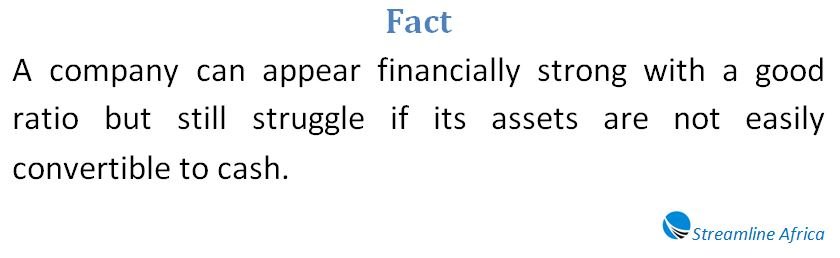
Despite its usefulness, the debt-to-assets ratio has its shortcomings. One major limitation is that it treats all assets equally, regardless of their quality or liquidity. For example, cash is far more useful in meeting debt obligations than specialized equipment or intangible assets.
A company might appear financially stable based on its ratio, but if a large portion of its assets cannot be easily converted into cash, it could still face difficulties in repaying debt.
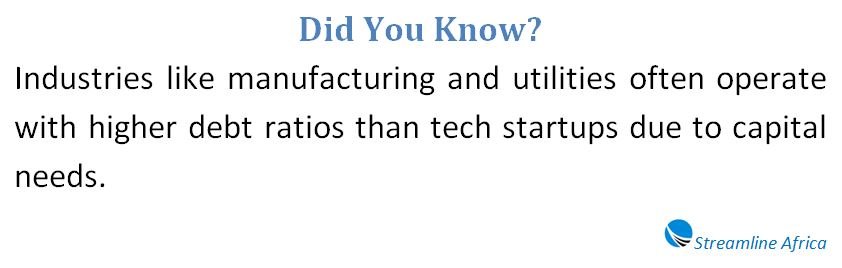
Additionally, the ratio does not account for differences between industries. Some sectors naturally operate with higher levels of debt due to the nature of their business. Comparing companies across different industries without adjusting for these differences can lead to misleading conclusions.
What Constitutes a Healthy Ratio
There is no universal benchmark for what makes a “good” debt-to-assets ratio. Acceptable levels vary depending on the company’s size, industry, and business model.
In many cases, a range between 0.3 and 0.6 is considered reasonable. Companies within this range typically strike a balance between leveraging debt for growth and maintaining financial stability.
However, startups often have lower ratios because they rely more on equity financing. Established firms with stable cash flows may comfortably operate with higher ratios, as they can manage debt more effectively.
Is Lower Always Better?
A lower ratio is often associated with reduced risk, but it is not always the ideal scenario. Companies that avoid debt entirely may miss opportunities to expand or invest in profitable projects.
Equity financing, while safer in some respects, comes with its own trade-offs. Issuing new shares can dilute ownership and reduce the portion of profits available to existing shareholders.
Therefore, the goal is not simply to minimize debt but to use it strategically. The right balance depends on the company’s objectives, market conditions, and risk tolerance.
When the Ratio Becomes Concerning
There are situations where the debt-to-assets ratio can become a red flag. If a company’s ratio is significantly higher than the industry average, it may indicate excessive borrowing.
This can lead to increased interest expenses and reduced financial flexibility. In extreme cases, the company may struggle to meet its obligations, especially during periods of declining revenue.
A ratio above 1.0 is particularly alarming. It suggests that the company’s liabilities exceed its assets, raising serious concerns about solvency.
Final Thoughts on Financial Balance
The total debt-to-total assets ratio is a powerful tool for understanding how a company finances its operations. By comparing debt to total resources, it provides insight into risk, stability, and strategic choices.
However, like any financial metric, it should not be used in isolation. Combining this ratio with other indicators and analyzing trends over time offers a more complete view of a company’s financial health.
Ultimately, the key lies in balance. Companies that manage debt effectively can achieve sustainable growth while maintaining resilience in the face of economic uncertainty.
Commonly Asked Questions and Answers
How is debt-to-assets ratio calculated in simple terms?
You divide total debt (both short-term and long-term) by total assets to get the ratio.
Why do investors care about this ratio?
It helps them understand risk levels and whether a company can generate returns without being overburdened by debt.
What does a ratio of 0.5 mean?
It means half of the company’s assets are financed through borrowing, while the other half comes from equity.
Is a higher ratio always bad?
Not necessarily. It can indicate aggressive growth strategies, but it also increases financial risk if not managed well.
What does it mean if the ratio is above 1?
The company owes more than it owns, which signals potential insolvency and serious financial trouble.
Why should this ratio be compared within the same industry?
Different industries use debt differently, so comparisons only make sense among similar businesses.
Read Also: Leverage Ratio: How Debt Impacts Business Growth, Risk, and Financial Stability
Can a low ratio be a disadvantage?
Yes, it may mean the company is not leveraging debt to expand or invest in profitable opportunities.
How does this ratio help lenders?
Lenders use it to decide whether a company can handle additional loans and repay existing debts.
Why is it important to track this ratio over time?
Trends reveal whether a company is becoming more financially stable or taking on increasing risk.