

Gabon’s structured personal income tax regime is designed to capture earnings generated through employment, professional services and other taxable activities. The Impôt sur le Revenu des Personnes Physiques (IRPP) applies to qualifying income earned within the country, including salaries, allowances, pensions and professional remuneration.
For businesses operating across Central Africa, understanding these obligations is essential for maintaining payroll accuracy, managing employment costs and reducing regulatory exposure.
Tax Residency and Cross-Border Employment
Individuals working in Gabon may incur income tax liabilities regardless of their country of residence. Non-residents are generally taxed on income originating from Gabonese activities.
Consider a Cameroonian engineering specialist contracted by a construction company in Libreville. Even when remuneration is processed through the employer’s Douala headquarters, income attributable to services performed in Gabon may remain taxable locally.
Companies are prohibited from reimbursing employees or executives for personal IRPP and complementary salary tax liabilities.
Read Also: Gabon Withholding Tax Guide: Corporate Rates, Treaties and Cross-Border Payments
Progressive Income Tax and Family Allowances
Gabon applies progressive IRPP rates ranging from 0% to 35%, incorporating household responsibilities through a family quotient mechanism.
Taxpayers without dependants generally receive one share, while married individuals receive two. Additional qualifying children increase the available shares, subject to prescribed limits.
Annual taxable earnings are adjusted using a 20% allowance before division by the applicable family quotient.
Income per share up to XAF 1.5 million is exempt, while amounts exceeding XAF 11 million fall within the highest tax bracket.
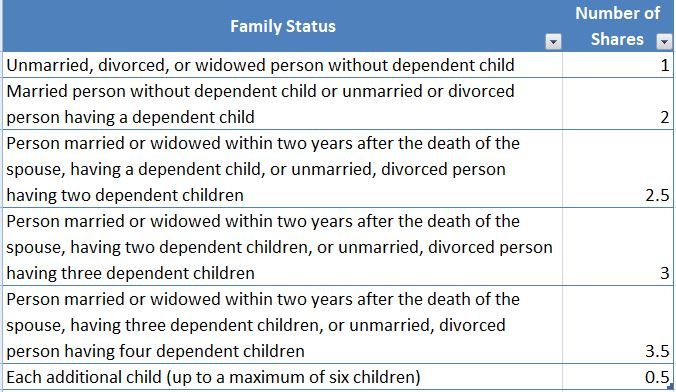
In Gabon, the family quotient (Q) is used to determine which personal income tax (IRPP) bracket applies to an employee. The system considers both the employee’s annual taxable income and family responsibilities.
The principle is that employees with more qualifying dependants may pay less income tax than employees earning the same salary with fewer dependants.
1. Understanding the Formula
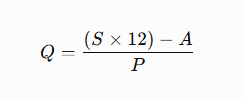
Where:
- Q: Annual taxable income per family share.
- S: Monthly taxable gross salary.
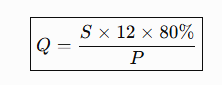
- A: A 20% allowance calculated on annual taxable gross income.
- P: Number of family shares allocated to the employee.
The formula can therefore be simplified to:
2. Practical Example: Employee Earning XAF 1,000,000 Monthly
Assume an employee working in Libreville earns XAF 1,000,000 monthly and is married with two dependent children.
Under Gabon’s family quotient system, the employee receives 3 family shares.
STEP-BY-STEP CALCULATION
| Monthly taxable salary | XAF 1,000,000 |
| Annual taxable salary | XAF 12,000,000 |
| 20% allowance | XAF 2,400,000 |
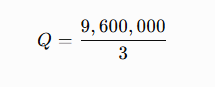
| Annual income after allowance | XAF 9,600,000 |
| Family shares (P) | 3 |
FAMILY QUOTIENT (Q)
XAF 3,200,000
3. Determining the Applicable Income Tax
The resulting Q of XAF 3,200,000 falls within the XAF 2,700,001–3,600,000 bracket, where the applicable formula is:
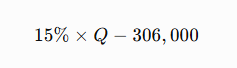
Therefore:
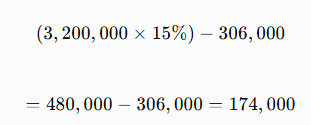
This is the annual tax calculated per family share.
To determine the employee’s total annual IRPP:
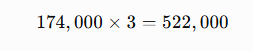
Annual IRPP
XAF 522,000
Monthly IRPP
XAF 43,500
4. How Family Shares Affect the Tax
Using the same monthly salary of XAF 1,000,000, here is how the family quotient affects the calculated IRPP.
| Family situation | Shares | Monthly IRPP |
|---|---|---|
| Single, no children | 1 | XAF 138,000 |
| Married, no children | 2 | XAF 60,000 |
| Married, one child | 2.5 | XAF 49,500 |
| Married, two children | 3 | XAF 43,500 |
| Married, three children | 3.5 | XAF 39,214 |
Illustrative IRPP calculations using the supplied tax brackets, before complementary salary tax or other payroll adjustments. Monthly amounts are rounded where necessary.
5. Interactive Family Quotient Calculator
Monthly taxable gross salary (XAF)Family quotient (number of shares)
3 shares
Annual income after allowance
9,600,000
XAF
Family quotient Q
3,200,000
XAF per share
Annual IRPP
522,000
XAF
Monthly IRPP
43,500
XAF
Illustrative calculator based on the supplied IRPP schedule. It excludes TCTS and assumes the selected shares are legally applicable.
The important distinction: Q is not the employee’s total annual taxable income. It represents the taxable income allocated to one family share. After calculating the tax on Q, the result is multiplied by the number of shares to determine the employee’s total IRPP.
This is why the family quotient is an important consideration for employers preparing payroll and calculating employees’ personal income tax in Gabon.
Complementary Salary Tax and Employer Responsibilities
Gabon also imposes a 5% complementary salary tax (TCTS), with monthly remuneration up to XAF 150,000 exempt.
Businesses should establish reliable payroll controls, maintain accurate employee records and periodically review withholding calculations.
Effective compliance strengthens financial governance while limiting exposure to penalties, payroll disputes and unexpected tax liabilities.
Frequently Asked Questions About Personal Income Tax in Gabon
Who Is Required to Pay Personal Income Tax in Gabon?
Individuals earning taxable income from employment, professional services or other qualifying activities in Gabon are generally subject to personal income tax (IRPP). Both residents and non-residents may have tax obligations depending on the source of their income.
What Are the Personal Income Tax Rates in Gabon?
Gabon applies progressive personal income tax rates ranging from 0% to 35%. The applicable rate depends on an individual’s taxable income after allowances and the family quotient calculation.
How Does the Family Quotient Affect Income Tax?
The family quotient considers a taxpayer’s marital status and qualifying dependants. It divides adjusted annual taxable income into family shares, potentially reducing the overall tax burden for employees supporting larger households.
How Is Personal Income Tax Calculated in Gabon?
Annual taxable earnings are reduced by a 20% allowance and divided by the applicable family shares. Tax is calculated using the resulting income bracket, then multiplied by the number of shares to determine annual IRPP.
Are Foreign Employees Required to Pay Income Tax in Gabon?
Yes. Foreign professionals working in Gabon may be liable for income tax on earnings attributable to services performed locally, even when their salaries are paid by employers based outside the country.
What Is the Complementary Tax on Salaries in Gabon?
The complementary tax on salaries (TCTS) is an additional 5% levy on qualifying employment remuneration. Monthly income up to XAF 150,000 benefits from an exemption under the applicable rules.
Can Employers Pay Personal Income Taxes on Behalf of Employees?
Gabon prohibits companies from reimbursing employees and executives for their personal IRPP and TCTS liabilities. Employers should distinguish statutory payroll withholding obligations from prohibited reimbursement arrangements.