
Eswatini operates a source-based income tax system, meaning individuals are generally taxed on earnings generated within the country. This applies to both residents and non-residents, regardless of where they permanently live. The determining factor is whether the income originates from Eswatini or is legally treated as arising there.
How Personal Income Tax Rates Work
Eswatini uses progressive taxation, where higher earnings attract higher rates. Rather than taxing an individual’s entire income at one percentage, the system applies different rates to successive income portions.
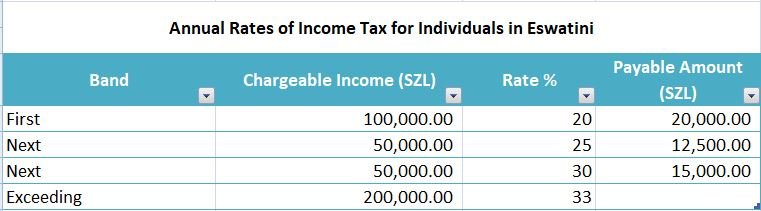
The annual tax structure is outlined below:
| Annual Taxable Income (SZL) | Tax Calculation |
|---|---|
| 0 – 100,000 | 20% of taxable income |
| 100,001 – 150,000 | SZL 20,000 + 25% above SZL 100,000 |
| 150,001 – 200,000 | SZL 32,500 + 30% above SZL 150,000 |
| Above 200,000 | SZL 47,500 + 33% above SZL 200,000 |
Practical Example of Personal Income Tax Calculation in Eswatini
Consider an employee in Eswatini who earns an annual taxable salary of SZL 180,000 and is 35 years old.
Since the employee’s income falls within the SZL 150,001–200,000 tax bracket, the applicable calculation is:
| Description | Amount (SZL) |
|---|---|
| Annual taxable income | 180,000 |
| Base tax on first SZL 150,000 | 32,500 |
| Income exceeding SZL 150,000 | 30,000 |
| Tax on excess income (30%) | 9,000 |
| Total tax before rebate | 41,500 |
| Annual tax rebate | (8,200) |
| Annual income tax payable | 33,300 |
| Monthly income tax deduction | 2,775 |
The employee would therefore pay SZL 33,300 in annual personal income tax, equivalent to SZL 2,775 per month.
After income tax, the employee retains SZL 146,700 annually, or SZL 12,225 monthly, before any other statutory deductions or contributions.
Annual Tax Rebates and Relief
Taxpayers receive annual rebates that reduce their calculated income tax liability. Individuals aged 60 or younger qualify for SZL 8,200, while those above 60 receive SZL 10,900.
Consequently, individuals earning no more than SZL 41,000 in annual taxable salary generally pay no personal income tax.
What Taxpayers Should Consider
Understanding these thresholds helps employees estimate deductions, evaluate salary offers, and manage personal finances. Employers should also apply the appropriate tax bands and rebates when calculating payroll deductions to support accurate withholding and compliance with Eswatini’s tax requirements.
Frequently Asked Questions About Personal Income Tax in Eswatini
Who Is Required to Pay Personal Income Tax in Eswatini?
Both residents and non-residents must pay income tax on earnings originating from Eswatini or legally considered to arise within the country.
What Is the Highest Personal Income Tax Rate in Eswatini?
The highest personal income tax rate is 33%, applicable to the portion of annual taxable income exceeding SZL 200,000.
What Is the Minimum Taxable Income in Eswatini?
Individuals aged 60 or younger generally pay no income tax when their annual taxable salary does not exceed SZL 41,000, after applying the standard tax rebate.
Does Eswatini Offer Personal Income Tax Rebates?
Yes. Eligible taxpayers receive an annual rebate of SZL 8,200, while individuals older than 60 benefit from an increased rebate of SZL 10,900.
How Is Personal Income Tax Calculated in Eswatini?
Eswatini uses progressive tax brackets ranging from 20% to 33%. Each portion of taxable income is taxed at its applicable rate before deducting the relevant annual rebate.
Are Non-Residents Taxed Differently From Residents?
Both residents and non-residents are subject to the same progressive income tax rates on taxable Eswatini-sourced earnings, although individual circumstances may affect their final tax obligations.