
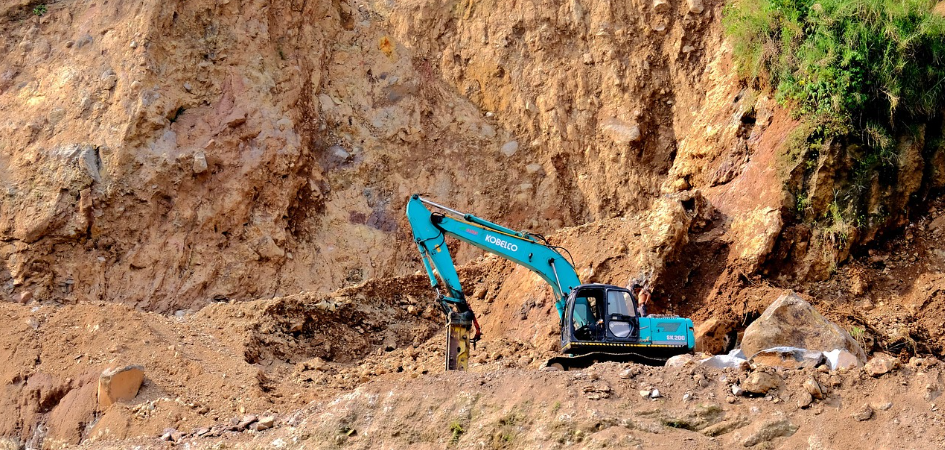
Nigeria has taken another decisive step toward transforming its mining industry with the announcement of two significant mineral discoveries that could reshape both its economy and its position in the global critical minerals market. The country recently revealed a world-class polymetallic mineral province in Kaduna State alongside an estimated 3.3 million metric tonnes of lithium reserves near Abuja. Together, these discoveries have the potential to attract billions of dollars in investment while supporting Nigeria’s long-term strategy of reducing dependence on crude oil exports.
For decades, Nigeria has been recognized for its vast but largely underdeveloped mineral wealth. While petroleum has dominated government revenue and foreign exchange earnings, mining has remained one of the country’s least exploited sectors despite abundant geological potential. These newly identified deposits present an opportunity to build an entirely new growth engine capable of creating employment, expanding exports, strengthening industrialization, and positioning Nigeria among the world’s emerging suppliers of critical minerals.
For investors, these discoveries represent more than impressive geological findings. They signal the beginning of a new chapter in one of Africa’s largest economies, where reforms, rising global demand, and expanding infrastructure could combine to create attractive long-term opportunities across the mining value chain.
A Discovery That Extends Beyond Lithium
Although lithium has attracted most international attention because of its role in electric vehicle batteries, Nigeria’s latest announcement is particularly significant because it involves a diversified collection of strategic minerals rather than a single resource.
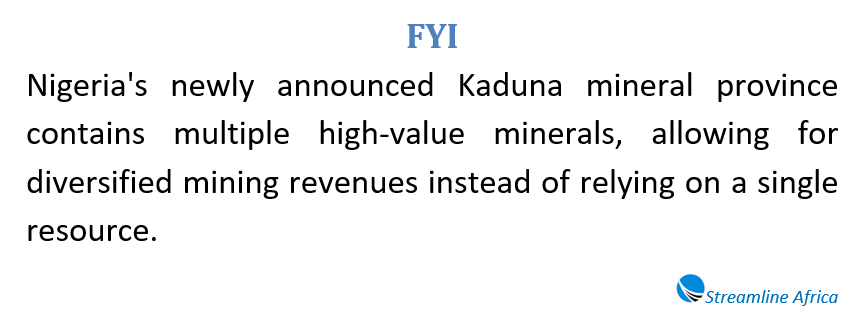
The newly identified mineral province in Kaduna reportedly contains commercially attractive concentrations of platinum group metals, gold, nickel, copper, lithium, and rare earth elements. Such a combination is relatively uncommon and greatly enhances the economic value of the project because multiple minerals can be extracted from the same mining region.
Diversified mineral deposits often provide stronger financial resilience than single-commodity projects. If prices weaken for one mineral, revenues from others can help stabilize returns. This makes large polymetallic projects especially appealing to institutional investors seeking exposure to long-term commodity growth while reducing reliance on one specific market.
The discovery was verified through geological assessments, increasing confidence in the quality and commercial potential of the deposits. Verification by national geological authorities also provides an important level of credibility that investors typically look for during the early stages of resource development.
Read Also: Why Africa Has Become the Center of Global Investment and Economic Competition
Why Lithium Continues to Command Global Attention
Alongside the Kaduna discovery, an estimated 3.3 million metric tonnes of lithium reserves were announced at another mining site near Abuja.
Lithium has become one of the world’s most strategically important minerals because it serves as a key ingredient in rechargeable batteries used in electric vehicles, renewable energy storage systems, consumer electronics, and various industrial applications.
As countries continue investing heavily in cleaner energy systems, demand for lithium is expected to remain robust over the coming decades. Manufacturers are racing to secure reliable supplies, while governments seek to diversify sourcing away from traditional producing regions.
For Nigeria, the discovery presents an opportunity not only to export raw lithium but also to encourage domestic processing and battery-material manufacturing. Developing downstream industries would allow the country to capture more value from its natural resources instead of relying solely on raw mineral exports.
Such industrial expansion could generate skilled employment while encouraging technology transfer and supporting broader economic diversification.
Critical Minerals Are Becoming Strategic Assets
The global transition toward cleaner energy has transformed minerals into strategic economic assets. Resources such as nickel, copper, lithium, platinum group metals, and rare earth elements are now essential components in industries that are expected to drive economic growth throughout the coming decades.
Electric vehicles require significantly larger quantities of critical minerals than conventional automobiles. Wind turbines, solar panels, electricity transmission systems, advanced electronics, and defense technologies also depend heavily on these materials.
As demand continues to accelerate, many countries are actively seeking new sources of supply to reduce concentration risks associated with a limited number of producing nations.
Nigeria’s emerging mineral discoveries therefore arrive at a particularly favorable moment. Instead of entering an oversupplied market, the country is positioning itself during a period when global competition for secure mineral supplies continues to intensify.
Economic Diversification Gains Momentum
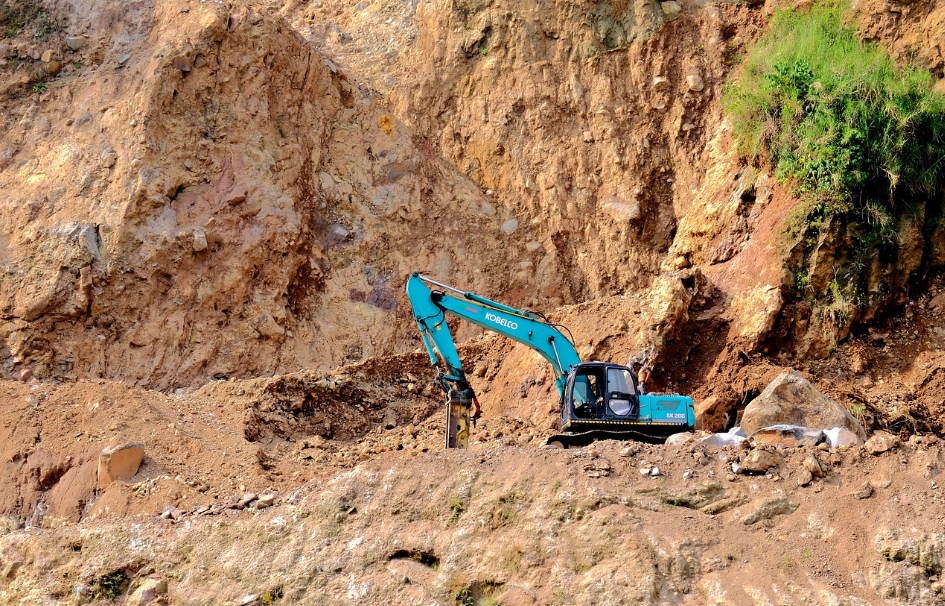
One of Nigeria’s long-standing economic challenges has been its heavy reliance on crude oil revenues. Oil price fluctuations have repeatedly exposed the country’s public finances to external shocks, making economic diversification an important national priority.
Mining offers an alternative source of export earnings that can reduce this dependence while expanding industrial activity.
If developed successfully, the newly discovered mineral deposits could generate substantial government revenue through royalties, taxes, export earnings, licensing fees, and infrastructure investment.
The broader economic impact could extend well beyond mining operations themselves. Large-scale mineral development typically stimulates transportation, logistics, engineering, equipment supply, financial services, environmental consulting, construction, and workforce development.
As these supporting industries grow, they create multiplier effects that strengthen regional economies and encourage broader private-sector participation.
Why Investors Are Watching Nigeria More Closely
Several developments have combined to increase investor interest in Nigeria’s mining sector.
First, the government has intensified efforts to formalize mining activities, improve regulation, and reduce illegal extraction. Stronger oversight helps improve transparency and gives investors greater confidence in project governance.
Second, geological exploration has expanded considerably, resulting in improved resource mapping and better understanding of the country’s mineral potential.
Third, global mining companies are increasingly seeking geographic diversification as they reduce dependence on traditional mining jurisdictions.
Nigeria’s large domestic market, improving infrastructure, expanding financial sector, and strategic location within West Africa provide additional advantages that strengthen its long-term investment appeal.
While challenges remain, including infrastructure development, financing, environmental management, and community engagement, many investors recognize that early participation in emerging mining regions can generate significant long-term value if projects are managed responsibly.
Opportunities Beyond Mineral Extraction
Perhaps the greatest investment opportunity lies beyond simply extracting minerals from the ground.
Modern mining increasingly emphasizes complete value chains that include mineral processing, refining, manufacturing, research, logistics, recycling, and specialized engineering services.
Instead of exporting unprocessed ore, countries are working to develop industries that produce battery materials, industrial alloys, electronic components, and other higher-value products.
Nigeria has the opportunity to attract investment across multiple stages of this value chain.
Processing facilities could significantly increase export earnings while reducing reliance on imported industrial materials. Local manufacturing could also support regional markets as Africa accelerates industrialization under the African Continental Free Trade Area.
These downstream investments often create substantially more employment and economic value than mining operations alone.
Responsible Development Will Determine Long-Term Success
While the discoveries are highly encouraging, successful development will depend on responsible implementation.
Modern investors increasingly evaluate mining projects according to environmental, social, and governance standards alongside financial performance. Sustainable mining practices, community participation, transparent licensing, environmental protection, and responsible land management have become essential components of project financing.
Infrastructure investment will also be critical. Roads, railways, electricity, water supply, telecommunications, and processing facilities must expand to support commercial-scale mining operations efficiently.
Government agencies, private investors, financial institutions, and local communities will need to collaborate to ensure that development generates lasting economic benefits while minimizing environmental impacts.
If these elements are managed effectively, Nigeria could establish a competitive mining sector capable of attracting international capital for decades.
A New Era for Nigeria’s Mining Industry
Nigeria’s announcement of a world-class polymetallic mineral province in Kaduna and substantial lithium reserves near Abuja represents far more than another resource discovery. It reflects the country’s growing determination to reposition mining as a cornerstone of national economic development.
For investors, the timing is particularly compelling. Global demand for critical minerals continues to rise as economies transition toward cleaner energy, advanced manufacturing, and digital technologies. Countries capable of supplying these resources responsibly are expected to play increasingly important roles within international supply chains.
Although commercial production will require continued exploration, infrastructure investment, regulatory consistency, and responsible environmental management, the foundations for long-term growth are becoming increasingly visible.
If Nigeria successfully converts these discoveries into productive mining operations while expanding downstream processing and manufacturing, the country could emerge as one of Africa’s most influential critical mineral producers. For investors seeking exposure to long-term commodity growth and economic diversification, Nigeria’s evolving mining landscape may become one of the continent’s most promising opportunities over the next decade.
Frequently Asked Questions
What makes Nigeria’s new mineral discovery so significant?
The discovery includes a world-class polymetallic mineral province and an estimated 3.3 million metric tonnes of lithium, positioning Nigeria as an emerging player in the global critical minerals market.
Why is lithium attracting so much global attention?
Lithium is a key raw material for manufacturing electric vehicle batteries, renewable energy storage systems, and many modern electronic devices, making it one of the world’s most sought-after minerals.
Which other valuable minerals were discovered?
Besides lithium, the Kaduna mineral province contains gold, nickel, copper, platinum group metals, and rare earth elements, creating multiple revenue opportunities from one mining region.
How can investors benefit from these discoveries?
Investors could find opportunities in mining operations, mineral processing, infrastructure development, logistics, equipment supply, engineering services, and downstream manufacturing.
How does this support Nigeria’s economic growth?
Developing the mining sector can reduce dependence on crude oil, increase export earnings, create jobs, and stimulate industrial development across several sectors.
Why is a polymetallic deposit considered valuable?
A polymetallic deposit contains several commercially valuable minerals, allowing mining companies to diversify revenue streams and reduce reliance on the price of a single commodity.
What industries could benefit from Nigeria’s critical minerals?
Electric vehicle manufacturing, renewable energy, semiconductor production, aerospace, electronics, construction, and defense industries all rely heavily on critical minerals.
What challenges must Nigeria overcome?
The country will need continued investment in infrastructure, transparent regulations, environmental protection, community engagement, and mineral processing facilities to maximize the discoveries’ value.
What could these discoveries mean for Nigeria’s future?
If responsibly developed, they could transform Nigeria into one of Africa’s leading suppliers of critical minerals while attracting substantial foreign investment and supporting long-term economic diversification.