
A Small Island Economy with Emerging Potential
São Tomé and Príncipe, an island nation in the Gulf of Guinea, presents investors with a distinctive business environment shaped by its geography, political stability, and natural resources. Drawing on years of economic and market analysis, our advisory team has observed that the country continues to rely heavily on agriculture, particularly cocoa production, although gradual efforts are being made to diversify the economy. Tourism, light manufacturing, and selected service industries are becoming increasingly important as the government seeks to reduce dependence on traditional exports.
Political developments in early 2025, including the appointment of a new prime minister and adjustments within the government, reinforced the country’s commitment to institutional reforms and continued collaboration with international development partners. While São Tomé and Príncipe remains one of Africa’s smallest economies, its stable political environment and openness to foreign investment provide encouraging conditions for long-term investors willing to operate in a niche market.
Economic Landscape and Business Environment
The country’s economy combines elements of market-based activity with significant government involvement in strategic sectors. Public investment and international development assistance continue to play an important role in supporting economic growth, while private sector participation is gradually expanding.
Agriculture remains a cornerstone of economic activity, with cocoa maintaining its position as the leading export. At the same time, export earnings increasingly include manufactured components, processed agricultural products, and specialty goods. Construction, manufacturing, and service industries have also contributed to recent economic expansion, reflecting gradual diversification beyond traditional plantation farming.
Although domestic demand is relatively limited because of the country’s small population, government initiatives aimed at improving the investment climate have created opportunities for businesses seeking first-mover advantages in emerging sectors.
Promising Sectors for Investment
Tourism continues to stand out as one of the country’s strongest investment opportunities. The islands’ untouched beaches, tropical forests, rich biodiversity, and peaceful atmosphere appeal to travelers seeking eco-tourism and luxury island experiences. Continued investment in hospitality facilities, transportation services, and tourism infrastructure is expected to strengthen the industry’s contribution to foreign exchange earnings.
Agriculture also offers significant opportunities beyond conventional cocoa production. Investors are increasingly exploring premium organic cocoa, spices, specialty coffee, palm oil, and value-added agricultural processing. Growing international demand for sustainably produced and certified agricultural products creates additional export potential.
Manufacturing and service industries have similarly shown encouraging growth, supported by public infrastructure projects and private investment. Businesses involved in food processing, logistics, renewable energy, and digital services may benefit as the economy gradually modernizes.
Challenges Investors Should Consider
Despite its opportunities, São Tomé and Príncipe presents several structural challenges that require careful planning. Its remote island location increases transportation costs and extends delivery times for imported materials and exported goods. Companies operating in the country must account for higher logistics expenses than many mainland African markets.
Economic performance also remains sensitive to movements in international commodity prices, particularly cocoa, which continues to generate a significant share of export revenue. Fluctuations in global demand or pricing can quickly affect national income and government finances.
Infrastructure limitations represent another constraint. Port facilities, domestic transport links, aviation connections, and logistics services continue to require further development. Businesses may also encounter limited access to financing, a relatively small labor market, and a restricted consumer base. External factors such as rising food and fuel prices, climate-related disruptions, and shifts in global tourism demand can further influence economic stability.
Business Establishment and Investment Incentives
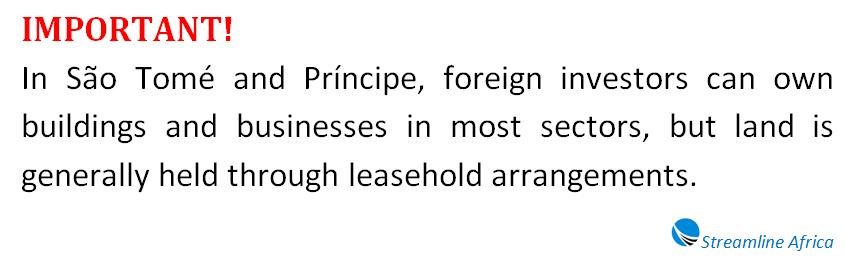
Foreign investors generally enjoy a welcoming regulatory environment. International companies can establish and operate businesses across most sectors without significant ownership restrictions. However, land ownership follows a different model. While foreign investors may purchase buildings and other structures, the land itself typically remains under leasehold arrangements rather than private ownership.
Business registration has been simplified through the country’s Single Window business registration system, enabling entrepreneurs to complete administrative procedures more efficiently through a centralized government office.
The government also provides several incentives designed to attract investment. Depending on the sector and project characteristics, investors may qualify for reductions in corporate taxation, exemptions from selected import and export duties, and additional benefits for companies that invest in workforce training and skills development.
Cultural and Practical Considerations
Successful business operations in São Tomé and Príncipe depend not only on financial planning but also on understanding local customs and communication practices. Portuguese serves as the official language, while several Portuguese-based Creole languages are widely spoken throughout the islands. Businesses without Portuguese-speaking staff may benefit from employing qualified interpreters during negotiations and official engagements.
Weather conditions should also be considered when planning commercial activities. The tropical climate brings heavy rainfall during parts of the year, making the dry seasons—from June to September and again from December to February—the most suitable periods for travel, construction activities, and field operations.
Outlook
São Tomé and Príncipe is not a large consumer market, but it offers attractive opportunities for investors seeking long-term growth in tourism, sustainable agriculture, and specialized service industries. While logistical constraints, infrastructure gaps, and external economic shocks remain important considerations, continued reforms, investor-friendly policies, and international partnerships position the country as a promising niche destination for carefully planned investment strategies.
Frequently Asked Questions
What makes São Tomé and Príncipe attractive to investors?
The country offers emerging opportunities in tourism, agriculture, renewable energy, food processing, logistics and digital services. Its political stability and openness to foreign ownership also support long-term investment.
Which sector has the strongest growth potential?
Tourism is one of the most promising sectors. The islands’ beaches, forests, biodiversity and peaceful environment create strong potential for eco-tourism, boutique resorts and luxury travel services.
Why is agriculture still important to the economy?
Agriculture remains a major source of income and exports, particularly through cocoa production. Premium cocoa, spices, coffee, palm oil and organic products could create additional value.
Is the economy becoming more diversified?
Yes. Construction, manufacturing and services are expanding, although agriculture and foreign-funded public spending still play a major role in economic activity.
Can foreigners fully own businesses?
Foreign investors can generally establish, own and operate businesses in most industries. However, certain sensitive banking and state-related activities may remain restricted.
Can foreign investors purchase land?
Foreigners may purchase buildings and other structures, but they cannot usually own the land underneath them. Land is generally provided through long-term lease arrangements.
How can a company be registered?
Businesses can be registered through the Guichê Único para Empresas, a government-supported single-window office designed to simplify company formation procedures.
What incentives are available to investors?
Eligible companies may receive corporate tax reductions, withholding tax benefits, customs exemptions and incentives for training and developing local employees.
What are the main business risks?
Major risks include high transportation costs, weak infrastructure, limited financing, a small consumer market and dependence on imported food, fuel and equipment.
How do global cocoa prices affect the country?
Cocoa remains an important export, so falling international prices can reduce export earnings, weaken government revenue and place pressure on the wider economy.
Why are logistics particularly challenging?
The country’s island location increases shipping costs and delivery times. Limited ports, air connections and inter-island transport can also disrupt business operations.
What should international businesses know about local culture?
Portuguese is the official business language, while Portuguese-based Creole languages are widely spoken. Companies may need interpreters or Portuguese-speaking employees to communicate effectively.