

From the perspective of our investment advisory team, recent projections regarding the future of Nigeria, Ghana, and Côte d’Ivoire show huge signs of optimism. They reflect a growing recognition among regional economists, investors, and development strategists that West Africa may become one of the most commercially significant regions in the global economy over the next several decades.
The projection suggests that Nigeria could emerge as the world’s fifth-richest country within 50 years, while Ghana and Côte d’Ivoire may rank among the world’s top 15 economies within 25 years. Although such forecasts appear ambitious under current economic conditions, the underlying fundamentals supporting these expectations deserve serious attention from governments, institutional investors, infrastructure developers, and private sector stakeholders.
Nigeria’s Market Scale Gives It Long-Term Strategic Advantage
Nigeria’s greatest economic advantage remains its scale. With a rapidly expanding population, significant natural resources, a large consumer market, and growing technological innovation, the country possesses characteristics commonly associated with future global economic powers. Our advisory analysis indicates that Nigeria’s demographic trajectory alone could reshape investment flows across Africa if supported by stable economic policy and industrial growth.
The country’s digital economy continues to attract foreign capital, especially in fintech, logistics, e-commerce, and digital payments. Lagos has already established itself as a major technology hub within Africa, and this momentum could accelerate over the next two decades if infrastructure development improves.
However, projections of Nigeria becoming one of the world’s richest nations will require structural transformation beyond oil dependency. Manufacturing expansion, stable energy supply, transportation modernization, security improvements, and currency stabilization remain essential. Without these reforms, economic growth may continue to underperform relative to the country’s enormous potential.
Ghana and Côte d’Ivoire Are Emerging Investment Destinations
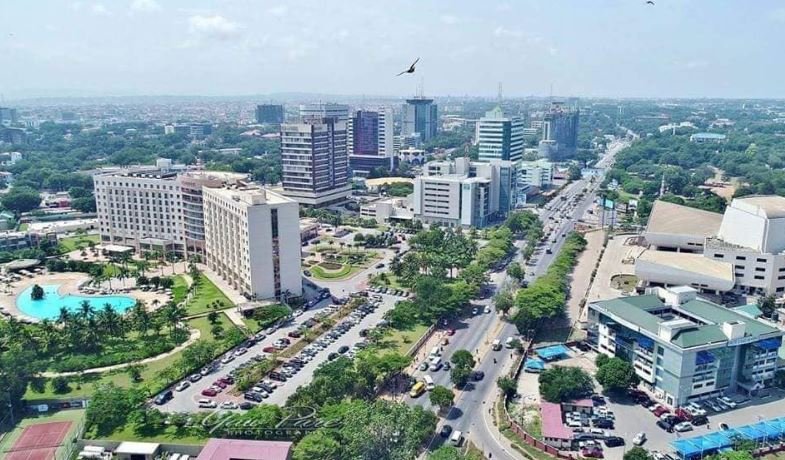
From an investment perspective, Ghana and Côte d’Ivoire are increasingly positioning themselves as strategic gateways into West Africa. Both economies have demonstrated resilience, growing urbanization, expanding middle-class populations, and increasing investor confidence.
Ghana continues to attract interest in financial services, mining, renewable energy, agribusiness, and technology-driven enterprises. The country’s relatively stable democratic environment has strengthened investor perception, making it one of the more attractive destinations for regional expansion strategies.
Côte d’Ivoire, meanwhile, has quietly built one of the strongest industrial and agricultural economies in Francophone Africa. Infrastructure development, port expansion, road networks, and industrialization policies are helping the country strengthen its position as a commercial hub for regional trade.
In our assessment, both countries have the potential to achieve significant economic scale within the next 25 years if they successfully transition from commodity-reliant economies into diversified industrial economies.
Regional Trade Integration Will Determine Future Growth
One of the most important points raised by the ECOWAS commissioner concerns regional trade integration. From an advisory standpoint, this may be the single most important factor influencing West Africa’s long-term economic future.
Historically, many West African economies have depended heavily on exporting raw materials to Europe, North America, and Asia while importing finished goods in return. This model has limited industrial growth within the region and exposed local economies to external market shocks.
A stronger regional trade ecosystem could change this dynamic completely. If ECOWAS member states successfully reduce border delays, harmonize customs systems, improve transportation corridors, and simplify trade regulations, intra-African commerce could expand dramatically.
For investors, this would create opportunities across manufacturing, warehousing, logistics, transportation, digital trade platforms, food processing, construction materials, and consumer goods distribution.
Infrastructure Remains the Region’s Biggest Economic Barrier
Despite strong long-term projections, infrastructure deficits remain one of the most significant constraints facing West Africa. Poor road networks, unstable electricity supply, congested ports, limited rail systems, and inconsistent cross-border regulations continue to slow business expansion.
In practical terms, businesses operating across West Africa often face higher operational costs than competitors in more integrated global markets. In some situations, it remains cheaper to import products from overseas than to transport goods between neighboring African countries.
From our perspective, large-scale infrastructure investment will determine whether these economic projections become reality or remain theoretical forecasts. Governments alone may not have sufficient financing capacity, making public-private partnerships increasingly important.
The Private Sector Is Already Driving Regional Integration
Another important observation from the ECOWAS commissioner is that private businesses and ordinary citizens are currently moving faster than regional institutions themselves. Across West Africa, traders, transport operators, fintech startups, and entrepreneurs are already building cross-border commercial networks despite regulatory inefficiencies.
This trend is important because it demonstrates that regional demand for economic integration already exists. Consumers are increasingly connected through digital payments, telecommunications, online commerce, and mobile banking systems. Businesses are responding faster than policymakers.
Our advisory team believes this private-sector momentum could become one of West Africa’s strongest economic advantages if governments create more supportive regulatory environments.
Human Capital Development Will Shape Long-Term Competitiveness
No economy can achieve sustained global relevance without investing heavily in education, workforce development, and innovation. Nigeria, Ghana, and Côte d’Ivoire all possess youthful populations capable of driving future productivity, but this demographic advantage must be supported with quality education and technical skills development.
Technology, artificial intelligence, engineering, manufacturing expertise, and entrepreneurship training will become increasingly important over the next several decades. Countries that fail to invest in human capital may struggle to convert population growth into economic prosperity.
West Africa’s Economic Future Depends on Strategic Execution
As investment advisors, our conclusion is clear: the projections regarding Nigeria, Ghana, and Côte d’Ivoire are ambitious but achievable under the right conditions. West Africa possesses the population strength, entrepreneurial energy, resource base, and geographic position needed to become a major economic force globally.
However, long-term success will depend on execution rather than potential alone. Governments must prioritize infrastructure modernization, industrialization, regional trade integration, policy consistency, energy expansion, and institutional reforms.
If these priorities are addressed effectively, West Africa could transition from a resource-exporting region into one of the world’s most dynamic investment and industrial growth corridors over the next half century.
Important Highlights
West Africa Is Gaining Global Economic Attention
International investors are beginning to view West Africa as a future center for trade, technology, manufacturing, and consumer growth.
Nigeria’s Population Could Become Its Biggest Economic Asset
Nigeria’s massive and youthful population gives the country long-term advantages in labor, innovation, and market expansion.
Regional Trade May Be More Important Than Foreign Aid
The future of West Africa may depend more on African countries trading with each other than relying heavily on Western economies.
Ghana Is Becoming A Strong Investment Destination
Political stability, entrepreneurship, and digital innovation continue to strengthen Ghana’s appeal to investors.
Côte d’Ivoire Is Quietly Building Industrial Strength
Infrastructure growth and agricultural processing are helping Côte d’Ivoire expand beyond raw commodity exports.
Infrastructure Problems Still Slow Economic Progress
Poor roads, unstable electricity, and border delays remain major barriers to faster regional growth.
Young Entrepreneurs Are Driving Change Faster Than Governments
Many businesses across West Africa are already creating cross-border opportunities despite policy limitations.
Technology Will Shape The Region’s Economic Future
Fintech, digital payments, e-commerce, and innovation hubs are becoming major growth engines in the region.
Diversification Is Critical For Long-Term Wealth
Countries that depend only on oil, cocoa, or minerals may struggle unless they build stronger manufacturing and service industries.
Human Capital Investment Cannot Be Ignored
Education, technical skills, and workforce development will determine whether economic growth becomes sustainable.
ECOWAS Must Modernize To Stay Relevant
Regional institutions need faster reforms and stronger trade systems to support private-sector growth.
West Africa Has The Potential To Become A Global Growth Corridor
With the right leadership and economic policies, the region could emerge as one of the world’s fastest-growing investment markets.