
Latest posts
-
Seychelles: Exploring the Business Climate, Investment Potential, and Commercial Challenges

Seychelles is one of Africa’s smallest nations by population, yet it has built a reputation as one of the continent’s most prosperous island economies. Located in the western Indian Ocean, the archipelago combines political stability, a relatively high standard of living, and an economy driven by marine resources and international tourism. While its limited land…
-
What Return on Average Assets Means

Return on average assets, shortened to ROAA, measures how successfully a company converts its asset base into net income. Instead of considering profit in isolation, the ratio evaluates the amount earned in relation to the resources used to produce it. This makes ROAA an important indicator of operating efficiency, particularly for banks and other financial…
-
How Resilient Founders Lead Through Business Disruption and Uncertainty

Business disruption rarely arrives with ceremony. One week, a company may be hiring and celebrating record sales. The next, a supplier collapses, a contract is cancelled, or regulation changes the business. That was the situation facing Maya Bennett, founder of a logistics technology company in Denver. Her platform helped food distributors coordinate deliveries across western…
-
How Businesses Can Adapt, Stay Resilient And Grow During Economic Uncertainty

Every business eventually encounters a period in which established assumptions no longer hold. Customer demand may weaken, operating costs may rise, financing conditions may tighten, regulations may shift, and competitors may introduce new technologies or commercial models. These developments rarely arrive as a single, clearly defined event. More often, they emerge gradually through slower payments,…
-
When Rational Financial Decisions Outperform Purely Logical Choices

Financial decision-making is often framed as a technical exercise driven by expected returns, interest rates, risk-adjusted performance and cost efficiency. While these indicators are essential, they do not fully capture the practical realities that influence long-term financial outcomes. A logical decision identifies the option that appears mathematically superior. A rational decision goes further by considering…
-
Togo: An Investment Gateway Connecting Coastal and Inland West Africa
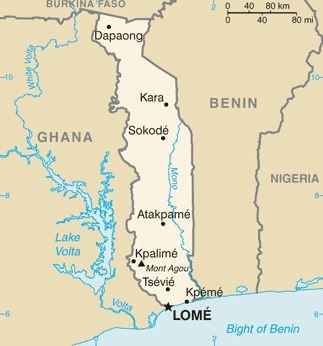
Togo presents a distinctive proposition within West Africa. Although the country is relatively small in geographic size, its location, port infrastructure, and access to regional markets give it strategic importance. Togo functions as both a domestic market and a transit platform for businesses seeking to reach landlocked economies across the subregion. The country stretches from…
-
Sierra Leone: An Emerging Frontier for Long-Term Investment
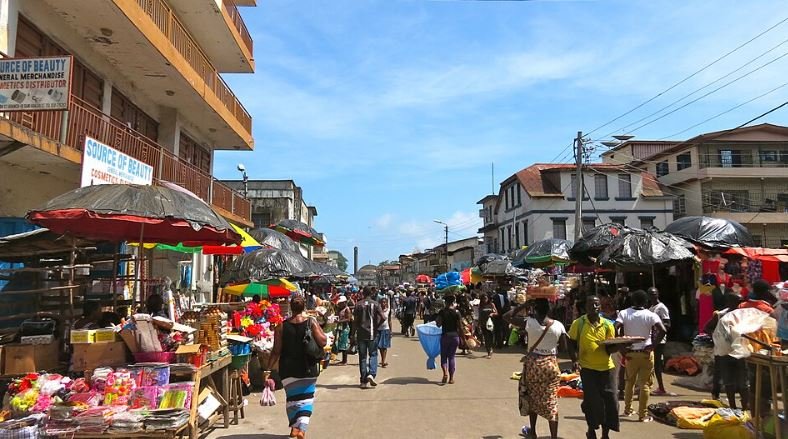
Executive Overview From our assessment, Sierra Leone represents a frontier investment market with considerable long-term potential supported by abundant natural resources, a strategic Atlantic coastline, and a steadily evolving democratic system. Although the country continues to address infrastructure deficits, governance reforms, and human capital constraints, meaningful progress in institutional rebuilding has strengthened investor confidence compared…
-
Morocco’s OCP Group: How Africa’s Phosphate Giant Is Reshaping Global Fertilizer Supply

Morocco’s OCP Group is emerging as one of the most strategically important companies in the global fertilizer industry. While global attention remains focused on energy security, technology competition and supply-chain disruption, OCP is strengthening its position within a sector that directly influences agricultural productivity, food prices and national food security. The company’s competitive advantage is…
-
How to Start a Profitable Gold Trading Business in 2026: Strategy, Compliance and Risk Management Guide

Gold trading remains one of the most established forms of commodity commerce, supported by sustained demand across investment markets, jewellery manufacturing, central bank reserves, technology, and wealth preservation. Its historical role as a store of value continues to attract entrepreneurs and investors seeking exposure to a globally recognised asset. However, the modern gold trade is…
-
Business Opportunities In Ghana For African Americans: Real Estate, Agribusiness, Finance, And Diaspora Investment

For African Americans considering Ghana as a place to live, invest, or build long-term economic roots, the conversation must go beyond cultural return. While Ghana’s historical and emotional connection to the African diaspora remains powerful, sustainable relocation depends heavily on business planning, financial readiness, trusted partnerships, and a clear understanding of the local market. Ghana…