
Latest posts
-
Days Cash on Hand Explained: Formula, Calculation, Examples and Liquidity Management Guide

What Does Days Cash on Hand Mean? Days cash on hand is a liquidity measure that estimates how long an organization can continue paying its routine operating costs using only the cash and near-cash resources it currently holds. The metric is particularly useful when management wants to understand how financially resilient the business would be…
-
What Credit Sales Mean for a Business

Credit sales arise when a company provides goods or services to a customer but allows payment to be made at a later date. Instead of receiving cash immediately at the point of sale, the business records the transaction as revenue while waiting for the customer to settle the outstanding amount. This approach is common in…
-
What Accrued Wages Really Mean: Accounting, Journal Entries, Cash Flow and Payroll Management

Accrued wages are employee compensation costs that a business has already incurred but has not yet paid by the end of an accounting period. They arise whenever employees perform work during one reporting period but receive their salaries, wages, overtime payments, commissions, or other qualifying compensation in a later period. From an accounting perspective, the…
-
Starting a Business in South Africa as a Foreigner: A Strategic Market Entry Guide

South Africa remains one of the most commercially significant markets in Africa for international companies seeking scale, regional access and sophisticated financial infrastructure. Its large consumer economy, developed banking sector, established legal institutions and position within Southern Africa make it an attractive base for foreign investors evaluating long-term expansion on the continent. However, establishing a…
-
Customer Insights Strategy: How Businesses Can Turn Customer Data Into Sustainable Growth

Customer Understanding as a Source of Competitive Advantage In increasingly competitive markets, organizations are under growing pressure to differentiate not only through products and pricing, but also through the quality of the customer experience they deliver. As consumers interact with businesses across digital and physical channels, the ability to interpret customer behaviour accurately has become…
-
Demand Shocks: Causes, Economic Impact, Inflation Risks and Strategic Business Responses

As economic advisory professionals, we view demand shocks as one of the most important signals for understanding sudden changes in market behaviour. They can affect individual products, entire sectors, or national economies, and their consequences often extend beyond immediate movements in sales or prices. A demand shock can alter production decisions, investment priorities, employment levels,…
-
Fiscal Policy in Africa: What Tax, Spending, and Debt Decisions Mean for Business
Fiscal policy has become one of the most important variables shaping business conditions across African markets. Decisions on taxation, public expenditure, subsidies, infrastructure, and government borrowing can quickly influence consumer demand, financing costs, investment confidence, and operating margins. For companies, the practical question is no longer whether fiscal policy matters. It is how quickly changes…
-
What are Supply Shocks? Causes, Inflation Effects, Stagflation Risks and Economic Strategies
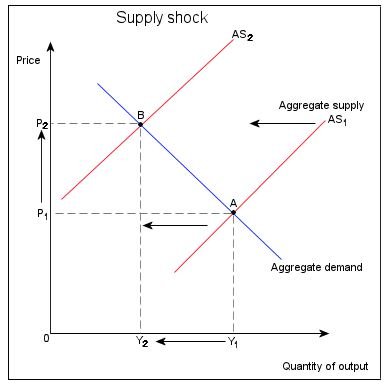
Supply shocks represent some of the most disruptive forces an economy can experience because they affect the productive side of markets rather than simply changing consumer spending. A supply shock occurs when the availability, cost, or productive capacity associated with a good, service, or essential input changes unexpectedly. These shocks can emerge quickly and may…
-
Constant Dollars: A Practical Framework for Inflation-Adjusted Financial Analysis

Understanding the Strategic Value of Constant Dollars Financial data can be difficult to interpret accurately when it spans multiple years. A revenue figure, salary, investment value, or economic indicator recorded today may appear significantly larger than a comparable figure from a decade ago. However, part of that increase may simply reflect inflation rather than genuine…
-
Understanding Business Cycles: Phases, Measurement, and Strategic Implications
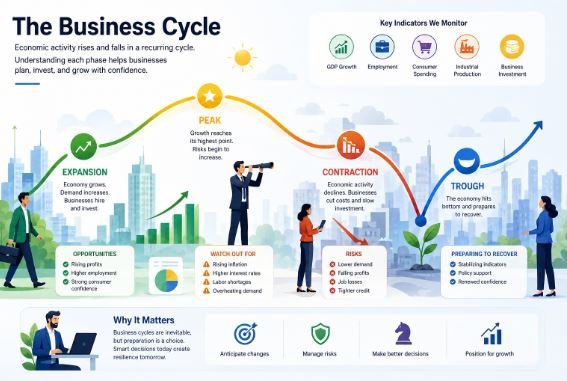
Business cycles describe the recurring fluctuations in the level of economic activity within a national economy. These movements typically alternate between periods of expansion and periods of contraction, affecting production, employment, household income, consumer expenditure, investment, and corporate performance. Although business cycles follow a recognizable sequence, they do not occur at predictable intervals. The duration…