
Latest posts
-
Eswatini Corporate Tax Filing Deadlines, Payments and Audit Rules

For businesses operating in Eswatini, tax compliance involves coordinating reporting deadlines, advance payments and the possibility of an audit. Understanding these requirements helps companies prepare their accounts and manage cash flow throughout the year. Accounting Dates and Filing The standard tax year begins on 1 July and closes on 30 June. Companies generally follow this…
-
Botswana’s Corporate Tax Filing Deadlines, Payments And BURS Rules

Corporate tax compliance in Botswana depends on keeping reliable records, observing filing deadlines, and planning payments throughout the business year. The system places responsibility on companies to calculate their taxable income and disclose it correctly. Understanding how these obligations fit together helps businesses manage cash flow and avoid unnecessary administrative pressure. Choosing the Accounting Period…
-
Namibia Corporate Income Tax (CIT): Latest Tax Rates, Exemptions, Deductions & Foreign Company Rules
Namibia’s territorial taxation framework implies that businesses generally pay corporate income tax on earnings obtained within the country. Revenue considered to originate from Namibia may also be taxable, regardless of where the receiving company is headquartered. However, certain income categories qualify for exemptions under national tax legislation. Tax Responsibilities for Foreign Businesses International companies conducting…
-
Eswatini Corporate Income Tax Guide: 25% Tax Rate, Deductions and Calculations
If you are running a business in Eswatini, you are generally required to pay corporate income tax on profits generated within the country. The tax system in this country focuses primarily on where income is earned rather than where a company is registered. This means both local businesses and foreign companies earning income from Eswatini…
-
Botswana Corporate Income Tax Guide: Latest Tax Rates, Mining Taxes & Business Incentives

Botswana’s source-based corporate taxation system means businesses generally pay tax on income generated within the country. The framework provides different tax treatments depending on the nature of a company’s operations, with incentives available to qualifying industries and financial service providers. Standard Corporate Tax Rates Most companies operating in Botswana pay corporate income tax at a…
-
Personal Income Tax Rates in Namibia

In Namibia individuals generally pay income tax on earnings generated within the country, regardless of their nationality or residential status. Income originating outside Namibia is ordinarily excluded unless legislation specifically treats it as Namibian-sourced. For example, a Kenyan engineering consultant providing services at a mining operation near Rosh Pinah may incur Namibian tax obligations on…
-
Latest Eswatini Personal Income Tax Rates: Tax Brackets, Rebates and Salary Calculations

Eswatini operates a source-based income tax system, meaning individuals are generally taxed on earnings generated within the country. This applies to both residents and non-residents, regardless of where they permanently live. The determining factor is whether the income originates from Eswatini or is legally treated as arising there. How Personal Income Tax Rates Work Eswatini…
-
Botswana Personal Income Tax Guide: Rates, Tax Bands, Withholding Tax and Calculations
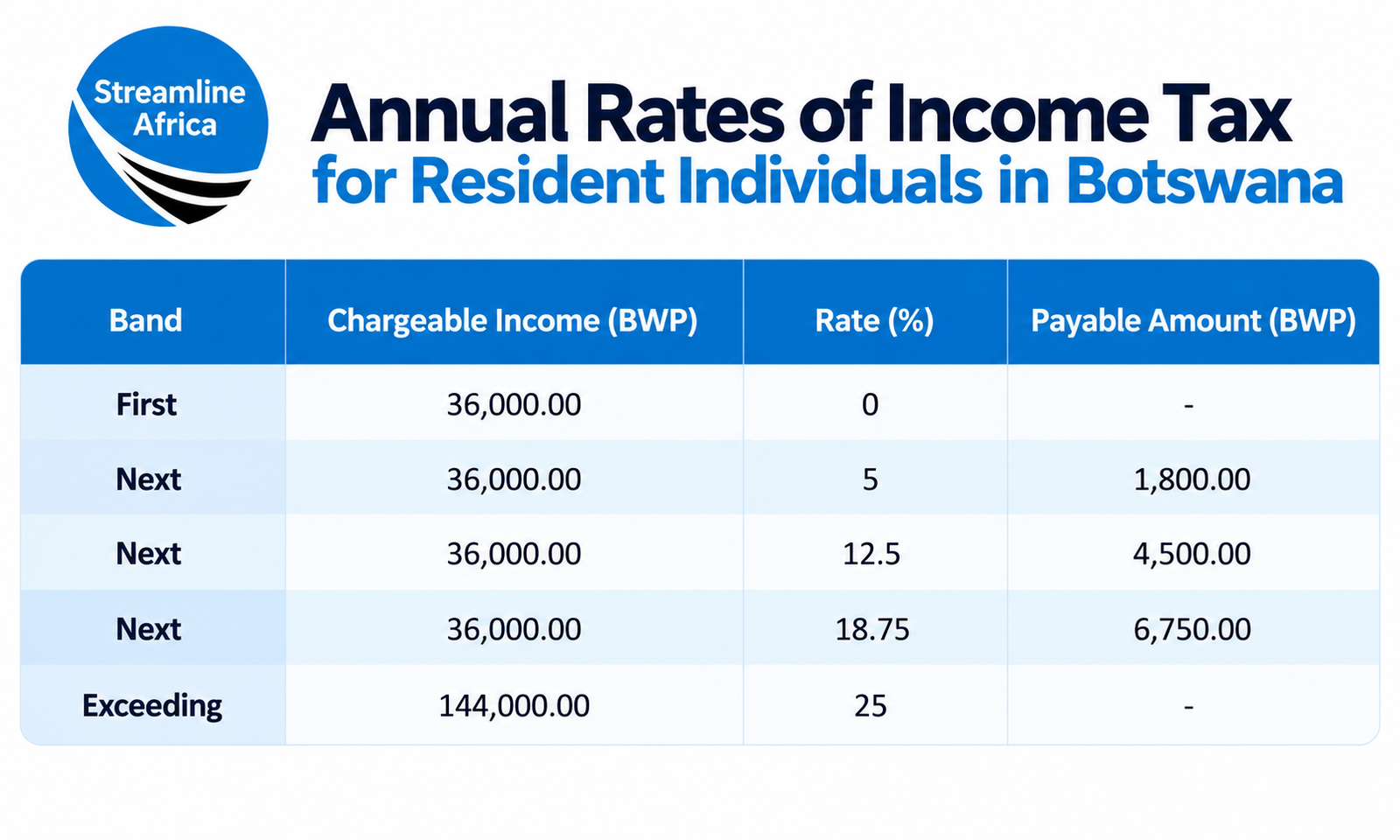
Did you know that Botswana follows a territorial approach to personal income tax? In practical terms, tax is generally determined by the source of income rather than simply an individual’s nationality. Income arising from employment, business activities or other taxable sources within Botswana may therefore be subject to tax in the country. Work performed outside…
-
Corporate Group Tax Treatment in Botswana

Botswana generally treats each company within a corporate group as a separate taxpayer. This means businesses under common private ownership cannot normally combine profits and losses when determining corporate income tax. A notable exception applies to wholly owned subsidiaries of the Botswana Development Corporation Limited (BDC). Established in 1970 and wholly owned by the Botswana…
-
Botswana’s Corporate Tax Incentives: SPEDU Tax Rates, Foreign Tax Credits and Eligibility Guide
Botswana provides targeted tax incentives to encourage investments that contribute to economic development, employment, productive capacity and regional growth. Qualifying business development projects may receive additional relief relating to revenue or capital expenditure where the government considers the investment beneficial to the country. For example, a company establishing a food-processing facility that purchases agricultural produce…