
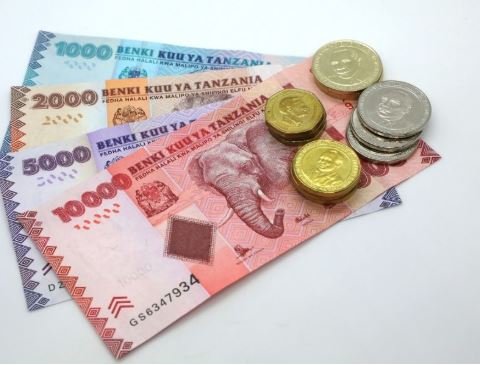
Pay in Tanzania varies widely. The amount a person earns depends on the industry, type of job, location, experience and whether the work is within the formal or informal economy.
Available wage estimates put the average gross salary at around TZS 650,000 per month, or about TZS 7.8 million a year. The median monthly income, however, is much lower at roughly TZS 200,000. This difference matters because an average can be pushed upward by a smaller number of people earning relatively high salaries.
For this reason, TZS 650,000 should not be read as what most Tanzanian workers earn. Many people work in farming, small businesses, informal trading and casual employment. Formal-sector salary figures do not fully capture these workers.
How Minimum Wages Work in Tanzania
Tanzania does not have one minimum monthly salary that applies equally to every worker. Minimum wages are set according to different sectors of the economy.
An important change took effect on January 1, 2026, under Government Notice 605A. It replaced the previous wage order from 2013. Under this framework, agriculture and general workers have a minimum wage of about TZS 175,000 per month. This is roughly TZS 5,833 per day or TZS 1,010 per hour.
The effective date is worth remembering when reviewing older employment contracts or salary records. A wage that complied with the previous rules may no longer satisfy the applicable minimum.
Minimum Pay Is Different Across Industries
The sector in which a person works can make a significant difference to the minimum salary that applies.
For agriculture and general services, the monthly floor is around TZS 175,000. Domestic workers fall under a lower category, with a reported minimum of TZS 80,000 per month. Mining sits at the other end of the scale, with minimum monthly rates ranging from about TZS 695,000 to TZS 765,900.
Imagine Asha works in general agricultural services while Joseph is employed by a mining company. Both may be full-time employees, but that does not mean the same statutory minimum applies to them.
This is an important point for employers. Before deciding whether a salary meets the legal requirement, the employer first needs to know which sector and worker category the position belongs to.
Source: velmalaw.co.tz
How Tanzania’s Minimum Wage Has Changed
Minimum wages do not remain fixed forever. They are adjusted as labour rules and economic conditions change.
The general wage benchmark was around TZS 80,000 per month in 2010. It moved to approximately TZS 100,000 in 2013 and later reached TZS 175,000 under the wage framework that became effective in 2026.
The dates are useful because they provide context. Someone comparing salaries across different years should avoid applying today’s wage floor to an earlier period without considering which rules were actually in force at the time.
Working Hours and Overtime Pay
Salary alone does not tell the full story of a job. Working hours and overtime can have a major effect on what an employee eventually earns.
The standard working week in Tanzania is 45 hours. Those hours can be arranged in different ways depending on the workplace. For example, an employee working five days may work nine ordinary hours per day.
When overtime is required, the normal overtime rate is 1.5 times the employee’s ordinary rate. Work performed on a public holiday attracts payment at twice the normal rate. Overtime is also limited to 50 hours within a four-week period.
Keeping clear records of hours worked is therefore important. It helps employees understand their pay and allows employers to calculate additional compensation correctly.
What a Salary Can Buy
Converting Tanzanian salaries into US dollars can make international comparisons easier, but exchange rates tell only part of the story.
The general minimum wage benchmark of TZS 1,010 per hour is shown as roughly US$0.38 using the exchange-rate comparison in the source data. When local living costs are considered through purchasing-power calculations, its estimated value is closer to US$1.38 per hour.
These are two different ways of looking at income. Currency conversion tells us what the money is worth when exchanged. Purchasing power tries to show what that income can actually buy where the worker lives.
For anyone comparing jobs across countries, considering both can give a more useful picture than simply converting one salary into another currency.
Minimum Wage Versus Average Salary
There is a noticeable distance between Tanzania’s general minimum wage benchmark and its reported average formal-sector salary.
A monthly minimum of around TZS 175,000 is only about 27% of the estimated average gross monthly salary of TZS 650,000.
That gap should be interpreted carefully. Average earnings can be influenced by professionals, managers and other higher-paid employees. They also reflect formal employment more strongly than informal work.
Location can make a difference too. Formal-sector earnings in Dar es Salaam are generally higher than those found in many other parts of Tanzania.
Comparing Tanzanian Wages Internationally
International wage comparisons can be helpful, especially for employers, job seekers and businesses looking across different markets. However, they need context.
The source data converts Tanzania’s general minimum wage benchmark to about US$0.38 per hour and average gross monthly earnings to approximately US$244.36.
These figures should not be treated as direct measures of living standards. Housing, transport, food, taxes and other everyday costs differ considerably between countries. Two workers earning very different amounts in dollar terms may therefore have a smaller difference in purchasing power than the exchange-rate figures suggest.
What Employers and Workers Should Keep in Mind
The simplest way to understand Tanzania’s wage system is to remember that there is no single minimum salary for every job. The correct wage floor depends heavily on the employee’s sector and classification.
Employers should identify the appropriate wage category, keep reliable working-time records and calculate overtime using the applicable rules. Workers can also benefit from knowing which sectoral minimum applies to their jobs rather than relying on a general national figure.
Salary statistics are useful for understanding the wider labour market, but they are only a starting point. A realistic assessment of pay should consider the specific occupation, industry, location, working hours and employment arrangement.
And because wage rules can change, employers and workers should always confirm the current statutory rate before making an employment or payroll decision.
What Employers and Workers Should Keep in Mind
The simplest way to understand Tanzania’s wage system is to remember that there is no single minimum salary for every job. The correct wage floor depends heavily on the employee’s sector and classification.
Employers should identify the appropriate wage category, keep reliable working-time records and calculate overtime using the applicable rules. Workers can also benefit from knowing which sectoral minimum applies to their jobs rather than relying on a general national figure.
Salary statistics are useful for understanding the wider labour market, but they are only a starting point. A realistic assessment of pay should consider the specific occupation, industry, location, working hours and employment arrangement.
And because wage rules can change, employers and workers should always confirm the current statutory rate before making an employment or payroll decision.
Read Also: Namibia Salary and Minimum Wage Guide: Average Pay, Working Hours and Employee Benefits
Practical Wage Compliance Checklist for Employers
A practical compliance review starts with classification. Identify the sector in which the employee actually works and confirm the minimum wage category that applies to the role. Tanzania uses sector-specific wage floors, so applying a general figure without checking the employee’s category can result in the wrong minimum being used. The source material, for example, shows different wage floors for domestic work, agriculture and general services, and mining.
Next, compare the employee’s basic pay with the applicable statutory minimum. Do not assume that a salary is compliant simply because it appears reasonable compared with salaries paid by similar businesses. The relevant test is whether the employee receives at least the minimum required for the correct sector and category.
Working hours should also be checked. Tanzania’s ordinary working week is stated as 45 hours, while overtime is generally compensated at 1.5 times the normal rate. Work performed on public holidays attracts twice the normal rate, and the source states that overtime is limited to 50 hours during a four-week cycle.
Employers should therefore maintain clear records showing ordinary hours, overtime and public-holiday work. Payroll records should correspond with those working-time records so that additional hours can be identified and paid correctly.
It is also sensible to review payroll whenever wage regulations change. The wage framework that took effect on January 1, 2026 replaced the previous 2013 order, illustrating why businesses should not assume that a wage rate used for many years remains current.
As a practical routine, an employer can work through these questions during each compliance review:
- Have we identified the correct sector and wage category for every employee?
- Does each employee’s pay meet or exceed the minimum applicable to that category?
- Are ordinary working hours being recorded accurately?
- Is overtime identified separately and paid at the appropriate rate?
- Is work performed on public holidays compensated correctly?
- Are overtime limits being monitored rather than simply paying for unlimited additional hours?
- Do payroll records match attendance and working-time records?
- Have any employees changed roles or departments in a way that could affect their wage classification?
- Have we checked whether the applicable wage order or statutory rates have changed?
- Can the business produce clear records showing how each employee’s wages and additional payments were calculated?
This checklist is intended as a practical starting point rather than a substitute for checking the applicable wage order or obtaining professional advice where an employee’s classification is unclear. The source itself notes that the detailed rates across all sectors should be confirmed against the full statutory schedule.
A short compliance review carried out regularly is usually more useful than waiting until a payroll problem appears. For workers, the same information provides a straightforward way to understand whether pay, working hours and overtime are being handled consistently with the rules that apply to their employment.