
Latest posts
-
Mauritius’ Latest Personal Income Tax Rates: Tax Brackets, Residency Rules and Fair Share Contribution Explained

When it comes to personal income tax in Mauritius, the country’s system primarily distinguishes between residents and non-residents while applying progressive rates to taxable earnings. For employees, entrepreneurs, investors, and foreign professionals, understanding these obligations is essential for financial planning and regulatory compliance. Tax Obligations for Residents and Non-Residents Individuals earning income from activities conducted…
-
Madagascar Personal Income Tax Rates: IRSA Tax Brackets, Salary Calculations and Business Tax Guide

Madagascar maintains separate tax arrangements for employment earnings and income generated through business activities. Understanding these distinctions is essential for individuals, entrepreneurs, and foreign investors seeking to manage their tax obligations effectively. Employment income falls under the Salary and Related Income Tax (IRSA), while income from commercial activities is generally assessed through Business Income Tax…
-
Libya’s Latest Personal Income Tax Rates: Salary Thresholds, Deductions and Examples

Libya’s personal income tax system focuses on earnings generated through employment within the country. For example, an employee working for a construction company in Tripoli may be liable for personal income tax on their Libyan employment income, regardless of whether they are Libyan or a foreign national. The rules distinguish employment earnings from other sources…
-
Gabon Personal Income Tax Guide: IRPP Latest Rates, Family Quotient Calculations, Salary Tax and Employer Compliance

Gabon’s structured personal income tax regime is designed to capture earnings generated through employment, professional services and other taxable activities. The Impôt sur le Revenu des Personnes Physiques (IRPP) applies to qualifying income earned within the country, including salaries, allowances, pensions and professional remuneration. For businesses operating across Central Africa, understanding these obligations is essential…
-
Personal Income Tax in Ethiopia: A Guide to Tax Obligations, Compliance & Latest PAYE Rates

Ethiopia’s personal income tax framework establishes clear obligations for individuals earning income through employment, commercial activities, and investments. Effective tax management requires an understanding of residency classifications, taxable income, applicable rates, and statutory deductions. Individuals and businesses should incorporate these considerations into their financial planning to maintain compliance and minimise potential tax exposure. Tax Residency…
-
Latest Eswatini Personal Income Tax Rates: Tax Brackets, Rebates and Salary Calculations
Eswatini operates a source-based income tax system, meaning individuals are generally taxed on earnings generated within the country. This applies to both residents and non-residents, regardless of where they permanently live. The determining factor is whether the income originates from Eswatini or is legally treated as arising there. How Personal Income Tax Rates Work Eswatini…
-
Personal Income Tax in Equatorial Guinea: Latest Rates, Residency and Tax Obligations
Equatorial Guinea operates a personal income tax system that requires individuals to contribute a portion of their taxable earnings to the government. The amount payable depends on an individual’s income level, tax residency status, and the applicable tax brackets. The country follows a progressive taxation structure, meaning individuals with higher taxable earnings generally face higher…
-
Egypt Personal Income Tax Guide: Tax Rates, Exemptions and Practical Calculations
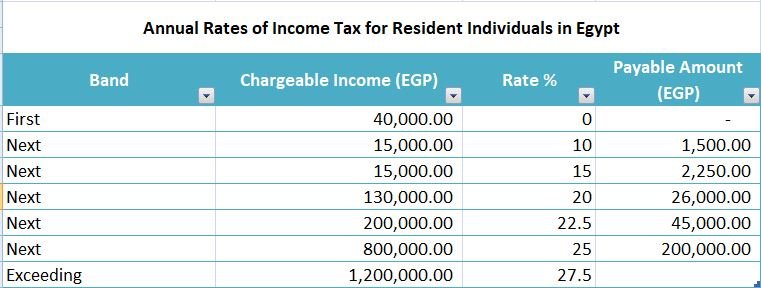
Egypt’s personal income tax system considers both an individual’s residency status and the source of their earnings. Resident individuals are generally taxed on net income earned within Egypt. Income generated abroad may also become taxable when the resident’s main commercial, industrial, or professional activities are based in Egypt. Non-residents are generally taxed only on income…
-
How Personal Income Tax Works in Republic of the Congo

In Republic of the Congo, personal income tax is mainly determined by where an individual is domiciled and where their income originates. Individuals regarded as domiciled in the country are generally taxed on their worldwide income, regardless of whether the earnings arise locally or overseas. Those who are not domiciled in the country are normally…
-
DRC Personal Income Tax Guide: IPR Rates, Expatriate Tax and Employer Obligations

The Democratic Republic of the Congo (DRC) applies personal income tax, commonly known as IPR, primarily to employment earnings. For employees, the tax system follows a progressive structure, so income is divided into different bands and each portion is taxed at the rate assigned to that band. This approach means moving into a higher tax…